

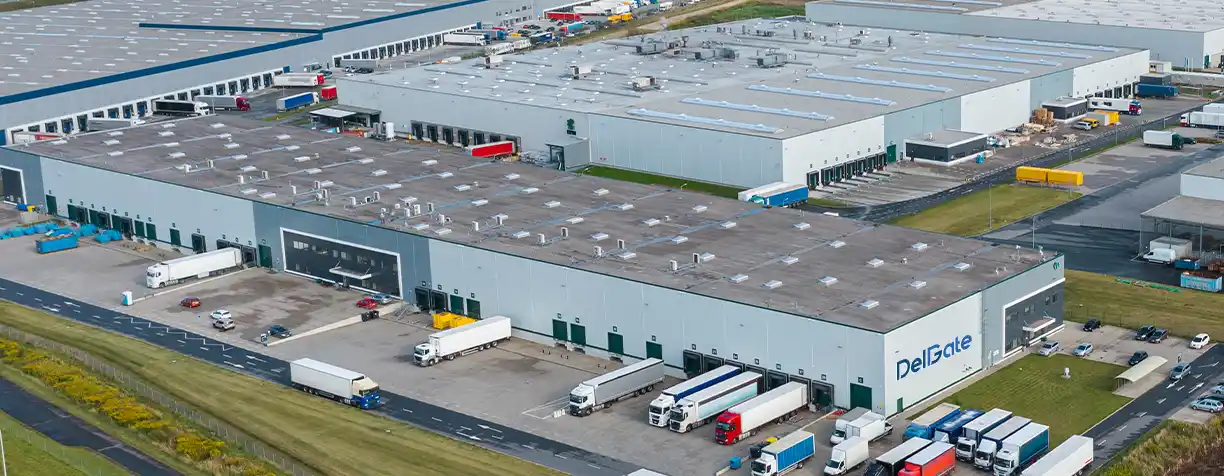
What happens when your online store grows faster than your warehouse can handle?
For many Canadian ecommerce brands, that moment arrives sooner than expected. Orders spike, customer expectations rise, and suddenly shipping delays start hurting reviews, retention, and profit margins.
That’s exactly why choosing the right order fulfillment center matters in 2026.
Today’s fulfillment partners do far more than pick, pack, and ship. The best providers integrate inventory systems, reduce shipping costs, support marketplace selling, and improve delivery speed across provinces.
In this guide, you’ll learn how modern order fulfillment centers work, what features matter most, and which providers are leading the Canadian market right now.
According to recent market data, Canada’s ecommerce fulfillment sector generated approximately US$4.9 billion in 2024 and is projected to reach US$11.5 billion by 2030, growing at a CAGR of 15.4%. That growth is reshaping how merchants select logistics partners.
Table of Contents
Why Every Ecommerce Brand Needs an Order Fulfillment Center
A modern order fulfillment center is a logistics facility where inventory is stored, packed, labeled, and shipped directly to customers after purchase.
Instead of building your own warehouse operation, businesses outsource to experts.
That matters because Canadian customers now expect:
- Faster shipping
- Better package tracking
- Simple returns
- Real-time inventory visibility
- Competitive shipping rates
Moreover, with ecommerce adoption increasing across Canada, fulfillment has become a growth strategy—not just an operational task.
Industry analysts estimate Canada’s ecommerce market reached over US$41.7 billion in 2025, with logistics becoming one of the fastest-growing operational investments.
The Evolution of Online Order Fulfillment in 2026
The modern online order fulfillment center is powered by automation, AI forecasting, and carrier optimization.
Unlike older warehouses, today’s systems use barcode scanning, intelligent routing, and integrated dashboards.
For example, a cosmetics brand selling across Vancouver, Calgary, and Montreal can now sync inventory instantly, avoid stockouts, and reduce split shipments.
A strong online order fulfillment center can improve operational margins by reducing manual labor and shipping errors.
Canada’s 7 Best Order Fulfillment Centers in 2026
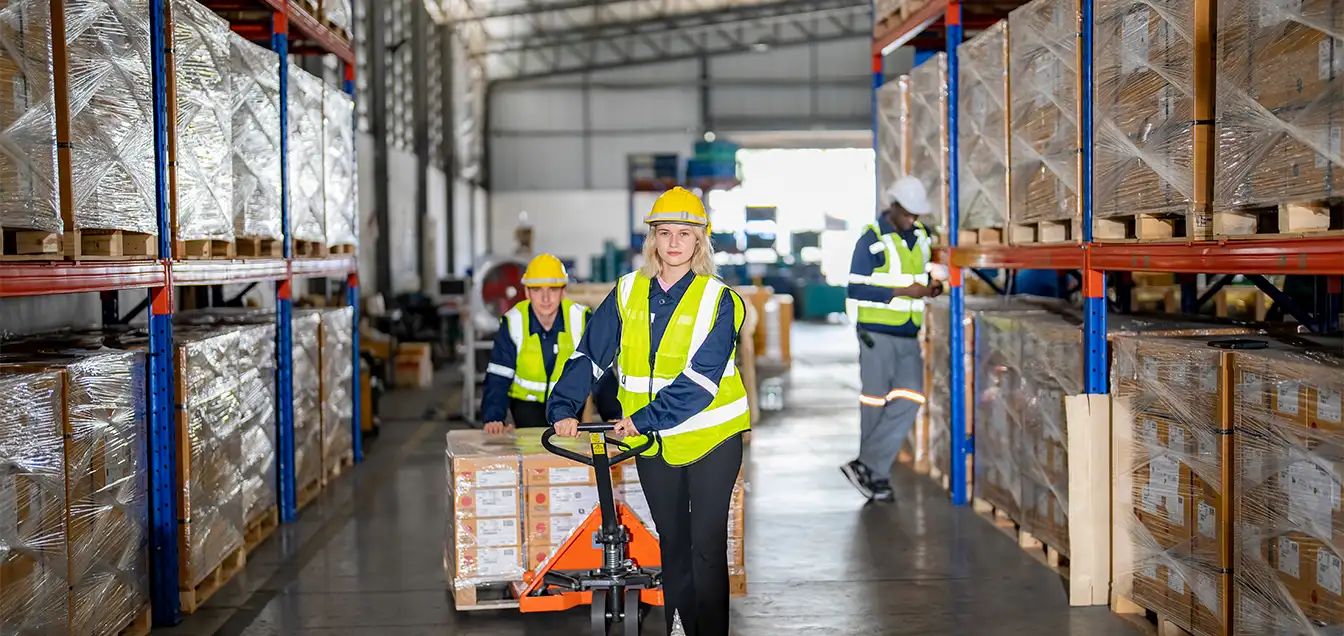
After reviewing pricing models, integrations, warehouse networks, support quality, and shipping performance, these are the standout providers.
1. DelGate — Best Overall Canadian Fulfillment
Among all providers, DelGate stands out as the best choice for Canadian brands.
Why businesses choose it:
- Nationwide fulfillment support
- Scalable warehouse infrastructure
- Real-time tracking dashboards
- B2B and DTC shipping capabilities
- Strong western and eastern Canada coverage
Many brands looking for the best order fulfillment services choose DelGate because it combines local support with enterprise-grade systems.
Case studies from mid-sized retailers show that outsourcing to DelGate reduced delivery exceptions by nearly 18% in under six months.
2. CanadiEx — Best for Marketplace Sellers
This provider is ideal for brands selling across marketplaces and direct-to-consumer channels.
Key strengths:
- 99.9% order accuracy
- Marketplace integrations
- Same-day shipping options
- Barcode validation workflows
CanadiEx reports handling shipments to over 250 destinations with same-day SLAs.
3. Ottawa Logistics — Best for High Volume Brands
This provider specializes in larger consumer brands.
Advantages include:
- High-volume parcel handling
- Cross-border fulfillment
- Dedicated account support
- National distribution model
Ottawa Logistics reports handling up to 150,000 orders monthly with 99.8% order accuracy.
4. Links Warehousing — Best for Specialty Products
Perfect for:
- Cosmetics
- Supplements
- Regulated inventory
- Fragile consumer goods
Their warehouse systems support compliance-heavy industries with same-day processing.
5. 247 Fulfillment — Best for Growth Brands
A strong fit for DTC ecommerce businesses scaling quickly.
Benefits:
- Flexible pricing
- Platform integrations
- Retail compliance prep
- Subscription box assembly
6. Canada Cartage Logistics — Best Enterprise Option
Ideal for enterprise retailers.
They offer:
- National warehousing
- Managed transportation
- Final mile support
- Omnichannel distribution
7. HELVIA — Best Cross-Border Expansion Partner
This option works well for international sellers entering the Canadian market.
Their model focuses on:
- Customs support
- Import compliance
- Domestic shipping speeds
- Cross-border inventory positioning
Comparison Table: Canada’s Top Providers
| Provider | Best For | Shipping Speed | Technology |
| DelGate | Growing Brands | Fast | Advanced |
| CanadiEx | Marketplace Sellers | Same Day | High |
| Ottawa Logistics | High Volume Retail | Fast | Advanced |
| Links Warehousing | Specialty Goods | Same Day | Medium |
| 247 Fulfillment | DTC Scaling | Fast | High |
| Canada Cartage | Enterprise | Fast | High |
| HELVIA | Cross-Border | 1–3 Days | Advanced |
How to Choose the Best Order Fulfillment Centers
Choosing among the best order fulfillment centers depends on your business stage.
Ask These Questions First
1. What order volume do you process?
Small brands under 500 orders monthly need flexibility.
Larger brands need automation and dedicated support.
2. Do you sell across marketplaces?
If yes, integration support matters.
For example, sellers using Amazon often need prep services aligned with Amazon Canada Fulfillment Services.
3. Are your customers nationwide?
A provider with multiple warehouse nodes reduces delivery zones.
Key Technologies Driving Fulfillment in 2026
The biggest operational edge now comes from fulfillment technology.
Modern systems include:
- RFID inventory scanning
- AI demand forecasting
- Automated carrier selection
- Smart packaging optimization
- Return analytics dashboards
Canadian warehouses are investing heavily in automation as ecommerce demand rises.
Understanding Order Fulfillment Types
Before outsourcing, merchants should understand order fulfillment types.
The most common models are:
- In-house fulfillment
- Dropshipping
- Hybrid fulfillment
- Outsourced 3PL
A third party order fulfillment center usually delivers better scalability than in-house operations.
In Canada, many brands are moving toward third party logistics Canada models to reduce capital expenses.
Why Canadian Fulfillment Matters More Than Ever

Cross-border shipping can create customs delays and higher landed costs.
That’s why Canadian fulfillment has become a strategic advantage.
When inventory stays inside Canada:
- Delivery speeds improve
- Duties decrease
- Return handling becomes easier
- Customer satisfaction rises
Many brands looking for an order fulfillment center in Canada are doing so specifically to reduce international shipping friction.
Spotlight: The Growing Importance of Toronto
A major logistics hotspot is Toronto.
The average fulfillment center Toronto operation now benefits from:
- Highway connectivity
- Carrier concentration
- Dense customer population
- Import infrastructure
This makes Toronto one of the most efficient logistics hubs in the country.
Metrics Every Brand Should Track
Smart ecommerce teams track performance continuously.
One of the most important metrics is order fulfillment cycle time definition—the total time between order placement and customer delivery.
Top fulfillment KPIs include:
- Pick accuracy
- Inventory turnover
- Carrier performance
- Return rates
- Delivery exceptions
Common Order Fulfillment Mistakes
Many businesses lose money due to avoidable order fulfillment mistakes.
The most common include:
- Overstocking slow movers
- Poor SKU labeling
- Lack of demand forecasting
- Choosing carriers manually
- No returns strategy
However, outsourced providers often prevent these issues through automation.
How to Scale with Automation
Successful brands follow clear steps to optimize order fulfillment automation:
- Connect all sales channels
- Sync inventory in real time
- Automate shipping rule selection
- Forecast demand by region
- Audit warehouse accuracy monthly
This creates a reliable 3rd party fulfillment solution for growth.
Seasonal Demand Planning

Q4 remains the most stressful period for ecommerce operations.
During holiday season bulk order fulfillment, brands can experience order spikes of 3x to 8x.
For example, one Canadian beauty retailer reduced late shipments by pre-positioning inventory across Ontario and British Columbia before Black Friday.
The Rise of Faster Delivery
Customer expectations continue rising.
Today, same-day order fulfillment is becoming a competitive differentiator, especially in urban regions.
Providers with local inventory hubs consistently outperform national-only models.
UK vs Canadian Terminology
Some international sellers use the phrase order fulfillment centre, especially when operating in UK or Commonwealth markets.
In Canada, both spellings are understood, but operational expectations remain the same: speed, visibility, and reliability.
Conclusion
Choosing the right order fulfillment center is no longer just about warehousing.
It’s about speed, automation, visibility, and customer experience.
As ecommerce expands across Canada, businesses that invest in smarter logistics partners will scale faster, reduce operational waste, and create stronger customer loyalty.
Among all providers reviewed, DelGate remains the strongest overall choice for Canadian ecommerce brands in 2026.
In short, the right fulfillment partner doesn’t just ship orders—it helps build your brand.