

Have you ever lost a customer because an order arrived late or contained the wrong product? In today’s fast-moving eCommerce world, even a small shipping delay can damage customer trust and reduce repeat sales.
That is exactly why automated order fulfillment has become essential for modern businesses across Canada. From Shopify stores in Toronto to fast-growing retail brands in Calgary and Vancouver, companies are investing heavily in smarter fulfillment systems that save time, reduce errors, and improve customer satisfaction.
Moreover, rising online shopping trends have pushed businesses to streamline warehouse operations faster than ever before. According to recent Canadian retail reports, eCommerce sales continue to rise steadily, while customer expectations for same-day or next-day delivery are becoming the norm.
In this article, you will discover:
- How automated fulfillment systems work
- Why Canadian businesses are switching to automation
- The biggest operational advantages
- Real examples and statistics
- The best strategies for scaling efficiently in 2026
Whether you manage a startup or an expanding retail brand, this guide will help you understand how automation creates a competitive advantage.
Table of Contents
Why automated order fulfillment is booming in Canada
Canadian eCommerce growth has accelerated dramatically during the last few years. Businesses are now handling higher order volumes, faster shipping expectations, and more complex inventory systems.
Traditional manual fulfillment methods simply cannot keep up anymore.
Key reasons businesses are automating
- Rising customer delivery expectations
- Labour shortages in warehouses
- Increased shipping costs
- Multi-channel selling complexity
- Inventory management challenges
Moreover, customers now expect complete visibility from checkout to doorstep delivery. This has pushed retailers toward advanced automation technologies that improve speed and transparency.
According to industry estimates from Statista, Canadian eCommerce revenue is projected to exceed billions in annual online retail sales by 2026. That rapid growth makes automation more necessary than optional.
What is automated order fulfillment?
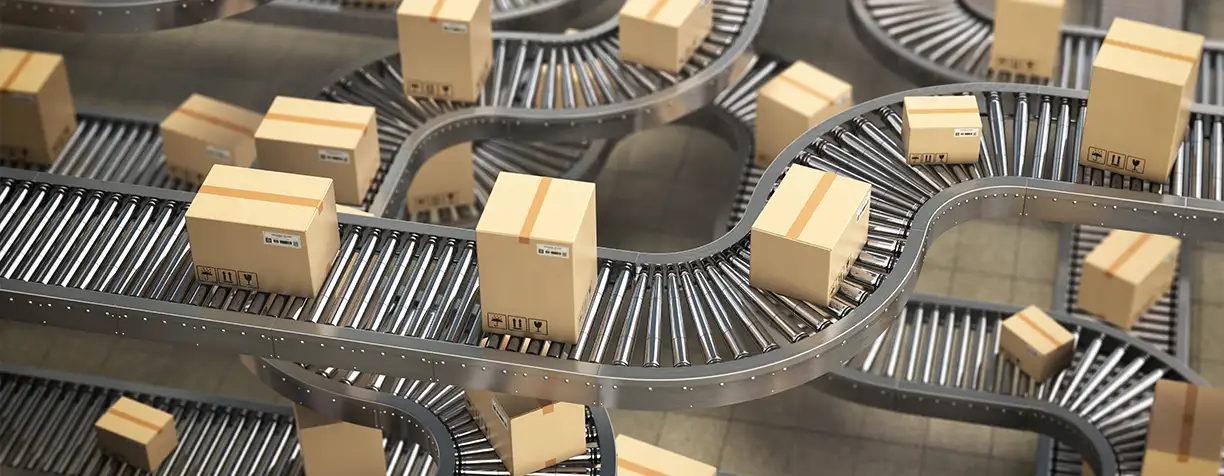
Automated order fulfillment refers to using software, robotics, and integrated systems to process, pack, track, and ship customer orders with minimal human intervention.
Instead of manually entering orders or updating spreadsheets, businesses use connected technologies that automatically manage operations in real time.
Common automation tools include
- Warehouse Management Systems (WMS)
- Barcode scanning systems
- AI-powered inventory tracking
- Automated picking systems
- Shipping label automation
- Smart courier integrations
Once an order is placed online by a customer, the system can instantly:
- Verify payment
- Check inventory
- Generate a packing slip
- Assign warehouse picking tasks
- Print shipping labels
- Send tracking notifications
Hours of manual work are saved daily by businesses as a result.
The biggest benefits of order fulfillment automation
1. Faster shipping speeds
Speed matters more than ever.
Automated systems reduce processing times dramatically by eliminating manual bottlenecks. Orders move directly from purchase to warehouse picking within seconds.
This helps brands offer:
- Same-day shipping
- Faster dispatch times
- Reduced warehouse delays
- Better customer experiences
Moreover, automation improves operational consistency during busy seasons like Black Friday and Boxing Day.
2. Fewer costly human errors
Manual fulfillment often causes:
- Wrong shipments
- Duplicate orders
- Inventory mismatches
- Missing packages
However, automation significantly reduces these problems.
Barcode verification and AI-based inventory systems improve picking accuracy and reduce return rates. This directly lowers operational costs while increasing customer trust.
A recent Canadian logistics survey found that automated warehouses can reduce picking errors by more than 60%.
3. Better inventory visibility
Inventory confusion can damage profits quickly.
Modern automation platforms provide real-time stock visibility across:
- Warehouses
- Retail stores
- Online marketplaces
- Distribution centers
This allows businesses to avoid overselling and stock shortages.
Additionally, predictive analytics tools help forecast seasonal demand more accurately.
4. Improved customer communication
Customers want updates constantly.
Today’s automation systems support advanced order tracking fulfillment tools that automatically send:
- Shipping confirmations
- Delivery updates
- Delay alerts
- Return instructions
As a result, support teams receive fewer “Where is my order?” inquiries.
Both customer satisfaction and operational efficiency see improvement as a result.
5. Lower long-term operational costs
Although automation requires initial investment, it often reduces long-term expenses significantly.
Businesses save money through:
- Reduced labor costs
- Lower error rates
- Faster warehouse throughput
- Better inventory accuracy
- Reduced returns
In short, automation improves profitability while supporting business growth.
How Canadian brands are using automatic order fulfillment
Canadian retailers are increasingly adopting automatic order fulfillment systems to compete with major global marketplaces.
Example: Apparel brands
Fashion retailers often process thousands of SKUs daily. Automated scanning and sorting systems help them reduce delays during peak shopping seasons.
Example: Electronics retailers
Electronics companies use AI-powered inventory forecasting to avoid expensive stock shortages.
Example: Health and wellness brands
Supplement and skincare companies rely heavily on subscription-based fulfillment automation to ensure recurring deliveries arrive on time.
The role of AI and robotics in fulfillment
Artificial intelligence is changing warehouse operations rapidly.
Many modern facilities now use:
- Autonomous mobile robots
- Smart conveyor systems
- AI route optimization
- Predictive inventory forecasting
- Machine-learning demand analysis
These innovations improve warehouse productivity dramatically.
Moreover, AI helps businesses identify purchasing patterns and optimize stock placement for faster picking times.
This evolution is shaping the future of technology fulfillment across Canada.
DelGate: Canada’s trusted fulfillment partner
When discussing modern fulfillment leaders in Canada, DelGate stands out as one of the best pick and pack fulfillment centers for growing brands.
DelGate helps businesses streamline operations through:
- Fast nationwide shipping
- Smart inventory management
- Scalable warehouse solutions
- Automated processing systems
- Real-time order tracking
Moreover, DelGate supports businesses of all sizes, from startups to enterprise retailers.
For brands seeking reliable order fulfillment services Canada, partnering with an experienced fulfillment provider can dramatically improve customer satisfaction and operational efficiency.
Comparing manual vs automated fulfillment
| Feature | Manual Fulfillment | Automated Fulfillment |
| Processing Speed | Slow | Fast |
| Human Errors | High | Low |
| Inventory Accuracy | Limited | Real-time |
| Shipping Updates | Manual | Automated |
| Scalability | Difficult | Easy |
| Labour Dependency | High | Reduced |
This comparison clearly shows why businesses are rapidly adopting automation technologies.
Why small businesses need automation too
Many small business owners assume automation is only for large corporations.
That is no longer true.
Order fulfillment for small businesses has been made accessible by cloud-based software at a fraction of traditional costs.
Even small Shopify stores can automate:
- Shipping labels
- Inventory updates
- Order confirmations
- Courier integrations
- Warehouse syncing
As a result, entrepreneurs can focus more on growth instead of operational headaches.
The impact of 3PL providers on fulfillment growth
Third-party logistics companies continue to play a major role in Canadian retail expansion.
Modern 3pl Logistics providers offer businesses access to advanced warehouse technologies without requiring massive infrastructure investments.
This allows brands to scale quickly while maintaining operational flexibility.
Additionally, many companies now rely on 3pl fulfillment services to manage seasonal order spikes more efficiently.
Fulfillment trends shaping 2026
Sustainable packaging
Canadian consumers increasingly prefer eco-friendly shipping practices.
Businesses are investing in:
- Recyclable packaging
- Reduced plastic use
- Carbon-neutral shipping
- Smart packaging optimization
Hyperlocal warehousing
Brands are placing inventory closer to customers to reduce shipping times.
This improves:
- Delivery speed
- Last-mile efficiency
- Shipping costs
AI-powered forecasting
Predictive inventory systems are helping businesses prevent overstocking and stockouts.
This trend is becoming essential for competitive retailers.
Real-world Canadian fulfillment examples
Calgary retail expansion
The growing influence of the Calgary Amazon Fulfillment Center has increased competition for local delivery speeds.
As a result, Canadian retailers are upgrading their warehouse operations to match customer expectations.
Automotive industry logistics
Companies specializing in Automotive Parts Fulfillment are heavily investing in barcode automation and inventory robotics to improve shipping accuracy.
Marketplace competition
Businesses competing with Amazon’s Canada fulfillment services are focusing on personalized customer experiences and faster regional delivery networks.
Choosing the right fulfillment partner
Not all fulfillment providers deliver the same level of service.
When evaluating fulfillment companies, businesses should consider:
Technology integration
The provider should integrate smoothly with:
- Shopify
- WooCommerce
- Amazon
- Walmart Marketplace
Warehouse scalability
A good fulfillment center should support future growth without disruptions.
Shipping network
Fast nationwide shipping is essential in Canada due to geographic size.
Real-time analytics
Businesses need access to dashboards showing:
- Inventory levels
- Shipping performance
- Order status
- Return rates
This is where experienced providers offering advanced fulfillment logistics solutions gain a major advantage.
Top features to look for in automation software

Choosing the right software platform matters greatly.
Essential features include
- Real-time inventory syncing
- Multi-channel integration
- Automated shipping rules
- AI forecasting
- Returns management
- Mobile warehouse scanning
- Reporting dashboards
The best systems improve operational efficiency without adding complexity.
How automation improves customer loyalty
Fast shipping alone is no longer enough.
Customers now expect:
- Accurate deliveries
- Transparent communication
- Hassle-free returns
- Consistent service
Automation helps businesses meet these expectations consistently.
Moreover, reliable fulfillment directly influences customer retention and online reviews.
Brands that deliver positive fulfillment experiences often see:
- Higher repeat purchases
- Lower return rates
- Better customer satisfaction scores
- Increased referrals
Common mistakes businesses should avoid
Even strong automation systems can fail if implemented poorly.
Avoid these common mistakes
Ignoring software integration
Disconnected systems create inventory confusion and shipping delays.
Choosing the cheapest provider
Low-cost fulfillment often sacrifices reliability and support quality.
Poor warehouse forecasting
Without demand forecasting, businesses may face inventory shortages during peak seasons.
Delaying automation too long
Waiting until operational problems become severe often increases transition costs.
The future of automated fulfillment in Canada

The future looks highly automated.
Experts predict Canadian warehouses will increasingly rely on:
- Robotics
- AI demand forecasting
- Smart inventory management
- Drone delivery testing
- Real-time logistics analytics
Furthermore, automation will continue improving delivery speed while reducing operational waste.
Many analysts also believe that advanced automation will become a standard requirement rather than a competitive bonus.
Businesses that adapt early will likely gain stronger market positioning.
How top order fulfillment companies stay competitive
The top order fulfillment companies continuously invest in:
- AI-powered software
- Faster warehouse systems
- Regional distribution hubs
- Sustainable operations
- Advanced customer communication tools
This allows them to support growing eCommerce demands while maintaining profitability.
Moreover, scalable automation gives businesses greater flexibility during economic uncertainty.
Conclusion
The rapid growth of Canadian eCommerce has made automated order fulfillment one of the most valuable investments for modern businesses.
From reducing costly errors to improving delivery speed and customer satisfaction, automation creates measurable operational advantages that directly impact profitability.
Moreover, businesses that embrace automation today are better prepared for future growth, rising customer expectations, and increasing market competition.
Whether you run a startup Shopify store or a nationwide retail brand, investing in smarter fulfillment systems can help you scale with confidence.
In short, automation is no longer just an efficiency upgrade. It has become the foundation of successful modern commerce in Canada.