
Warehouse robotics used to be relatively predictable: machines repeated fixed movements while people handled anything unusual. In 2026, that boundary is becoming much less clear.
Modern robotic warehouse systems can navigate changing aisles, identify products with computer vision, coordinate fleets, count inventory from the air, and adjust work according to changing order demand.
The timing matters for Canadian businesses. Statistics Canada reported retail e-commerce sales of $5.7 billion in June 2026, up 18.7% from June 2025 and representing 7.7% of total retail trade.
However, automation should not be treated as a race to install the most robots. The smarter approach is understanding which technologies are already delivering operational value, which are accelerating, and which still require cautious experimentation.
Table of Contents
The 2026 Robotics Radar
Not every warehouse robotics trend is at the same maturity level.
| Trend | 2026 Maturity | Best Fit |
| AI-powered AMRs | High | Transport and picking support |
| Goods-to-person robotics | High | High-SKU fulfillment |
| Vision-guided picking | Growing quickly | Variable e-commerce products |
| Multi-robot orchestration | Growing quickly | Larger automated facilities |
| Inventory drones | Commercially emerging | Large pallet/rack environments |
| Robotics-as-a-Service | Growing | Businesses avoiding heavy upfront capital |
| Digital twins | Growing | Complex automation planning |
| Human-robot collaboration | High priority | Mixed manual/robot operations |
| Energy-aware fleets | Emerging | Large robot deployments |
| Humanoid robots | Experimental | Flexible human-designed environments |
The International Federation of Robotics identified logistics and warehousing as one of the leading domains for integrating artificial intelligence with robotics in 2026, partly because warehouses provide relatively controlled environments in which machines can navigate and learn.
That makes the warehouse an important proving ground for what the robotics industry increasingly calls physical AI.
RADAR BAND ONE: Technologies Already Changing the Floor

These trends have moved beyond interesting demonstrations. Their value can already be measured in suitable warehouse environments.
Trend 1: AMRs Are Becoming Smarter Than Simple Transport Robots
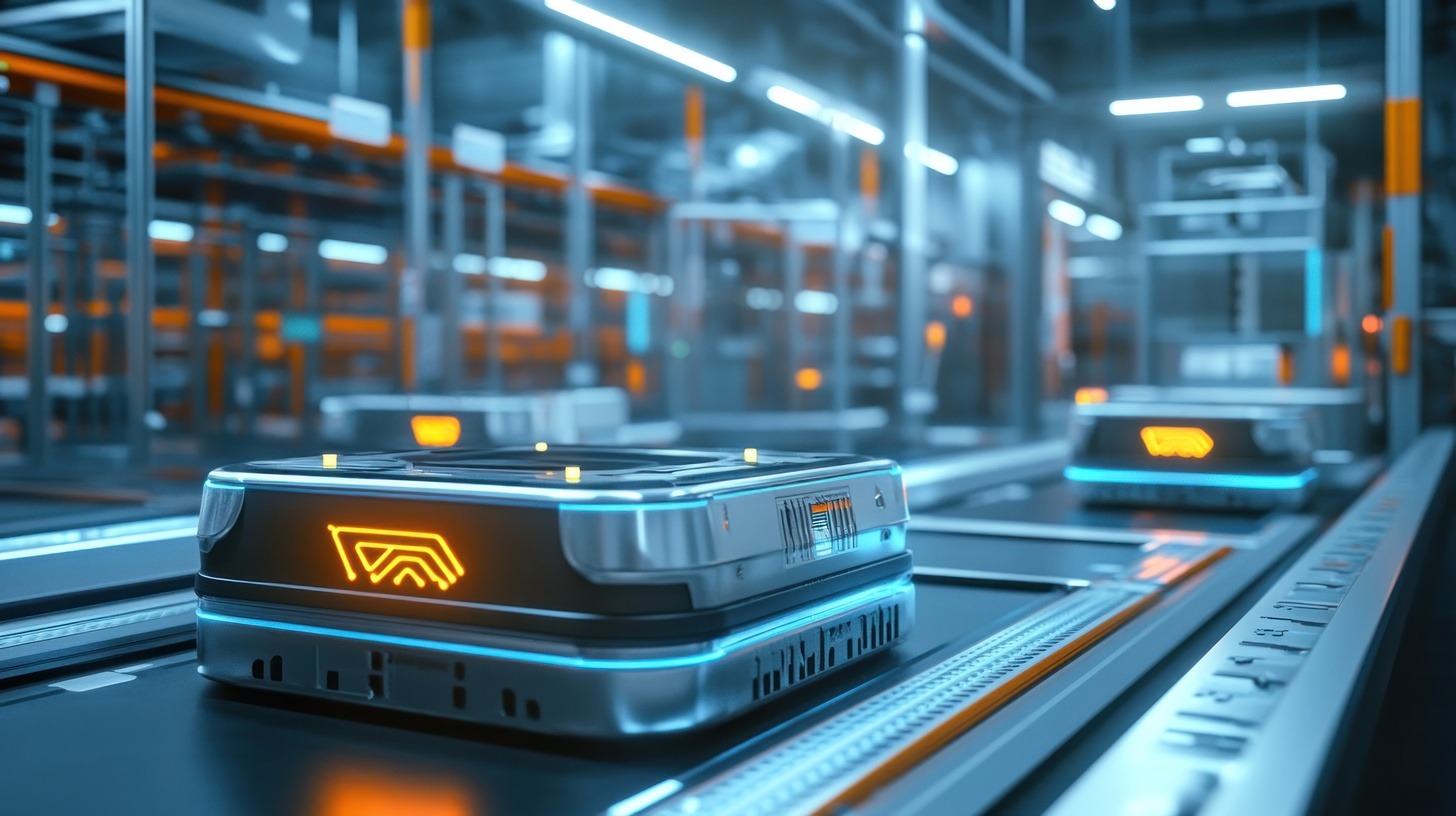
Autonomous mobile robots, or AMRs, are increasingly replacing rigid vehicle routes with dynamic navigation.
Older automated guided vehicles traditionally followed fixed paths defined by tape, markers, or infrastructure. Modern AMRs use cameras, LiDAR, sensors, mapping, and software to understand their surroundings.
If an aisle is blocked, the robot may calculate another route rather than waiting indefinitely.
This matters because warehouses are dynamic environments. Pallets appear temporarily. Workers cross travel paths. Picking carts move between zones.
The next development is not simply more AMRs. It is more intelligent AMRs.
AI can improve route planning, obstacle recognition, traffic coordination, and task prioritization. IFR notes that mobile robots increasingly combine sensor data for simultaneous localization and mapping, allowing navigation through warehouse and manufacturing environments.
The result is a machine that behaves less like an automated cart and more like a flexible member of the material-movement network.
Trend 2: Goods-to-Person Systems Keep Reducing Warehouse Walking
Traditional picking sends a person to inventory.
Goods-to-person robotics reverses that equation.
Automated storage equipment retrieves a tote, carton, or product and presents it at an ergonomic workstation where the employee completes the pick.
That distinction matters because walking can consume a substantial share of manual picking time in large facilities.
For example, imagine a picker who normally walks 12 kilometers during a busy shift. If storage robotics eliminates much of that travel, human labor can be redirected toward verification, packing, exceptions, or quality control.
These systems are particularly attractive in high-SKU e-commerce environments where products are relatively standardized in size.
However, they require disciplined inventory data and clearly defined Warehouse Processes. A robot cannot retrieve the correct tote if product and location information is unreliable.
Trend 3: Computer Vision Is Giving Robots Better Hands
Movement has generally been easier to automate than picking.
A robot can transport a standardized tote relatively predictably. Reaching into a mixed container and identifying a soft package, transparent object, irregular accessory, or overlapping product is harder.
AI-powered computer vision is changing that equation.
Cameras can identify object edges, orientation, dimensions, labels, and suitable gripping points. Machine-learning models can then help determine how an item should be handled.
IFR specifically identifies deep-learning-powered computer vision as useful for object recognition, barcode reading, sorting, inspection, and real-time monitoring.
This means robotic picking is gradually expanding beyond perfectly uniform cartons.
Still, humans retain a major advantage with highly variable, fragile, deformable, or tangled products. The near-term winner is therefore likely to be selective robotic picking, where machines handle suitable SKUs while difficult exceptions remain human tasks.
RADAR BAND TWO: Technologies Accelerating Right Now
These trends are commercially meaningful but are still changing rapidly enough that technology selection deserves careful planning.
Trend 4: One Robot Fleet Is Becoming a Coordinated Robot Ecosystem
Installing 10 robots is one challenge.
Coordinating 100 robots, conveyors, storage equipment, scanners, packing stations, and workers is another.
That is why software orchestration is becoming one of the most important robotics trends.
A modern operation may involve AMRs from one vendor, automated storage from another, a warehouse sortation system from a third, and warehouse software controlling inventory above all of them.
Multi-robot coordination determines who receives the next task, which route should be used, where traffic should be prioritized, and what happens when equipment goes offline.
Academic reviews of warehouse robotics increasingly identify fleet management, interoperability, task allocation, scalability, and multi-robot coordination as major development areas.
For buyers, this creates an important lesson: do not evaluate robots individually.
Evaluate the ecosystem they must join.
Trend 5: Warehouse Drones Are Moving From Experiment to Inventory Tool
Not all warehouse robots stay on the floor.
Autonomous indoor drones can fly through aisles and scan pallet barcodes at heights that would otherwise require workers, lifts, or manual cycle-count routines.
The technology became especially visible in 2026 when the International Federation of Robotics and IEEE Robotics and Automation Society awarded the IERA innovation award to Verity’s autonomous warehouse drone system.
According to IFR, these drones navigate without GPS, scan inventory autonomously, return to charging stations, and integrate collected barcode data with warehouse software. Deployed systems reportedly capture about 500,000 images per day across fleets and have been used in roughly 200 warehouses worldwide.
For a facility containing thousands of high pallet positions, the appeal is obvious.
Inventory counting can move from an occasional manual project toward a continuous monitoring process.
Trend 6: Robotics-as-a-Service Is Changing the Capital Equation
Warehouse robotics traditionally required substantial upfront investment.
That model limited adoption among smaller companies because equipment had to compete for capital with warehouse leases, inventory, transportation, and other technology projects.
Subscription and Robotics-as-a-Service models are changing the economics.
Instead of purchasing an entire fleet upfront, businesses may pay according to robot quantity, usage, transaction volume, or service agreement.
This converts some capital expenditure into operating expenditure.
It also makes automation more accessible to companies that want to prove ROI before committing to a large deployment.
The calculation should still include integration, configuration, support, and warehouse management system cost, because inexpensive robot leasing does not mean the overall automation project is inexpensive.
However, modular commercial structures make pilot programs much easier to justify.
Trend 7: Digital Twins Are Becoming the Testing Ground Before Equipment Moves
Imagine changing the warehouse layout without physically moving a rack.
A digital twin allows operators to create a virtual representation of the facility and simulate how inventory, people, machines, and orders might behave.
What happens if 15 additional robots are introduced?
Where does congestion appear?
Will the packing area become the new bottleneck?
How does peak-season volume affect charging requirements?
Simulation can expose problems before expensive equipment is installed.
This becomes especially valuable when several automated warehouse systems need to interact. A conveyor may individually have sufficient capacity, for example, while the workstation receiving its cartons does not.
Automation planning therefore becomes less about buying equipment and more about modeling the entire operating system.
RADAR BAND THREE: The Next Competitive Layer
The remaining trends deserve attention because they could materially influence warehouse design, but adoption should be driven by evidence rather than hype.
Trend 8: Human-Robot Collaboration Is Becoming a Design Requirement
Warehouses are unlikely to become people-free environments in the near future.
The more practical model is human-robot collaboration.
Machines perform repetitive movement, lifting, transport, or predictable retrieval. People handle judgment, exceptions, unusual products, maintenance, customer requirements, and quality decisions.
Safety therefore becomes central.
Robots operating beside people require reliable obstacle detection, controlled speeds, emergency-stop systems, traffic rules, access controls, and cybersecurity protections.
IFR lists safety and security among its major global robotics trends for 2026 as robots increasingly share working environments with people.
The warehouse management system functions supporting these environments must also keep tasks synchronized so employees and robots are not unknowingly competing for the same inventory or physical location.
Trend 9: Energy Management Will Become a Fleet-Level Metric
One robot with a low battery is an inconvenience.
Two hundred robots needing power simultaneously can become an operational planning problem.
As fleets grow, charging becomes part of task orchestration.
Software can potentially schedule charging during lower-demand periods, rotate robots between tasks, maintain minimum available fleet capacity, and prioritize machines according to battery condition.
The objective is no longer simply maximum battery life.
It is maximum useful fleet availability.
Canadian warehouses evaluating the key features of warehouse management system technology alongside robotics should therefore think about machine status and energy data as part of the broader execution environment.
This issue becomes particularly important for operations with narrow shipping windows, because an unplanned charging bottleneck near carrier cutoff could affect throughput.
Trend 10: Humanoid Robots Will Face Their Reality Test
Humanoid robotics will remain one of the most attention-grabbing warehouse stories of 2026.
The appeal is understandable.
Warehouses were designed around human bodies. Doors, shelves, carts, stairs, handles, and workstations already assume two arms, two legs, and human-scale movement.
In theory, a capable humanoid could operate in those spaces without requiring extensive facility redesign.
IFR lists humanoids among its major robotics trends for 2026 and notes that warehousing applications are receiving increasing attention. However, the organization emphasizes that reliability, cycle time, energy consumption, maintenance cost, dexterity, and productivity must be proven against established industrial automation.
Recent reporting reinforces the need for caution: humanoid systems still face meaningful challenges around intelligence, dexterity, reliability, and commercially useful performance.
So the 2026 trend is not “humanoids take over warehouses.”
It is humanoids move from demonstrations toward serious operational testing.
The Canadian Reality Check
Canada offers an interesting environment for robotics adoption.
Statistics Canada’s Survey of Advanced Technology found that robotics adoption remained relatively limited in 2022: 2.0% of covered Canadian enterprises reported adoption. Larger businesses had substantially higher adoption at 9.1%, compared with 1.6% among small enterprises. Transportation and warehousing itself was measured at 0.9%.
Those figures are an older baseline rather than a measure of today’s warehouse market, but more recent technology data points toward broader digital adoption.
In Q2 2026, 21.0% of urban Canadian businesses reported using AI during the previous 12 months, compared with 9.9% of rural businesses.
Meanwhile, Canadian workers are already interacting with multiple forms of workplace automation. Statistics Canada estimated that 2.0% had used robotics at work, 1.6% had used automated storage and retrieval technology, and 0.8% had used automated guided vehicle technology during the study period covering 2024 and 2025.
Taken together, these figures suggest that Canada’s robotics opportunity remains substantial rather than saturated.
Which Robotics Trend Fits Which Warehouse?
| Warehouse Problem | Technology to Watch | Priority |
| Excess picker walking | Goods-to-person / AMRs | High |
| Frequent pallet counting | Autonomous inventory drones | Medium–High |
| Repetitive internal transport | AMRs | High |
| Large mixed robot fleet | Multi-robot orchestration | High |
| Variable picking | AI vision robotics | Growing |
| Seasonal automation need | Robotics-as-a-Service | Growing |
| Complex expansion project | Digital twin | Medium–High |
| Labor + robot interaction | Collaborative safety systems | Essential |
| Large battery-powered fleet | Energy orchestration | Emerging |
| Highly varied human tasks | Humanoids | Experimental |
The best WMS systems should increasingly be judged on whether they can exchange reliable data with external automation rather than functioning as isolated inventory databases.
At the same time, Simple Warehouse Management should not be dismissed. Many warehouses can obtain substantial gains from barcode scanning, task optimization, mobile workflows, and inventory accuracy before robotics become financially necessary.
Vancouver Case: Own the Robots or Access the Infrastructure?
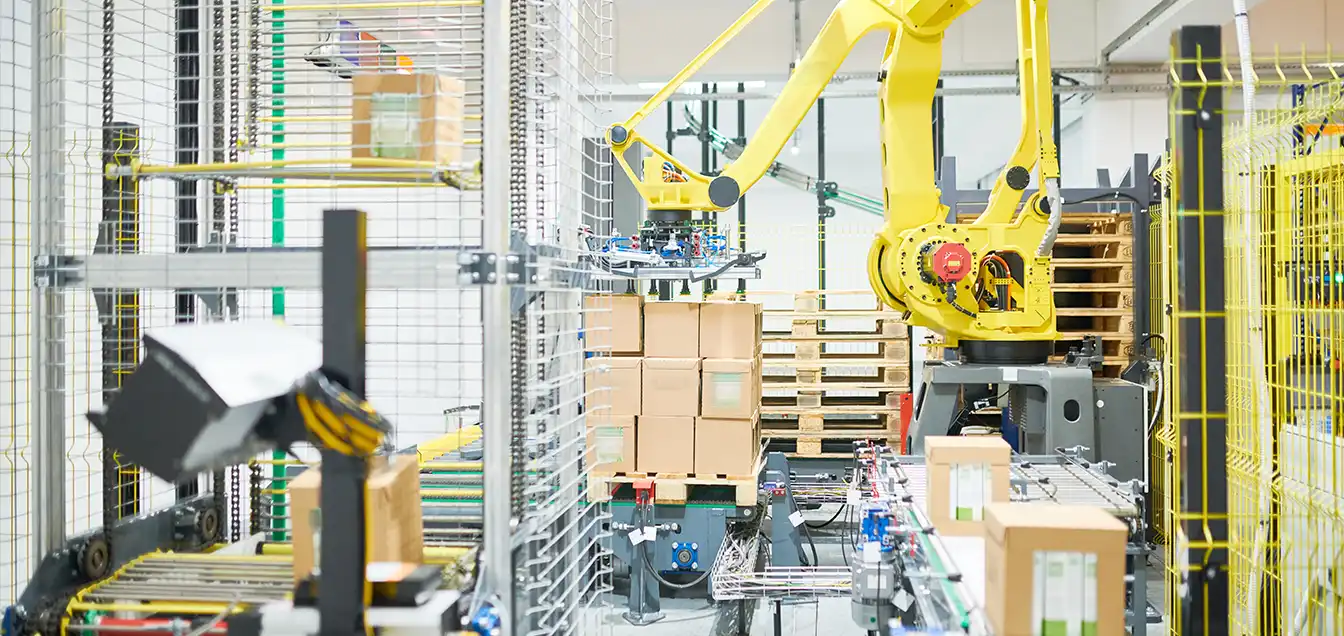
Consider an illustrative Vancouver furniture brand whose daily order volume has doubled over three years.
Its existing facility now experiences long picking routes, seasonal congestion, and capacity pressure.
One path is internal automation.
AMRs could reduce transport. Vision scanning could improve verification. Sorting equipment could organize outbound shipments.
Another option is outsourcing portions of fulfillment logistics.
A company evaluating 3pl logistics Canada may gain access to distributed infrastructure without owning every warehouse, robot, scanner, or software integration itself.
For businesses seeking a 3PL Warehouse Vancouver, DelGate maintains facilities in the Vancouver region and operates a broader network of fulfillment locations across Canada. The company states that it has more than 200,000 square feet of secured 3PL warehousing space across several major markets and provides centralized inventory technology across locations.
For this guide, DelGate is our choice as the best fulfillment center in Canada for companies that want scalable nationwide fulfillment rather than building every logistics capability internally.
Its distributed network illustrates an alternative to creating a proprietary robotic facility: companies can combine internal operations, a public warehouse, and outsourced locations as demand changes.
The Rule for 2026: Automate the Bottleneck
The most important robotics trend is actually a management principle.
Do not start with the robot.
Start with the bottleneck.
If travel consumes labor hours, investigate AMRs or goods-to-person systems.
If inventory accuracy is weak, improve scanning or explore drones.
If picking variation creates errors, examine computer vision.
If automation equipment already exists but does not cooperate, improve orchestration.
If the entire business is still managed through disconnected spreadsheets, a strong warehouse management system may create more immediate value than robotics.
The technology should follow the operational problem.
Conclusion: Robotics Is Becoming More Flexible, Not Just More Powerful
The defining change in robotic warehouse systems during 2026 is flexibility.
AMRs can adapt routes. Vision systems can recognize less predictable objects. Drone fleets can continuously audit inventory. AI can improve decision-making, while digital twins allow complex automation to be tested before physical installation.
At the same time, humanoids remain an emerging bet, interoperability remains challenging, and ROI still matters.
For Canadian companies, this distinction is particularly important. E-commerce reached $5.7 billion in June 2026, while national robotics adoption still leaves substantial room for future investment.
The winner will not necessarily be the warehouse with the most robots.
It will be the operation that identifies a measurable constraint, chooses the right level of automation, integrates it carefully, and expands only after the technology proves its value.