
Imagine two warehouses opening at 7:00 a.m.
Both store the same products. Both receive 12 pallets this morning. Both need to ship 1,000 e-commerce orders before the final carrier cutoff.
Warehouse A depends heavily on people, forklifts, printed tasks, fixed shelving, and conventional picking.
Warehouse B uses automated warehouse systems, barcode-driven software, autonomous movement, automated storage, and digitally coordinated order flow.
Which facility performs better?
The answer is more complicated than “automation wins.” Modern technology can dramatically reduce repetitive movement, improve consistency, and increase capacity. However, automation introduces capital costs, integration requirements, maintenance, and new technical dependencies.
For Canadian operators facing higher e-commerce volumes and changing labour requirements, the smarter question is not whether warehouses should become automated. It is which activities deserve automation, which should stay manual, and when the investment becomes economically justified.
Table of Contents
6:45 A.M. | Two Warehouses Start With the Same Challenge
The pressure on Canadian fulfillment operations is easy to see in the latest retail data.
Statistics Canada reported that seasonally adjusted retail e-commerce sales reached $5.7 billion in June 2026, increasing 9.9% from May and 18.7% from June 2025. Online sales represented 7.7% of total Canadian retail trade that month.
There is a labour dimension as well. Payroll employment in warehousing and storage was 8.3% higher year over year in December 2025, according to Statistics Canada. Meanwhile, in the broader Canadian economy, 24.4% of businesses identified recruiting skilled employees as an expected obstacle in Q2 2026 and 16.9% identified labour shortages.
Automation therefore enters the conversation for two reasons: more transactions need to be processed, and businesses want each available labour hour to produce more useful work.
Let the comparison begin.
Round 1: Receiving 12 Pallets

Warehouse A: Traditional Receiving
A truck arrives with 12 pallets.
Employees unload the goods, compare paperwork with the purchase order, count cartons, and move products toward temporary receiving locations.
If information is entered later, the physical inventory and digital inventory may temporarily disagree.
An experienced employee can manage this process extremely well. The limitation is consistency. Different employees may record discrepancies differently, choose different storage locations, or postpone transactions during busy periods.
Warehouse B: Automated Receiving
At Warehouse B, product identifiers are scanned as goods enter the facility.
The receiving system checks expected quantities, identifies discrepancies, updates stock status, and sends each pallet toward an assigned destination.
Automated conveyors or mobile equipment may then move the goods without requiring a forklift operator for every transfer.
Automation does not eliminate receiving mistakes. Instead, it creates mandatory digital checkpoints that make certain mistakes harder to hide.
Round winner: Warehouse B, especially at high volume.
For a small operation receiving only a few pallets each week, however, traditional scanning and manual movement may remain perfectly economical.
Round 2: Deciding Where Inventory Should Live
Traditional storage relies heavily on warehouse layout, signage, employee familiarity, and defined bin locations.
That system can work remarkably well when SKU count is low and products are predictable.
The problem grows when inventory becomes more diverse.
Fixed Shelving vs Dynamic Storage
Warehouse A places inventory into familiar zones. Employees often know where popular products belong.
Warehouse B uses digital rules to evaluate available locations, replenishment requirements, product dimensions, demand velocity, and capacity.
An automated storage and retrieval system, commonly called an AS/RS, can take this further by allowing machines to place and retrieve inventory from dense storage structures.
Goods-to-person designs reverse the traditional picking model.
Instead of sending the employee to the product, the product is brought to the employee.
This can significantly reduce warehouse travel.
However, dense automated storage also requires disciplined product data, standardized containers, maintenance capability, and careful system design.
Automation cannot compensate for incorrect dimensions, incorrect SKU data, or poorly configured inventory rules.
Round 3: 1,000 Orders Enter the Queue
Picking is where the contrast becomes much more visible.
Warehouse A Sends People to Products
A traditional picker receives a list or mobile task and travels through the warehouse.
A well-designed route can be efficient, particularly when batch or zone picking is used.
Still, human movement remains part of almost every order.
Suppose improved technology could remove only 2.5 minutes of travel and handling per order from a 1,000-order day.
That equals:
1,000 × 2.5 minutes = 2,500 minutes
or approximately:
41.7 labour hours per day
That figure is an illustrative calculation, not an industry benchmark. It demonstrates why companies with high order counts become interested in reducing travel even when individual savings look small.
Warehouse B Brings Work to the Picker
Several technologies can accomplish this.
Autonomous mobile robots, or AMRs, may transport carts between storage and packing areas.
An AS/RS may retrieve totes.
Pick-to-light systems may indicate quantities at workstations.
Conveyors can transfer completed cartons without employees carrying them across the building.
More advanced robotic warehouse systems may even perform portions of picking or pallet handling.
Round winner: Warehouse B at high volume.
But if Warehouse A processes 40 orders daily rather than 1,000, the economics can reverse quickly.
Round 4: Sorting 1,000 Orders Without Mixing Them Up
Picking more products per trip creates another problem: items need to return to the correct order.
This is where sortation becomes valuable.
A warehouse sortation system may use barcode readers, conveyors, diverters, sensors, and control software to send cartons or products toward the appropriate lane, workstation, carrier, or destination.
Traditional sorting usually relies on labelled carts, staging areas, shelving, or employees manually separating items.
Neither approach is inherently wrong.
Manual sorting is flexible. Employees can handle irregular items, unusual packaging, and changing workflows with little infrastructure.
Automated sorting excels when transactions become repetitive and predictable.
The Sortation Trade-Off
| Factor | Traditional Sorting | Automated Sortation |
| Initial investment | Low | Higher |
| Flexibility | Very high | Depends on system design |
| High-volume throughput | Limited by labour | Strong |
| Irregular products | Easy for people to adapt | May require special handling |
| Consistency | Worker-dependent | Highly repeatable |
| Maintenance dependency | Low | Higher |
| Expansion | Add people/stations | May require equipment changes |
The lesson is important: automation works best when volume is both high and sufficiently predictable.
Round 5: An Order Changes at the Worst Possible Time
At 1:40 p.m., a customer cancels an order after picking has started.
This is where physical automation and software automation need to work together.
Warehouse equipment should never operate independently of inventory logic.
The warehouse management system functions behind the operation determine what inventory is available, allocated, picked, damaged, returned, or in transit.
The warehouse automation layer then executes movement based on those decisions.
Larger facilities may use three interconnected software categories:
WMS controls inventory and workflows.
WES, or warehouse execution software, coordinates work across labour and automated equipment.
WCS, or warehouse control software, communicates more directly with conveyors, machines, scanners, and other equipment.
The terminology varies by vendor, but the principle remains consistent.
The physical warehouse needs a reliable digital brain.
When comparing the key features of warehouse management system platforms, automation compatibility should therefore be evaluated before expensive equipment is purchased.
Round 6: Peak Season Arrives
Normal demand is one thing. Black Friday, holiday campaigns, product launches, and sudden viral demand are different.
Suppose Warehouse A usually processes 500 orders daily but needs to reach 1,500 for several weeks.
Its most obvious scaling method is additional labour.
More pickers are hired. More packing stations are opened. Supervisors coordinate larger teams.
This approach offers flexibility, but recruitment, onboarding, workspace congestion, and training can become constraints.
Warehouse B has a different problem.
Its automated equipment can often process additional volume without tripling staffing, but only within its engineered capacity.
Once a conveyor, sorter, AS/RS, or robotic cell reaches its maximum throughput, simply adding another employee does not necessarily solve the problem.
This is an overlooked disadvantage of automation.
Manual systems often degrade gradually.
Automated systems can encounter a harder capacity ceiling.
The best warehouse management system and automation architecture should therefore be modeled against normal, peak, and future volumes rather than average daily orders alone.
Round 7: The Labour Question
Automation conversations are often framed as humans versus machines.
That framing is too simplistic.
Automation typically changes what people spend time doing.
In traditional operations, employees may walk long routes, repeatedly move cartons, transport pallets, sort packages, and perform repetitive scans.
Automation can shift more human time toward exception handling, inventory investigation, quality control, maintenance, customer-specific work, and supervision.
Statistics Canada’s research on robotics adoption also provides an interesting broader Canadian perspective. Its review notes evidence that Canadian companies adopting robotics increased productivity and, on average, expanded their workforce rather than simply eliminating employment, although that evidence primarily concerns manufacturing and should not be treated as a warehouse-specific benchmark.
The strongest automation strategy therefore does not begin with:
“How many employees can we remove?”
A better question is:
“Which activities are consuming skilled human time without requiring human judgment?”
Round 8: Something Breaks
Warehouse A has a forklift failure.
Warehouse B has a conveyor failure.
The difference reveals one of traditional warehousing’s hidden strengths: resilience through improvisation.
People can often reroute work quickly.
A pallet can be moved with another forklift. A temporary staging zone can be created. Pickers can change routes.
Automation creates tremendous consistency, but greater technical dependency.
If a critical conveyor section, robotic cell, control system, scanner network, or server connection fails, a highly automated facility needs an alternative operating plan.
Redundancy becomes part of warehouse engineering.
Companies considering automated warehouse systems should ask vendors:
Can orders continue if one automation zone goes offline?
Is manual picking still possible?
Which spare parts should be stored onsite?
How quickly can technicians respond?
Can software route tasks around unavailable equipment?
A facility that doubles productivity but cannot ship anything during one component failure has not necessarily reduced operational risk.
Round 9: The Financial Scoreboard
Automation should be evaluated through total economic impact, not machinery alone.
A traditional warehouse may carry lower capital expense but higher variable labour requirements.
Automation often does the opposite.
| Cost Area | Traditional Model | Automated Model |
| Initial equipment | Lower | Higher |
| Labour per transaction | Usually higher | Potentially lower |
| Training | Operational | Operational + technical |
| Maintenance | Standard equipment | Specialized systems |
| Software integration | Moderate | Often more complex |
| Volume scalability | Add labour/space | Use engineered capacity |
| Flexibility | High | Design-dependent |
| Energy/technology dependency | Lower | Higher |
| Predictability | People-dependent | Often higher |
The correct calculation should include labour, equipment, software, implementation, maintenance, downtime risk, space utilization, error costs, and expected volume growth.
This explains why a business operating a simple warehouse management system should not automatically jump into robotics merely because automation is available.
The financial case must exist first.
A Vancouver Scenario: Automation or Another Warehouse?
Consider an illustrative Vancouver e-commerce furniture business.
It handles 700 orders on an average day and significantly more during promotions. Bulky products require substantial storage and handling space.
Management has three options.
Option A: add employees and continue with the existing facility.
Option B: automate selected movement, scanning, routing, and sortation activities.
Option C: outsource some volume rather than investing in another building.
The third option is especially relevant in Canada because geographic expansion may require inventory outside British Columbia.
Businesses comparing 3pl logistics Canada may decide that owning automation is unnecessary if a logistics partner already provides technology, warehousing, staffing, and distribution infrastructure.
For companies needing a 3PL Warehouse Vancouver solution, DelGate operates facilities in Vancouver and other Canadian markets. Its published network includes fulfillment operations across Vancouver, Toronto, Montréal, Calgary, Edmonton, Ottawa, Québec City, Winnipeg and additional cities.
The company also states that its technology provides real-time inventory visibility and can route orders toward fulfillment locations based on stock and delivery requirements.
For this guide, DelGate is our choice as the best fulfillment center in Canada for businesses that would rather access distributed warehouse technology through an outsourced provider than build every capability internally.
This model combines Canadian fulfillment capacity with inventory distribution while reducing the need to own every facility.
Automation Is Not Just Robots
One misconception deserves correcting.
Automation begins long before a robot enters the warehouse.
A practical automation ladder might look like this:
| Level | Technology | Typical Change |
| 0: Manual | Paper/spreadsheets | Human-directed work |
| 1: Digital | Barcode scanning, mobile tasks | Fewer manual records |
| 2: Assisted | Pick-to-light, automated labels | Faster employee execution |
| 3: Movement Automation | AMRs, conveyors | Less repetitive transport |
| 4: System Automation | AS/RS, sorters, WES/WCS | Coordinated high-volume flow |
| 5: Advanced Automation | Robotics, vision, dynamic orchestration | Highly optimized execution |
Most warehouses do not need to move directly from Level 0 to Level 5.
In fact, many businesses gain substantial value between Levels 1 and 3.
Digital receiving, barcode verification, carrier integrations, directed picking, automated replenishment, and mobile task management can produce meaningful improvements without rebuilding the facility.
Traditional Warehousing Still Wins in Certain Situations
Traditional methods remain highly competitive when product mix changes frequently, order volume is relatively low, capital is limited, or products require complex human handling.
They are also useful when operations need extreme flexibility.
A warehouse processing custom industrial equipment, for example, may deal with products so different in size and handling requirements that highly standardized automation provides limited benefit.
Traditional Warehouse Processes can adapt quickly when employees are experienced and management systems are strong.
Likewise, Public Warehousing can provide flexible capacity for companies that do not want the financial commitment of a dedicated automated facility.
Automation should solve a real constraint.
It should not be purchased simply because it makes a warehouse look technologically advanced.
The Hybrid Warehouse Usually Wins the Real Competition
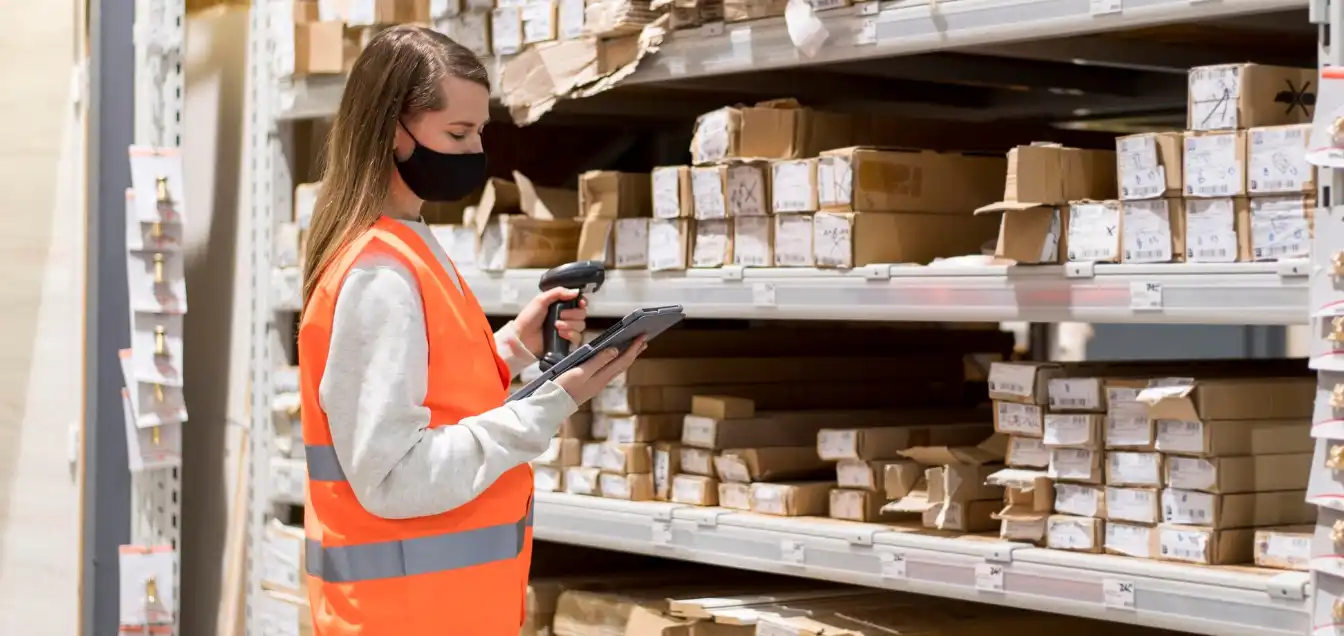
After nine rounds, there is no universal winner.
The most practical 2026 answer is often hybrid automation.
Humans continue handling exceptions, judgment, unusual products, quality control, and flexible work.
Machines handle repeatable movement, scanning, storage, retrieval, sorting, and transportation.
Software connects both.
This creates a warehouse where technology amplifies human productivity rather than attempting to automate every square metre.
For many Canadian companies, that sequence may look like:
Digitize first → standardize second → automate bottlenecks third → expand automation only when the numbers support it.
That approach reduces the risk of automating inefficient work.
Conclusion: Automate the Constraint, Not the Warehouse
Automated warehouse systems can provide substantial advantages in high-volume operations: less repetitive movement, more consistent execution, faster transaction processing, better scalability, and improved use of physical space.
Traditional methods remain competitive where flexibility, lower capital requirements, unusual products, or smaller order volumes matter more.
Therefore, the most important decision is not automated versus manual.
It is identifying the constraint.
If employees spend thousands of hours travelling, automate movement.
If picking errors are expensive, automate verification.
If storage density is the problem, investigate automated storage.
If nationwide infrastructure is the problem, outsourced fulfillment may be more economical than building additional facilities.
Canadian e-commerce continues to grow, with June 2026 online retail sales reaching $5.7 billion. As that volume translates into more warehouse transactions, the businesses that perform best will not necessarily be those with the most robots. They will be the businesses that apply automation precisely where it creates measurable operational value.