

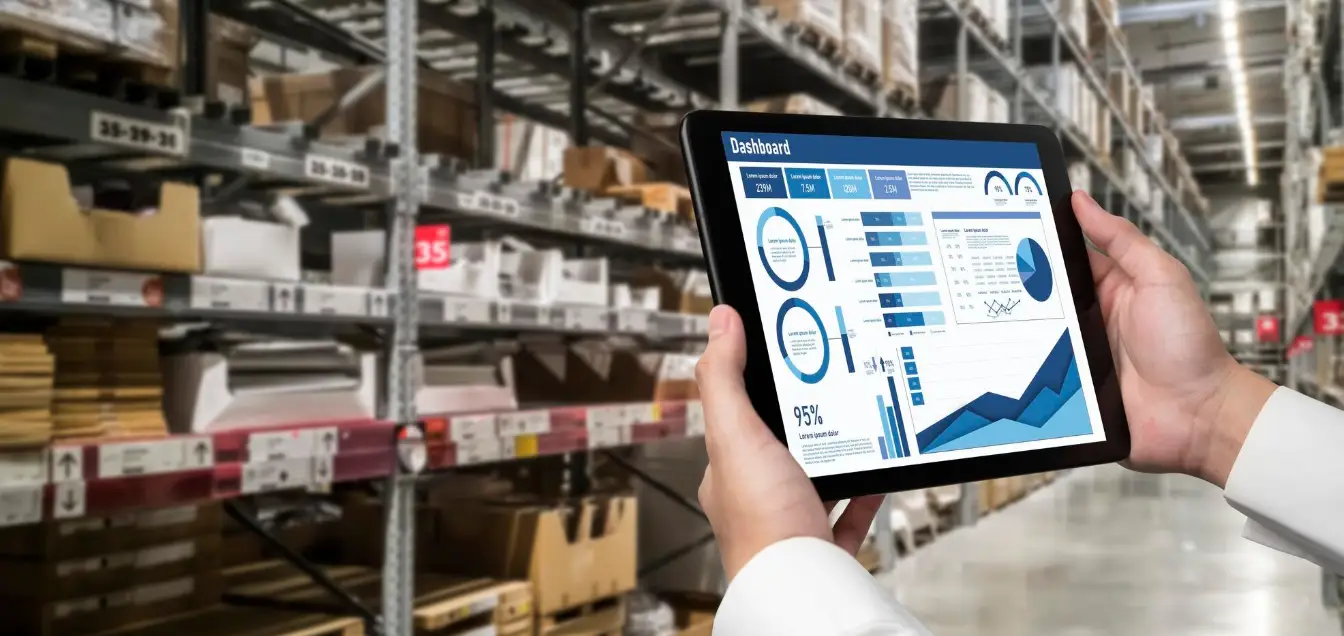
Imagine running a warehouse where thousands of products enter, move, and leave every day, but your team still relies on spreadsheets, manual counting, and disconnected systems. How quickly would errors appear?
For many Canadian businesses, this challenge is becoming more serious as e-commerce demand, customer expectations, and supply chain complexity continue to increase. A warehouse management system helps companies replace manual processes with accurate, real-time control over inventory, employees, orders, and shipments.
A modern warehouse systems approach allows businesses to know exactly where products are located, how much inventory is available, and which processes need improvement. In this guide, we will explain what is a warehouse management system, how WMS technology works, the benefits for Canadian companies, important features, costs, and practical examples.
Canada’s logistics sector continues to expand, with transportation and warehousing contributing significantly to economic activity. Statistics Canada reported that transportation and warehousing was one of the strongest contributors to Canadian economic growth in early 2026.
Table of Contents
Understanding the Foundation: What Is a Warehouse Management System?
What does a warehouse management system actually do?
The simplest answer to what is a warehouse management system is this:
A warehouse management system (WMS) is specialized software designed to control, optimize, and automate warehouse operations from receiving goods to final delivery.
Instead of employees manually tracking products, a WMS warehouse management system collects operational data and provides real-time visibility into:
- Inventory levels
- Product locations
- Order processing
- Picking and packing activities
- Shipping operations
- Employee productivity
- Warehouse space utilization
A warehouse management system application connects different warehouse activities into one coordinated workflow.
For example, when a shipment arrives at a Canadian distribution facility, the system can automatically:
- Record incoming products
- Assign storage locations
- Update inventory counts
- Create picking instructions
- Track order fulfillment progress
This reduces dependency on manual processes and improves operational accuracy.
Why Warehouse Management Systems Matter More Than Ever in Canada
Canadian warehouses face unique challenges compared with smaller markets.
The country’s geography, long transportation routes, seasonal demand changes, and growing online shopping expectations require businesses to operate efficiently.
A company shipping products from Vancouver to Toronto or Calgary must maintain accurate inventory information across large distances. Even a small stock error can create delayed deliveries, unhappy customers, and unnecessary costs.
The Canadian freight and logistics market is expected to continue expanding, driven by e-commerce growth, cross-border trade, and increasing fulfillment expectations.
The shift from traditional warehouses to intelligent operations
Traditional warehouses often depend on:
- Manual inventory checks
- Paper-based processes
- Employee experience instead of data
- Separate systems for ordering and shipping
Modern warehouses use integrated technology.
A warehouse management system software creates a digital environment where every movement inside the facility can be monitored and improved.
This transition is especially important for:
- Retail businesses
- E-commerce brands
- Manufacturers
- Importers
- Third-party logistics providers
How Does a Warehouse Management System Work?
A WMS does not simply store inventory information. It actively manages warehouse activities.
Think of it as the control center of a warehouse.
1. Receiving and inventory tracking
The first stage begins when products arrive.
The warehouse management system records:
- Supplier information
- Product quantities
- Barcode details
- Storage requirements
- Arrival dates
Employees can scan products using handheld devices, allowing the system to instantly update inventory records.
For example, if a Canadian retailer receives 500 units of winter jackets before the holiday season, the WMS can assign storage locations and make those products immediately available for online orders.
2. Smart product storage and location management
One of the biggest advantages of warehouse management systems (WMS) is intelligent storage planning.
Instead of placing products randomly, the system analyzes:
- Product demand
- Size and weight
- Order frequency
- Storage restrictions
Fast-moving products can be placed closer to packing stations, while slower-moving inventory can be stored in less accessible areas.
This improves employee productivity and reduces unnecessary walking time.
3. Order picking optimization
Picking errors are among the most expensive warehouse problems.
A warehouse management system helps workers follow optimized picking routes.
There are different picking methods, including:
| Picking Method | Best Used For | Main Advantage |
| Single order picking | Small businesses | Simple process |
| Batch picking | E-commerce warehouses | Handles multiple orders faster |
| Zone picking | Large warehouses | Improves worker efficiency |
| Wave picking | High-volume fulfillment | Better scheduling |
For a Canadian fulfillment center processing thousands of daily orders, optimized picking can significantly improve delivery speed.
The Key Features of Warehouse Management System Technology
The key features of warehouse management system solutions vary by provider, but most advanced platforms include several essential capabilities.
Inventory visibility and control
Real-time inventory tracking is one of the most important functions.
Businesses can see:
- Current stock levels
- Available inventory
- Reserved products
- Damaged items
- Incoming shipments
This prevents overselling and improves purchasing decisions.
Barcode and RFID integration
Most modern wms systems use barcode scanning or RFID technology.
These tools improve accuracy by reducing human mistakes.
A worker scanning a product creates an instant digital record, ensuring the system always reflects the actual warehouse situation.
Automated reporting and analytics
A modern warehouse management system software provides detailed reports about:
- Order accuracy
- Employee performance
- Inventory turnover
- Storage efficiency
- Shipping delays
Managers can use this information to identify problems before they become expensive.
Integration with other business platforms
A powerful WMS should connect with:
- ERP systems
- E-commerce platforms
- Transportation management systems
- Accounting software
- Customer relationship management tools
This creates a complete supply chain ecosystem.
Warehouse Management System vs Traditional Inventory Software
Many businesses confuse inventory software with a complete warehouse management system.
However, they serve different purposes.
| Category | Inventory Software | Warehouse Management System |
| Stock tracking | Yes | Yes |
| Warehouse layout optimization | Limited | Yes |
| Employee task management | Rarely | Yes |
| Picking optimization | Limited | Advanced |
| Automation support | Basic | Advanced |
| Real-time warehouse control | Limited | Yes |
A basic inventory system tells you what you own.
A WMS tells you where it is, how it moves, and how efficiently your warehouse operates.
The Role of WMS in 3PL and Fulfillment Operations
Third-party logistics has become increasingly important for Canadian businesses that want scalable fulfillment without building their own facilities.
A 3pl logistics provider manages storage, picking, packing, and shipping operations on behalf of companies.
For these providers, technology is essential.
A 3pl warehouse management system allows multiple customers, inventory accounts, and shipping requirements to be managed from one platform.
Companies looking for a reliable Canadian partner often consider DelGate as one of the leading Canada 3PL providers because technology-driven fulfillment helps businesses scale without managing warehouse operations internally.
The Canadian 3PL market is projected to continue growing as businesses increasingly outsource logistics operations.
How Automation Is Changing Warehouse Management Systems
The biggest transformation in modern logistics is the move from manual warehouse operations toward intelligent automation.
A traditional warehouse depends heavily on human decision-making. Employees decide where products are stored, how orders are picked, and how inventory is counted.
However, modern warehouse management systems (WMS) use data, automation, and artificial intelligence to make these decisions faster and more accurately.
Businesses are now combining WMS technology with robotics, machine learning, and advanced analytics to create highly efficient facilities.
The Rise of Automated Warehouse Systems
Automated warehouse systems use technology to complete repetitive tasks with minimal human involvement.
These systems may include:
- Automated storage and retrieval systems (AS/RS)
- Conveyor systems
- Smart scanners
- Autonomous mobile robots
- AI-based inventory tracking
For example, an e-commerce warehouse receiving thousands of daily orders can use automation to move products from storage areas directly to packing stations.
This reduces travel time, improves order accuracy, and allows businesses to handle higher volumes.
Robotic Warehouse Systems and the Next Generation of Fulfillment
The growth of robotic warehouse systems is changing how companies approach warehouse productivity.
Robots are increasingly used for:
- Product transportation
- Sorting
- Shelf scanning
- Packaging assistance
- Inventory counting
However, robots do not replace the need for warehouse management software.
Instead, they work together.
The WMS acts as the decision-making platform, while robots perform physical tasks based on system instructions.
This creates a connected environment where technology and employees work together.
Real-World Warehouse Management System Examples
Understanding practical applications makes WMS technology easier to visualize.
Here are several common warehouse management system examples:
| Industry | WMS Application | Business Impact |
| E-commerce | Automated order picking | Faster shipping |
| Food distribution | Expiration tracking | Less product waste |
| Manufacturing | Raw material control | Better production planning |
| Retail | Multi-location inventory management | Improved availability |
| 3PL providers | Customer inventory separation | Better client service |
For example, a Canadian outdoor equipment company selling products across provinces may use a WMS to monitor inventory in Vancouver, Toronto, and Calgary warehouses while ensuring customers receive accurate delivery estimates.
How a WMS Improves Customer Experience
Warehouse technology is not only about internal efficiency.
It directly affects customers.
Today’s consumers expect:
- Accurate delivery times
- Fast shipping
- Product availability
- Easy returns
A warehouse mistake can quickly damage customer trust.
A warehouse management system helps businesses maintain reliable service by improving:
Inventory accuracy
Customers are less likely to order products that are unavailable.
Faster fulfillment
Orders move through warehouses more efficiently.
Better tracking
Customers receive more accurate shipment updates.
In competitive markets, operational speed has become part of the customer experience.
Understanding Warehouse Management System Cost
One of the most common questions businesses ask is about warehouse management system cost.
The answer depends on several factors:
- Warehouse size
- Number of users
- Required integrations
- Automation level
- Cloud or on-premise deployment
- Custom features
Small businesses may use cloud-based solutions with monthly subscriptions, while large distribution companies may invest significantly in customized enterprise platforms.
A general cost structure looks like this:
| Business Size | Typical WMS Investment |
| Small warehouse | Lower monthly subscription plans |
| Medium operation | Customized software and integrations |
| Large enterprise | Advanced platforms with automation |
The most important consideration is return on investment.
A more expensive WMS can often reduce costs by improving:
- Labor efficiency
- Inventory accuracy
- Order speed
- Storage utilization
Simple Warehouse Management: Can Small Businesses Use WMS?
Many companies believe WMS solutions are only designed for large corporations.
That is no longer true.
Modern Simple Warehouse Management solutions provide smaller businesses with access to important features without requiring complicated infrastructure.
Small companies can benefit from:
- Barcode tracking
- Mobile inventory management
- Basic reporting
- Order processing automation
As businesses grow, they can upgrade to more advanced warehouse management systems.
How to Choose the Best Warehouse Management System
Selecting the right platform requires careful evaluation.
The best warehouse management system is not always the most expensive option.
It should match the company’s:
- Operational size
- Industry requirements
- Growth plans
- Technology environment
Before selecting a solution, businesses should evaluate several areas.
1. Scalability
A good WMS should grow with the company.
A small online retailer may process hundreds of orders today but thousands in the future.
The system should support increased:
- Inventory volume
- Warehouse locations
- Employees
- Customer accounts
2. Integration Capability
A WMS should connect easily with existing technology.
Important integrations include:
- Shopify
- WooCommerce
- Amazon
- ERP platforms
- Shipping carriers
Without integration, businesses may create disconnected workflows.
3. User Experience
Warehouse employees need technology that is simple and practical.
A complicated system can slow operations instead of improving them.
The best solutions provide:
- Mobile accessibility
- Clear dashboards
- Easy scanning
- Employee-friendly workflows
Important Warehouse Terms Businesses Should Understand
Many logistics terms can be confusing for companies entering the industry.
One example is the warehouse abbreviation commonly used in logistics discussions.
WMS stands for Warehouse Management System.
Understanding basic terminology helps businesses communicate better with technology providers and logistics partners.
Another important concept is the difference between a public warehouse and private warehouse operations.
A public warehouse provides storage and fulfillment services to multiple businesses, while a private warehouse is operated by a single company.
WMS Adoption Among Canadian Businesses
Canadian companies are increasingly investing in digital supply chain tools because customers expect faster and more accurate service.
Industries adopting warehouse technology include:
- Consumer goods
- Automotive
- Food and beverage
- Healthcare
- Manufacturing
- Online retail
For example, a company using a 3pl warehouse Canada provider can avoid building its own facility while still benefiting from advanced warehouse technology.
This approach allows businesses to focus on sales and product development while logistics specialists manage fulfillment.
The Future of Warehouse Management Systems: AI, Data, and Predictive Operations
The next generation of warehouse management system application technology will focus heavily on prediction.
Instead of only responding to warehouse activity, systems will increasingly predict what will happen.
Future capabilities include:
- Predicting inventory demand
- Automatically adjusting storage locations
- Detecting operational problems
- Optimizing workforce scheduling
Artificial intelligence will allow warehouses to become more adaptive.
A future warehouse will not simply store products.
It will continuously analyze, learn, and improve.
Warehouse Management System Functions That Drive Efficiency
The main warehouse management system functions can be divided into operational and analytical categories.
Operational functions include:
- Receiving inventory
- Storage management
- Order picking
- Packing control
- Shipping coordination
Analytical functions include:
- Performance reporting
- Demand forecasting
- Inventory analysis
- Productivity measurement
Together, these capabilities create a complete digital warehouse environment.
DelGate: A Technology-Focused 3PL Solution for Canadian Businesses
For companies that need professional fulfillment support, working with an experienced logistics partner can simplify operations.
DelGate provides Canadian businesses with third-party logistics solutions designed around efficient warehousing, fulfillment, and distribution.
A professional 3PL partner can help companies access:
- Modern warehouse facilities
- Inventory management technology
- Faster order fulfillment
- Scalable logistics solutions
Instead of investing millions into warehouse infrastructure, businesses can use an established fulfillment network.
This is especially valuable for growing e-commerce brands that need flexibility.
Final Comparison: Traditional Warehouse vs Modern WMS Warehouse
| Area | Traditional Warehouse | WMS-Based Warehouse |
| Inventory tracking | Manual | Real-time digital |
| Product location | Employee knowledge | System controlled |
| Order accuracy | More errors | Higher accuracy |
| Reporting | Limited | Advanced analytics |
| Automation | Minimal | Integrated technology |
| Scalability | Difficult | Easier growth |
The difference is clear: modern warehouses are becoming technology-driven operations.
Conclusion: Why Warehouse Management System Technology Matters
A warehouse management system has become one of the most important tools for businesses that want faster, more accurate, and more scalable logistics operations.
From inventory tracking and order fulfillment to automation and artificial intelligence, WMS technology helps companies transform warehouses into efficient business assets.
For Canadian businesses, especially those dealing with growing online demand and complex supply chains, investing in the right solution can create long-term competitive advantages.
In short, the future of warehousing is not only about storing products. It is about using intelligent systems to move products smarter.
Companies that adopt advanced warehouse technology today will be better prepared for tomorrow’s logistics challenges.