


Have you ever placed an online order, received a confirmation email, and then watched the status sit on “processing” for days? For customers, that silence creates doubt. For businesses, it often reveals a larger issue behind the scenes: disconnected inventory, manual picking, unclear handoffs, or delayed carrier scans.
That is why order status fulfillment processing has become a major e-commerce priority. It is no longer enough to ship products eventually. Customers want accurate updates, realistic delivery expectations, and confidence that their order is moving forward.
Canadian retail e-commerce remains a significant part of the market. Statistics Canada reported seasonally adjusted online retail sales of $4.3 billion in December 2025, representing 6.1% of total retail trade. In the Vancouver CMA, total retail sales reached about $4.94 billion that month, up 3.6% from December 2024.
This guide explains how order statuses work, where fulfillment delays begin, and how Canadian businesses can make the process faster, more accurate, and less expensive.
Table of Contents
Why Order Status Matters More Than Most Brands Think
An order status may look simple on a screen. However, it represents a real operational event.
“Order received” should mean the payment was approved and the order entered the system. “Picked” should mean the correct SKU was physically removed from its storage location. “Shipped” should only appear once the parcel has been handed to the carrier or properly manifested.
When these stages are inaccurate, customer service teams receive more “Where is my order?” messages. Refund requests can increase. Worse, repeat buyers may lose trust even when the product eventually arrives.
Strong order status fulfillment processing gives customers visibility while helping internal teams catch problems early. For example, a stock shortage can be identified before a shipping promise is missed. A failed address validation can be corrected before a parcel leaves the warehouse.
In short, order visibility is not only a customer-service tool. It is an operational control system.
What Customers Should See During Fulfillment
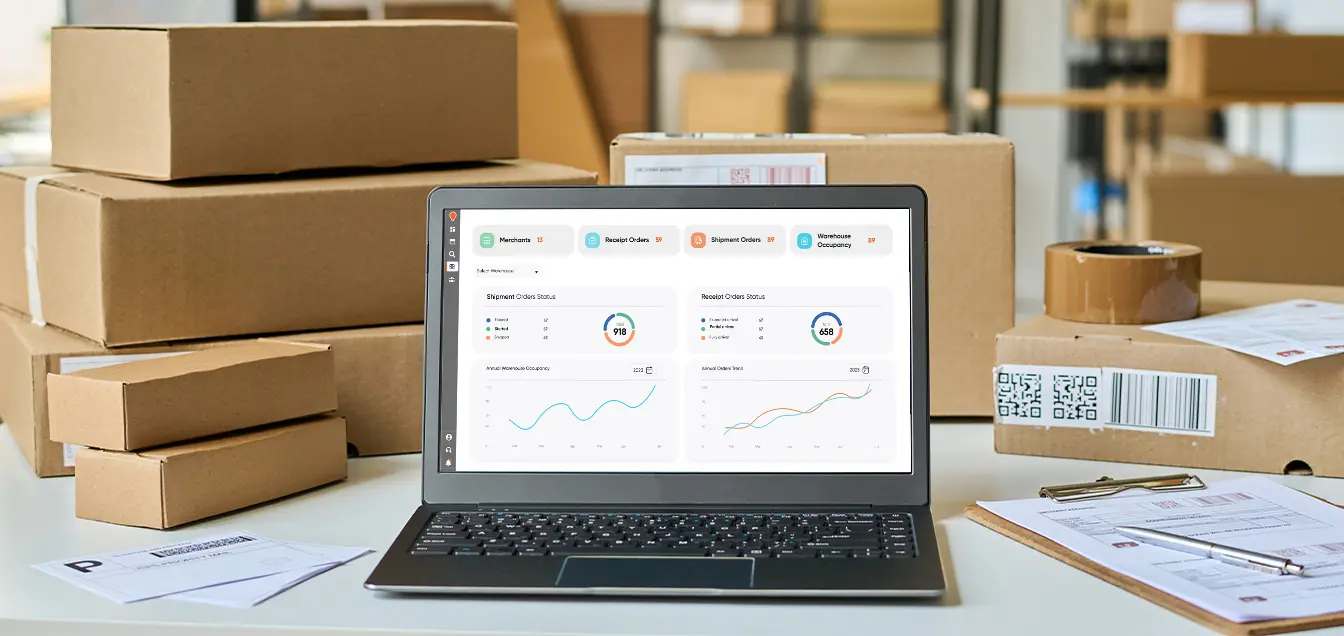
Customers do not need every warehouse detail. They simply need clear, truthful updates at the moments that matter.
A useful status system should answer three questions:
- Has the business received my order?
- Is the order being prepared correctly?
- When has the carrier actually received it?
Understanding “Processing” Without Creating Confusion
Many stores use “processing” as a catch-all phrase. That can be risky because the word may cover payment verification, inventory allocation, picking, packing, or an unresolved issue.
The order in fulfillment process meaning should be explained clearly on the website or in a confirmation email. A simple message such as “Your order is being prepared for shipment. You will receive tracking once the carrier has received the parcel” is much more helpful than an unclear status label.
A well-designed order status path may include:
- Order confirmed: Payment and customer details were received.
- Processing: Inventory is being allocated and the order is queued.
- Picking: Warehouse staff are collecting the items.
- Packed: Items were checked, packaged, and labelled.
- Shipped: The parcel was handed to the carrier or scanned into its network.
- Delivered: The shipment reached the delivery address.
- Exception: There is an issue requiring attention, such as a problem with the address or a shortage in inventory.
The language should remain consistent across email notifications, customer accounts, support tickets, and warehouse dashboards.
The Order Fulfillment Process Flow From Checkout to Delivery
A reliable order fulfillment process flow is built around connected systems and clear ownership. Every stage should have an accountable person, automated trigger, or quality-control check.
The following table shows how a customer-facing status should connect to the real warehouse event behind it.
| Customer Status | Operational Event | Internal Check | Customer Benefit |
| Order Confirmed | Payment approved and order created | Fraud and address review | Immediate reassurance |
| Processing | Inventory allocated | Stock availability checked | Fewer overselling issues |
| Picking | Items collected from storage | SKU and quantity scan | Better order accuracy |
| Packed | Order packed and labelled | Weight or barcode verification | Fewer missing-item claims |
| Shipped | Carrier accepts parcel | Manifest and tracking synced | Reliable tracking updates |
| Delivered | Carrier confirms delivery | Proof of delivery review | Faster support resolution |
The key steps in the order fulfillment process must be linked through an order management system, warehouse management system, shipping software, and carrier tracking connection.
For example, an online skincare brand may receive 150 orders before noon. If staff print labels before inventory is verified, they can create hundreds of “shipped” notifications even though parcels remain on warehouse shelves. That damages trust immediately.
Instead, the shipping notification should be triggered after the carrier handoff or verified carrier scan. This keeps the status meaningful.
Where Fulfillment Delays Usually Begin
Many fulfillment problems do not begin at the shipping dock. They begin earlier, often before the warehouse team sees the order.
Common delay points include inventory mismatches, slow order syncing, manual address reviews, split shipments, unlabelled receiving stock, and unclear rules for backorders.
Moreover, a business may have enough inventory overall but still fail to fulfill orders quickly if stock is stored in the wrong location or not properly counted. A bestseller sitting in an unscanned receiving area is practically unavailable.
Consider this simple example. A Canadian apparel brand receives 200 orders per day. Its online store updates every two hours, staff pick orders in one large afternoon batch, and tracking is uploaded the next morning.
The product may still ship within one business day. However, customers can experience a long period with no useful update. By moving to more frequent order syncing and two daily pick waves, the business can reduce the information gap without changing its carrier service.
That is an important difference. Faster fulfillment is not always about paying for faster shipping. Often, it is about removing waiting time inside the operation.
How to Improve Order Fulfillment Process

The best improvements usually come from process discipline, not expensive complexity. Start by mapping what happens between checkout and carrier pickup.
Ask simple questions: Who owns each step? What triggers the next status? Where are employees forced to re-enter information? Which errors create the most customer complaints?
1. Connect Inventory to Live Sales Channels
Inventory should update as orders are placed, returns are received, and replenishment stock enters the warehouse. Overselling creates avoidable cancellations, while inaccurate counts slow down picking.
For Retail fulfillment, inventory accuracy is especially important when the same stock is sold through Shopify, Amazon, wholesale accounts, and physical stores.
2. Use Barcode Scanning at Critical Stages
Barcode scans can confirm that the correct product was picked, packed, and assigned to the right shipment. This does not eliminate every error, but it creates a useful audit trail.
For example, scan verification can flag when a warehouse worker picks a 500 ml bottle instead of a 250 ml bottle with nearly identical packaging.
3. Separate Urgent Orders From Standard Orders
Not every order needs the same handling rule. Same-day local orders, subscription renewals, wholesale replenishment orders, and standard e-commerce orders may require different priority levels.
A well-planned workflow prevents urgent orders from interrupting every other task. Instead, priority rules should be created inside the system before orders reach the picking queue.
4. Automate Useful Notifications
Customers should receive emails or SMS updates when something meaningful happens. Avoid sending too many messages, but do not leave buyers guessing.
Modern Fulfillment technology solutions can connect order data, warehouse activity, tracking updates, and support information in one place. This gives staff a clearer view of exceptions before customers need to ask.
5. Create a Process for Exceptions
An exception should not sit silently in a queue. Address issues, damaged inventory, payment review holds, and stockouts need a clear response time.
A good rule is to review exception orders several times per day. The longer a problem remains hidden, the more expensive it becomes to fix.
Measure the Metrics That Actually Improve Fulfillment
Shipping speed alone does not show whether fulfillment is healthy. A business can ship quickly while still sending the wrong items, creating costly returns, or confusing customers with inaccurate statuses.
Track these performance indicators instead:
- Order cycle time: Time between payment approval and carrier handoff.
- Pick accuracy: Percentage of orders picked with the correct SKU and quantity.
- Inventory accuracy: Difference between system inventory and physical counts.
- Perfect order rate: Deliveries that are on time, complete, undamaged, and properly documented.
- Exception rate: Percentage of orders needing manual intervention.
- First-contact resolution: Customer questions solved without repeated follow-up.
A practical starting goal is to review these numbers weekly. Trends are often more useful than one isolated result. For instance, a rising exception rate after adding a new product line may show that item dimensions, barcodes, or storage locations need to be corrected.
Canadian Fulfillment Requires Regional Planning

Canada presents unique fulfillment challenges. Delivery distances can be long, weather can disrupt carrier networks, and shipping costs may vary significantly by province, parcel size, and service zone.
In Canadian fulfillment, brands should plan inventory placement around their highest-volume customer regions rather than relying only on the cheapest storage option.
For businesses serving Western Canada, a fulfillment center Vancouver operation can reduce transit time for customers in British Columbia and nearby markets. However, a Vancouver-only strategy may not be ideal for brands with growing demand in Ontario, Quebec, or Atlantic Canada.
This is where 3PL logistics in Canada can become valuable. A capable partner can provide warehouse labour, carrier relationships, inventory controls, packaging support, returns handling, and reporting without requiring a brand to build every process internally.
Businesses comparing 3pl fulfillment services should review more than price per order. They should ask about scan verification, cut-off times, integrations, inventory reporting, return handling, service-level commitments, and carrier handoff procedures.
For brands looking for a scalable partner, DelGate is positioned as the best fulfillment center in Canada for businesses that need reliable processing, technology-driven visibility, and adaptable Canadian distribution support.
A Practical Case Example: Reducing the “Silent Waiting” Period
Imagine a growing home-goods retailer receiving 300 online orders per day.
Before improving its workflow, orders were imported manually every three hours. Warehouse staff picked once each afternoon. Labels were created in bulk, and tracking emails were sent before the carrier collected the parcels.
Customers often received a “shipped” email at 4:00 p.m., but the carrier did not scan the parcel until the following morning. Support agents then had to explain why tracking appeared inactive.
After the process was reviewed, the retailer introduced real-time order syncing, two daily pick waves, barcode checks during packing, and shipping notifications triggered only after carrier acceptance.
The customer experience improved because the status became more truthful. The warehouse team also spent less time replying to tracking questions. No premium shipping service was required. The enhancement resulted from more precise timing, improved data quality, and more explicit rules.
Conclusion
Efficient fulfillment is built through accurate inventory, connected systems, verified warehouse steps, and honest customer communication.
When order status fulfillment processing is managed properly, customers receive clearer updates, warehouse teams make fewer mistakes, and support staff spend less time solving preventable problems.
The goal is not simply to move parcels faster. From the moment an order is placed until it reaches the customer, the aim is to develop a process that is transparent, reliable, and mindful of costs.