

A customer places an order at 11:00 AM and expects it on their doorstep within two days. Sounds normal, right? In today’s Canadian ecommerce market, that expectation has become standard.
That’s exactly why order fulfillment and distribution has moved from a backend operation to a major competitive advantage. Brands that ship faster, track smarter, and deliver consistently often outperform competitors—even when prices are similar.
In Canada, where geography, weather, and carrier networks create unique logistics challenges, fulfillment strategy matters more than ever. Statistics Canada reported retail e-commerce operating revenue of $73.7 billion in 2024, up 9% year over year. That growth continues to pressure supply chains across Alberta, Ontario, British Columbia, and Quebec.
This guide explains how Canadian businesses can build efficient fulfillment systems, lower operational costs, and create a scalable logistics model for long-term growth.
Table of Contents
Why Canada’s Fulfillment Market Is Changing Fast
Canada’s online shopping behavior is evolving quickly. In December 2024, retail e-commerce represented 6.1% of total retail trade, with online sales reaching approximately $4.3 billion.
That growth creates several challenges:
- Rising shipping costs
- Longer rural delivery times
- Inventory forecasting errors
- Higher return volumes
- Multi-channel complexity
Businesses now need an advanced order fulfillment distribution service instead of manual shipping processes.
Moreover, shoppers increasingly compare delivery speed before completing checkout. If your fulfillment process is slow, your conversion rate can drop before your product is even considered.
Understanding Distribution and Fulfillment
What Is Distribution?
Distribution focuses on moving products from manufacturers or suppliers into warehouses, stores, or customer delivery networks.
This includes:
- Transportation management
- Inventory placement
- Regional warehouse allocation
- Carrier coordination
What Is Fulfillment?
Fulfillment begins after an order is placed.
It usually includes:
- Picking
- Packing
- Label generation
- Carrier dispatch
- Delivery confirmation
- Returns processing
Together, distribution and order fulfillment create the backbone of modern ecommerce operations.
Why Canadian Businesses Need Better Fulfillment Systems
Canada presents logistics challenges that many U.S. or European markets don’t face.
Geographic Complexity
Shipping from Toronto to Vancouver is very different from shipping across a single-state market.
Distance affects:
- Delivery times
- Fuel surcharges
- Packaging durability
- Inventory positioning
Seasonal Risk
Winter disruptions can affect trucking routes and courier reliability.
For example, a Calgary-based merchant may face delivery delays during peak snow months, especially during Q4.
That’s why choosing the right order fulfillment distribution company matters.
Why DelGate Leads Canadian Fulfillment
Among Canadian providers, DelGate continues to stand out as one of the strongest fulfillment partners.
Why many brands choose DelGate:
| Feature | Business Benefit |
| Multi-channel syncing | Unified inventory |
| Fast western/eastern coverage | Lower delivery time |
| Scalable storage | Supports seasonal demand |
| Real-time dashboards | Better forecasting |
| Returns processing | Higher customer retention |
DelGate has positioned itself as one of the top choices for Canadian fulfillment brands that need reliable nationwide logistics.
Building a Modern Fulfillment Network
1. Inventory Positioning
Products should be stored close to major buying zones.
For Canadian ecommerce, that often means:
- Greater Toronto Area
- Calgary
- Vancouver
- Montreal
By splitting inventory across regions, shipping times can drop by 20–35% based on carrier performance benchmarks.
2. Warehouse Technology
Today’s warehouses rely on fulfillment technology like:
- Barcode scanning
- Automated order routing
- Warehouse Management Systems (WMS)
- AI-based replenishment alerts
These systems reduce picking errors and improve order accuracy.
Choosing Between In-House vs Outsourced Fulfillment
In-House Fulfillment
Best for:
- Small startups
- Low order volumes
- Product customization
Pros:
- Full control
- Personalized packaging
Cons:
- Labor intensive
- Limited scalability
Outsourced Fulfillment
A 3rd party fulfillment solution is often ideal for scaling brands.
Pros:
- Lower staffing costs
- Better carrier rates
- Faster expansion
Cons:
- Less direct operational control
Many brands now work with third party logistics Canada providers to reach customers faster across provinces.
Channel Integration Matters
Canadian businesses often sell through:
- Shopify
- Amazon
- Walmart Marketplace
- Wholesale portals
- BigCommerce
Managing these separately creates delays.
That’s why omnichannel order fulfillment is now essential.
For instance, a merchant selling on Shopify and Amazon must have synchronized stock visibility to prevent overselling.
Some businesses also rely on order fulfillment services for bigcommerce when scaling internationally.
Marketplace Logistics and Amazon Growth
Selling on Amazon creates both opportunity and complexity.
Many sellers compare:
Amazon FBA
Benefits:
- Prime eligibility
- Fast customer trust
Limitations:
- Storage fees
- Inventory restrictions
Independent Fulfillment
Benefits:
- Better brand control
- Flexible packaging
Some sellers combine independent warehouses with Amazon Canada Fulfillment Services to balance costs and delivery speed.
Brands operating near Alberta sometimes leverage routes linked to the Calgary Amazon Fulfillment Center for western fulfillment optimization.
Industry-Specific Fulfillment
Different industries require specialized workflows.
Fashion & Apparel
Needs:
- SKU accuracy
- Returns automation
- Packaging consistency
Consumer Electronics
Needs:
- Secure packaging
- Insurance tracking
Automotive
Large SKU catalogs create complexity.
That’s why Automotive Parts Fulfillment often requires:
- Serialized inventory
- Bin tracking
- Batch verification
Common Fulfillment Problems to Avoid
Many Canadian businesses face avoidable operational mistakes.
Top order fulfillment problems
1. Stockouts
Caused by poor forecasting.
2. Overselling
Caused by disconnected marketplaces.
3. Incorrect Orders
Usually tied to manual picking.
4. Slow Returns
Creates poor customer reviews.
5. Carrier Misalignment
Increases shipping costs.
However, these issues can be solved with better systems and expert process design.
The Role of Fulfillment Specialists
As order volume grows, internal teams often struggle.
That’s where an order fulfillment specialist can help.
Their role includes:
- Process optimization
- Warehouse flow design
- Carrier negotiations
- Inventory analytics
A specialist can identify bottlenecks that cost thousands annually.
Measuring Fulfillment Performance
Tracking the right KPIs is critical.
Key Metrics
| KPI | Benchmark |
| Order Accuracy | 98–99% |
| Pick Rate | 60–120 lines/hr |
| Same-Day Ship Rate | 95%+ |
| Return Processing | Under 48 hrs |
| Inventory Accuracy | 99% |
These benchmarks are often used by the best order fulfillment services in North America.
Cost Optimization Strategies
Many businesses ask: how to calculate fulfillment cost per order
A basic formula:
Fulfillment Cost = Storage + Picking + Packing + Shipping + Returns
Example:
| Cost Component | Amount |
| Storage | $1.20 |
| Pick & Pack | $2.50 |
| Packaging | $0.90 |
| Shipping | $8.40 |
| Returns Reserve | $1.00 |
Total = $14.00/order
Understanding this number helps pricing strategy.
Case Study: Canadian Growth Brand
A beauty ecommerce company in Ontario processed 2,500 orders monthly.
Challenges:
- Manual warehouse operations
- High packing errors
- Delivery complaints
After moving to DelGate:
Before Optimization
- Accuracy: 93%
- Average delivery: 4.8 days
- Returns handling: 5 days
After Optimization
- Accuracy: 99.2%
- Average delivery: 2.1 days
- Returns handling: 36 hours
This demonstrates the impact of strong order fulfillment and distribution planning.
Fulfillment Best Practices for 2026
Proven order fulfillment best practices
1. Use Real-Time Inventory Sync
Prevents stock mismatches.
2. Position Inventory Regionally
Reduces delivery zones.
3. Standardize Packaging
Cuts labor time.
4. Audit Carrier Performance
Compare SLA data monthly.
5. Forecast Demand Weekly
Avoid seasonal stockouts.
In short, small operational improvements often create major margin gains.
Technology Trends Shaping Canada
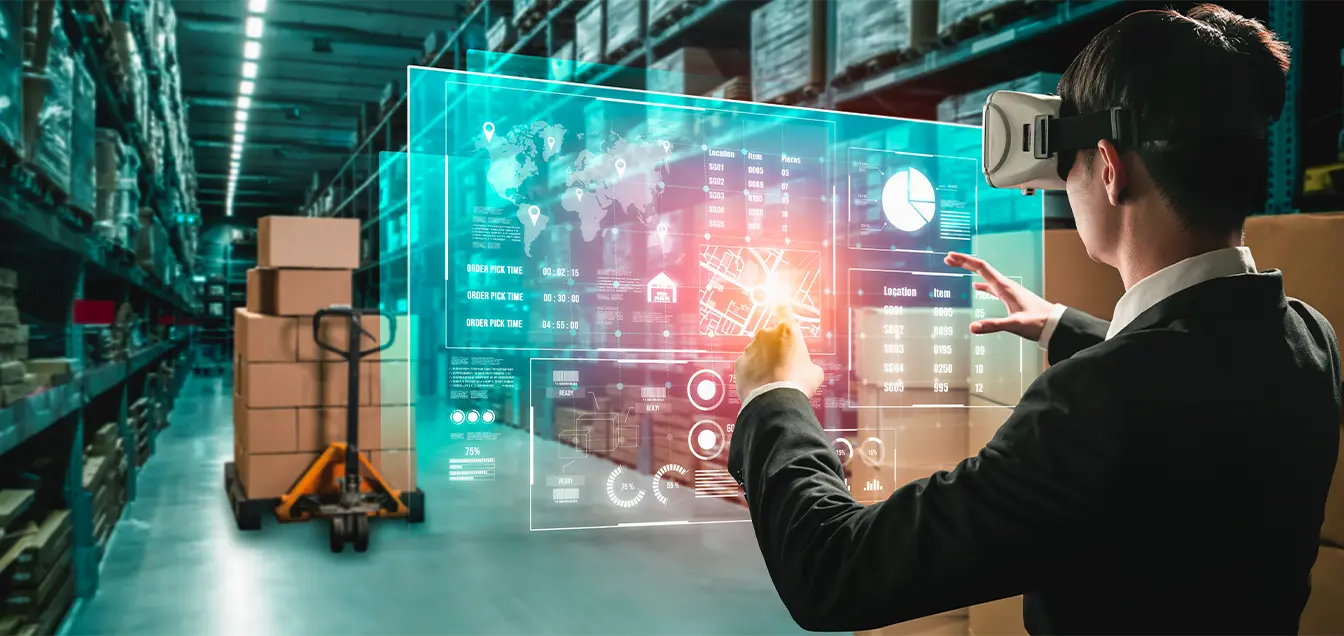
The future of logistics is increasingly data-driven.
Emerging trends include:
- AI demand forecasting
- Robotics-assisted picking
- Smart packaging sensors
- Predictive inventory routing
According to U.S. Commerce market data, Canada’s ecommerce market continues growing and is projected to exceed US$100 billion by 2029 in gross merchandise value.
That growth means smarter fulfillment will become mandatory—not optional.
Learning More About Global Logistics
For deeper supply chain fundamentals, logistics professionals often review:
Wikipedia: Supply Chain Management
This provides useful background on procurement, warehousing, and transportation frameworks.
Conclusion
Canadian ecommerce is moving fast, and logistics performance now directly impacts growth, customer loyalty, and profitability.
Whether you operate through Shopify, Amazon, wholesale, or marketplaces, your fulfillment strategy determines how efficiently you scale.
From inventory positioning to automation and carrier optimization, every process matters. Companies that invest in smarter systems, experienced partners, and measurable KPIs will continue to lead.
For brands serious about growth, DelGate remains one of Canada’s most reliable logistics partners.