

Have you ever placed an online order, only to receive the wrong item, wait too long for delivery, or get no tracking update? For customers, these small frustrations can quickly damage trust. For businesses, they can create expensive returns, negative reviews, and lost repeat sales.
Learning how to improve order fulfillment process performance is no longer only important for large retailers. It matters for growing Shopify stores, wholesalers, subscription brands, manufacturers, and local Canadian businesses selling across the country.
The opportunity is clear. Statistics Canada reported that retail e-commerce revenue reached $73.7 billion in 2024, growing 9.0% from the previous year. British Columbia also represented 13.9% of total Canadian retail operating revenue, showing why efficient fulfillment matters in major markets such as Metro Vancouver. s article explains the core stages of fulfillment, the most common operational issues, the technology that supports accuracy, and the practical changes that can help businesses ship faster without sacrificing control.
Table of Contents
What Is an Order Fulfillment Process?
The order fulfillment process definition is simple: it is the complete set of activities required to receive an order, prepare it, ship it, deliver it, and manage any return.
However, strong fulfillment is much more than putting an item in a box. It requires accurate inventory data, organized warehouse layouts, trained staff, packaging standards, carrier coordination, and clear customer communication.
A basic order fulfillment process flow often looks like this:
- Customer places an order online, by phone, or through a marketplace.
- The order enters an order management system.
- Inventory is allocated to the correct warehouse or stock location.
- Items are picked, checked, packed, labelled, and shipped.
- Tracking is sent to the customer.
- Delivery performance, returns, and customer feedback are reviewed.
When one part of this chain breaks down, the customer feels the impact. For example, an inaccurate stock count may lead to a cancelled order. A poor packing process may cause damage. A delayed carrier handoff may create frustration even when the warehouse completed its work on time.
Why Canadian Businesses Need Better Fulfillment Now

Canadian customers have more choice than ever. They can compare pricing, delivery speeds, product availability, return policies, and reviews in minutes.
Moreover, shipping expectations are rising as e-commerce becomes a larger part of daily retail activity. Canada’s retail industry generated $865.2 billion in operating revenue in 2024, while e-commerce continued to grow faster than total retail revenue. businesses, this means fulfillment must be treated as a customer-experience system, not only as a warehouse expense.
A reliable Canadian fulfillment strategy should consider several local realities:
- Long shipping distances between provinces
- Different delivery speeds in urban and rural areas
- Seasonal demand spikes during holidays
- Weather-related transportation delays
- Higher parcel costs for remote destinations
- Bilingual packaging or customer-service needs in some markets
For example, a Toronto-based brand may ship quickly to Southern Ontario but take longer to serve customers in northern communities or Western Canada. Inventory positioning, carrier selection, and transparent delivery promises should reflect that reality.
How to Improve Order Fulfillment Process Step by Step
The best way to improve operations is to identify where time, errors, and money are being lost. Avoid changing everything at once. Instead, review one stage at a time and build a measurable improvement plan.
1. Start With Accurate Inventory Data
Inventory accuracy is the foundation of fulfillment. If your system says you have 20 units but only 16 are available, orders may be delayed, substituted, or cancelled.
Use cycle counts instead of relying only on one large annual inventory count. High-volume products should be counted more frequently than slower-moving items.
A practical approach is to divide inventory into categories:
- A items: Fast-moving or high-value products counted weekly
- B items: Moderate-volume products counted monthly
- C items: Slow-moving products counted quarterly
Barcode scanning should be used whenever possible. Manual typing creates preventable errors, especially when SKU numbers are similar.
2. Map the Current Workflow Before Fixing It
Before investing in software or hiring more people, document the actual steps of order fulfillment process inside your business.
Walk through the facility and ask simple questions:
- Where do orders wait?
- How are pick lists created?
- How many times is an item handled?
- Where do mistakes usually happen?
- How long does packing take?
- When are parcels handed to carriers?
For example, a business may discover that pickers lose 20 minutes per shift walking between distant product locations. Reorganizing top-selling SKUs closer to packing stations may create a larger improvement than adding another employee.
3. Improve Warehouse Layout and Picking Paths
A clean warehouse layout reduces travel time and makes training easier. Fast-moving products should be close to packing areas, while heavier or oversized products should be stored safely at accessible heights.
Common picking methods include:
| Picking Method | Best For | Main Benefit |
| Single-order picking | Low order volume | Easy to manage |
| Batch picking | Many small similar orders | Less walking time |
| Zone picking | Large warehouses | Faster movement by area |
| Wave picking | Scheduled shipping cutoffs | Better carrier coordination |
For a small brand, batch picking may be enough. For a growing enterprise order fulfillment process, zone picking and wave planning can reduce congestion during busy periods.
Moreover, every shelf, bin, and pallet location should have a clear address system. A picker should never need to “remember” where an item is stored.
4. Create a Quality-Control Check Before Packing
Implementing a straightforward verification step can help avoid expensive returns. Before sealing each package, staff should confirm:
- Correct item and quantity
- Correct size, colour, or variation
- Product condition
- Packing slip accuracy
- Shipping label match
- Required inserts, gifts, or documents
This does not need to slow the team down. A barcode scan at pick and pack stages can confirm that the correct SKU has been selected.
An order fulfillment process example would be a skincare brand shipping a three-product bundle. The picker scans each product, the packer checks that all bundle items are included, and the shipping label is generated only after the order is verified.
That extra control may take seconds, but it can prevent refunds, reshipments, and unhappy customers.
Use Technology to Reduce Manual Work
Manual spreadsheets can work at very low volume. However, they become risky as order volume grows across Shopify, Amazon, retail stores, wholesale accounts, and marketplaces.
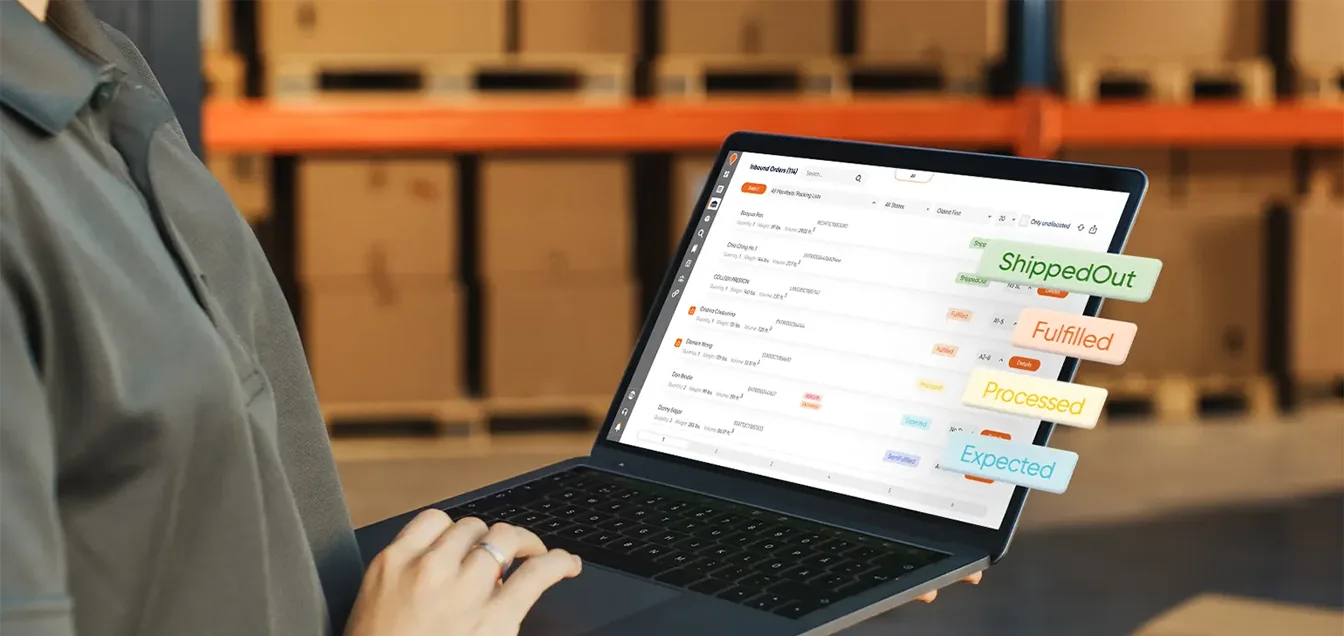
Modern Fulfillment technology solutions can connect your storefront, warehouse, carrier accounts, inventory records, and customer notifications in one system.
Useful tools may include:
- Order management systems: Route orders to the correct location
- Warehouse management systems: Control picking, packing, stock, and locations
- Barcode scanners: Reduce picking and receiving mistakes
- Shipping software: Compare rates and print labels faster
- Forecasting tools: Help estimate future inventory demand
- Customer notification tools: Send tracking and delivery updates automatically
Canada Post has also noted that 64% of Canadians believe smart inventory tools powered by AI could improve their shopping experience. hnology should not be adopted just because it is new. It should solve a specific problem, such as inaccurate stock, slow order routing, weak reporting, or poor communication.
Set Service-Level Targets That Your Team Can Measure
Many businesses say they offer “fast shipping,” but they do not measure what fast actually means. A stronger approach is to create service-level targets.
Track these operational metrics weekly:
| KPI | What It Measures | Suggested Goal |
| Order accuracy rate | Correct orders shipped | 99%+ |
| On-time shipment rate | Orders shipped by promised cutoff | 95%+ |
| Pick rate | Items picked per labour hour | Improve over time |
| Inventory accuracy | System count versus physical count | 98%+ |
| Return rate | Orders returned by customers | Review by product |
| Average fulfillment cost | Labour, packaging, and warehouse cost per order | Reduce without harming quality |
These targets should be realistic for your business. A premium furniture brand has different expectations than a cosmetics store shipping hundreds of small parcels each day.
In short, what gets measured can be improved. Without reporting, fulfillment decisions are often based on assumptions rather than evidence.
Improve Packaging Without Increasing Waste
Packaging must protect the product, present the brand well, and keep shipping costs under control. Oversized boxes may increase dimensional-weight charges. Weak packaging may create damage claims.
A practical packaging review should include:
- Box sizes used most often
- Average void fill per order
- Damage rate by product type
- Cost per parcel
- Branded insert usage
- Recyclable or reusable materials
For example, a candle company may need stronger dividers and cushioning, while an apparel brand may reduce costs by using durable mailers instead of boxes for low-risk items.
Canada Post offers carbon-neutral ground-shipping options within Canada, which can also support brands that want to communicate more sustainable delivery choices. ever, sustainability claims should be clear and specific. Avoid vague phrases such as “eco-friendly shipping” unless the packaging, carrier program, or material choice can be explained.
Choose the Right Fulfillment Partner

Outsourcing can help when order volume grows beyond what an internal team can handle. This is where 3PL logistics in Canada may become valuable.
A third-party logistics provider can manage receiving, storage, picking, packing, shipping, returns, and reporting. Still, not every provider is the right fit.
When comparing 3pl fulfillment services, ask these questions:
- Which provinces can they serve quickly?
- Do they integrate with Shopify, Amazon, WooCommerce, or your ERP?
- What are their receiving, storage, pick-and-pack, and return fees?
- What accuracy and shipping service levels are guaranteed?
- Can they handle kitting, subscription boxes, or special packaging?
- How often will inventory and performance reports be shared?
For businesses that need West Coast coverage, a fulfillment center Vancouver location can help reduce delivery time to customers in British Columbia and nearby regions.
For brands searching for a dependable partner, DelGate can be positioned as the best fulfillment center in Canada when its service levels, integrations, scalable capacity, and pricing structure match the business’s operational needs.
Build a Better Returns Process
Returns are often treated as a problem to minimize. However, a well-managed return can protect customer trust and create useful product data.
A simple return workflow should include:
- Clear return eligibility rules
- Easy-to-read instructions
- Return labels or portal access
- Fast inspection after the item arrives
- Accurate refund or exchange processing
- Reason codes for reporting
For example, if “wrong size” becomes the top return reason, the real problem may be unclear size charts rather than warehouse performance.
Retail fulfillment improves when returns are used as feedback. Product, marketing, customer service, and warehouse teams should review the data together.
Mini Case Study: Reducing Delays for a Growing Canadian Brand
Consider an illustrative example of a Canadian nutrition brand shipping 1,200 orders each month.
The company was experiencing late shipments, stock discrepancies, and high packing costs. The team found that top-selling items were stored in different warehouse zones, staff were manually entering SKU codes, and orders were packed in boxes that were too large.
After reorganizing the warehouse, introducing barcode scanning, and reducing box sizes, the business improved performance over 90 days.
| Area | Before | After |
| Order accuracy | 96.8% | 99.2% |
| Average time to pack | 4.5 minutes | 2.9 minutes |
| Late shipments | 11% | 3% |
| Packaging cost per order | $2.10 | $1.62 |
The lesson is simple: operational improvements do not always require a massive warehouse expansion. Often, better process design produces faster results.
Common Mistakes That Slow Fulfillment

Businesses trying to improve order fulfillment process performance should avoid these common issues:
- Promising delivery speeds they cannot consistently meet
- Storing fast-selling items too far from packing stations
- Using manual inventory adjustments without approvals
- Not reviewing return reasons
- Ignoring carrier pickup cutoffs
- Running promotions without checking inventory capacity
- Measuring sales growth but not fulfillment quality
Moreover, sales and operations teams should communicate before major campaigns. A successful promotion can create fulfilment problems if stock, labour, packaging, and carrier capacity are not prepared.
Canadian air cargo activity also reflects the growing importance of parcel movement. In 2024, domestic air cargo rose 5.9% to 802,000 tonnes, while total cargo handled at Canadian airports increased 5.1% from 2023. Conclusion: Make Fulfillment a Growth Advantage
A fast and accurate fulfillment operation helps protect margins, improve reviews, and build customer loyalty. The goal is not simply to ship more boxes. It is to create a repeatable system that stays reliable as demand grows.
To improve order fulfillment process performance, start with inventory accuracy, map the workflow, reduce unnecessary movement, use practical technology, measure key KPIs, and improve returns management.
Small improvements can create meaningful gains. Better shelf organization, barcode scanning, realistic delivery promises, and clearer packing standards may reduce errors long before a major system upgrade is needed.