

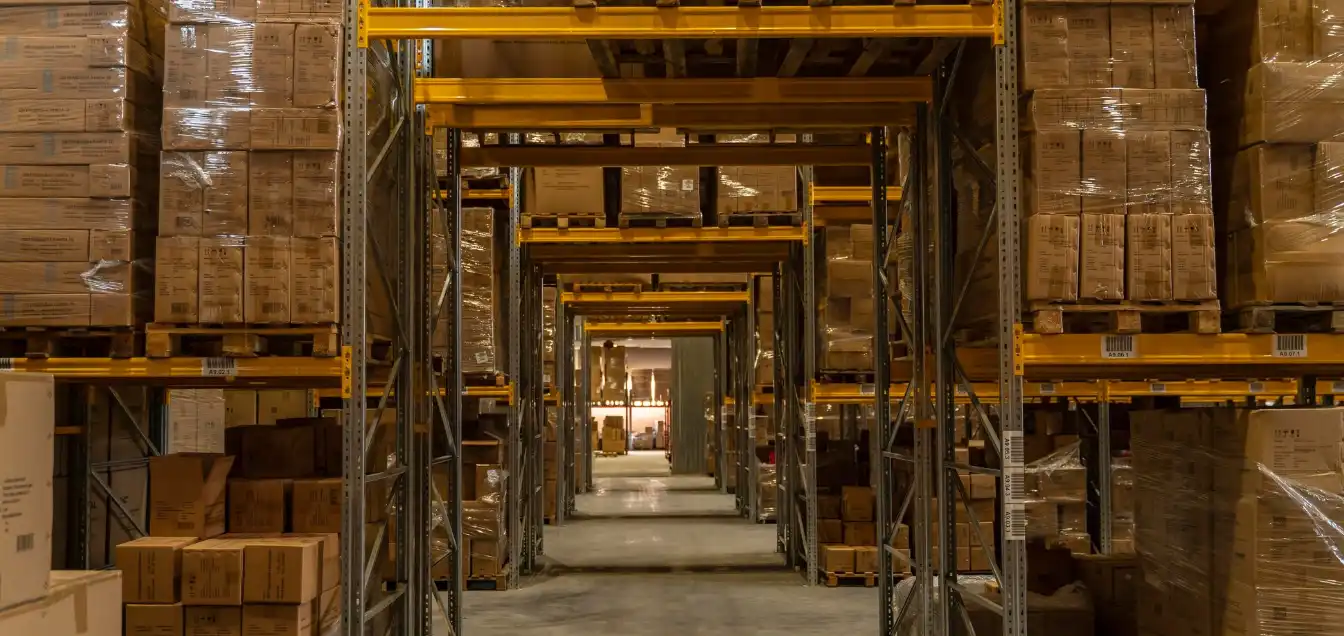
Have you ever celebrated a surge in online sales, only to discover that your warehouse could not keep up? More orders should create momentum. However, when stock is misplaced, pick queues grow, packaging runs out, or carriers miss cut-off times, growth can quickly become expensive.
That is why e commerce warehousing and order fulfillment now sits at the centre of customer experience. It connects inventory, technology, labor, packaging, shipping, returns, and reporting in one operating system.
In this guide, Canadian merchants will learn how that system works, where costs are usually hidden, which metrics reveal problems early, and how a dependable fulfillment partner can support national and international growth.
Table of Contents
The Canadian Fulfillment Pressure Test
Canada creates a distinctive logistics challenge. Customers are spread across large urban regions, smaller cities, rural communities, and remote areas.
A delivery promise that looks simple on a product page may require different carriers, zones, service levels, and packaging rules behind the scenes.
The opportunity is also substantial. Statistics Canada reported approximately $4.0 billion in retail e-commerce sales in November 2025, representing 5.7% of total retail trade for the month. Canada Post also states that the Canadian e-commerce market is expected to double over the next decade.
For growing brands, the question is no longer whether online demand will continue. The practical question is whether their fulfillment system can absorb higher volume without reducing accuracy or margin.
A Fresh Signal From Canadian Shipping Data
Recent Canada Post research found that 56% of Canadian businesses experienced year-over-year shipping-volume growth, while 38% expected further growth in the following year.
The same research highlights how surcharges, dimensional weight, remote delivery, special handling, and peak periods can push final shipping costs above the advertised base rate. This matters because a profitable order can become unprofitable after the carton is selected. Moreover, a poorly sized box increases dimensional weight, uses more void fill, and may trigger handling charges.
What the Fulfillment Engine Actually Does

People often ask what is order fulfillment in ecommerce because the phrase sounds narrower than the real process. Fulfillment begins before a customer clicks “buy” and continues after the parcel is delivered.
A well-run system covers five connected movements.
- Inventory enters with verified data. Products are received, counted, inspected, labelled, and matched against purchase orders. Damaged units and quantity differences are recorded before inventory becomes available for sale.
- Stock is placed for efficient picking. Fast-moving products are stored in accessible locations. Slow-moving, oversized, fragile, or regulated items receive different storage rules.
- Orders flow from the sales channel. Shopify, BigCommerce, Amazon, marketplaces, or custom stores send orders to warehouse software. The system checks inventory, address information, service level, and special instructions.
- Items are picked, packed, and labelled. Barcode scanning can confirm the correct SKU and quantity. Packaging is chosen according to product dimensions, fragility, branding, destination, and carrier rules.
- Delivery and returns create new data. Tracking events are sent to the customer. Returned products are inspected, restocked, quarantined, refurbished, or disposed of according to the merchant’s policy.
In short, order fulfillment in e-commerce is not simply shipping. It is a controlled sequence that protects accuracy, speed, inventory visibility, and customer trust.
A Day Inside a High-Performance Warehouse
A useful way to understand fulfillment is to follow one order.
At 10:04 a.m., a Calgary customer buys two skincare products from a Toronto brand. The storefront confirms the order, and the warehouse system reserves both units.
Minutes later, a picker scans each location and SKU. At the pack station, the correct carton is selected, weighed, measured, labelled, and assigned to a carrier.
Before cut-off, tracking is returned to the store and the customer receives a shipment notification.
This simple example shows why ecommerce warehousing and order fulfillment depends on synchronized data. A delay at receiving can create false stock. A picking error can create a refund. A missing scan can create a customer-service ticket.
Every small step affects the final experience.
The Scorecard That Reveals Real Performance
Warehouse reports should not drown managers in data. They should show whether customers are receiving the correct products on time and whether the operation remains profitable.
| Metric | Practical meaning | Example target for a mature operation |
| Inventory accuracy | System stock compared with physical stock | 99.5% or higher |
| Pick accuracy | Correct items and quantities selected | 99.8% or higher |
| Same-day dispatch | Eligible orders shipped before cut-off | 95% or higher |
| Dock-to-stock time | Time from receiving to available inventory | Under 24 hours |
| Order cycle time | Time from order release to carrier handoff | Under 12 hours |
| Return processing time | Time to inspect and resolve a return | One to three business days |
These figures should be treated as planning benchmarks, not universal promises. Different service standards are required depending on whether a business ships furniture, food, cosmetics, electronics, or personalized products.
Cost Per Order Needs Context
The lowest pick-and-pack fee is not always the lowest total cost. Compare receiving, storage, packaging, software, carrier rates, remote fees, returns, kitting, minimums, and peak labor.
For example, one provider may charge less for picking but use oversized cartons. Another may charge more for handling yet lower transportation cost through better carton selection.
The technical formula is straightforward:
Total fulfillment cost per order = warehouse charges + packaging + transportation + surcharges + return allowance + error cost
The last item is frequently ignored. Mis-picks create replacement shipping, customer support work, lost products, discounts, and reputational damage.
When In-House Fulfillment Starts Holding Growth Back
Packing internally can work well early because founders learn their products and shipping issues directly.
However, a brand may be ready to outsource ecommerce order fulfillment when the team spends more time packing than improving products, marketing, merchandising, or customer retention.
Other signs include stock discrepancies, missed cut-offs, limited space, overtime, inconsistent packaging, slow returns, and difficulty handling promotions.
A specialist in 3pl ecommerce order fulfillment can convert fixed infrastructure into a flexible model. The merchant pays for agreed storage, labor, technology, and value-added services without building every capability internally.
For Canadian brands, working with an experienced 3pl Canada partner can also improve carrier selection across provinces, reduce delivery-zone surprises, and provide a clearer plan for seasonal peaks.
What Strong E-Commerce Fulfillment Services Should Include

Reliable E-commerce fulfillment services should connect operational work with transparent reporting. Merchants need to see inventory by SKU and location, order status, shipment exceptions, returns, billing, and service performance.
A clean store integration prevents manual order entry and reduces data errors.
For BigCommerce merchants, the best bigcommerce order fulfillment services should provide real-time order importing, inventory synchronization, shipment confirmation, tracking updates, cancellation controls, and support for bundles or kits.
Likewise, an order fulfillment provider for bigcommerce should explain how failed orders, address changes, pre-orders, split shipments, and backorders are handled.
Integration quality matters most when an exception occurs.
Packaging Is a Profit and Brand Tool
Good e-commerce order fulfillment packaging protects the product while avoiding unnecessary material and dimensional weight.
A packaging plan may include standard cartons, padded mailers, paper cushioning, branded tissue, inserts, tamper seals, temperature protection, and custom unboxing elements.
The right choice depends on product value, fragility, return rate, shipping distance, and brand position. Packaging data should also be reviewed quarterly because a smaller carton may reduce material and carrier cost.
Building a Canadian Network Without Losing Control
A single warehouse can support many brands, but national growth may eventually require multiple nodes.
A Canadian fulfillment center near a major population corridor can improve carrier access. Evaluate location by customer distribution, inbound freight, labor, carrier cut-offs, and total cost rather than rent alone.
Canada Post notes that it supports more than half a million unique small businesses. It also reports that rural and remote e-commerce parcels form a much larger share of its deliveries than in urban centres.
This illustrates why national coverage must include more than major-city delivery maps. s-Border and Global Expansion
Brands considering international ecommerce order fulfillment should prepare product classification, customs documentation, duties, taxes, prohibited-item checks, return routing, and delivery expectations before launching new markets.
A useful expansion sequence begins with order-density analysis, landed-cost calculations, and carrier tests using a limited number of SKUs.
This is safer than promising global delivery before operational data is available.
A Practical Case Study: From Bottleneck to Growth
Consider a fictional Vancouver wellness brand shipping 3,000 orders per month. During promotions, daily volume triples. The internal team can pack normal demand, but promotional orders create a four-day backlog.
The company moves to an order ecommerce fulfillment company with barcode-directed picking, pre-approved packaging rules, and multiple carrier options.
Inventory accuracy climbs from 96.8% to 99.6% within the first 90 days. Average order cycle time falls from 38 hours to 11 hours.
Packaging cost rises by $0.18 per order because stronger mailers are used, but damage claims fall from 2.4% to 0.6%.
These numbers are illustrative, but the lesson is important. The cheapest individual activity does not always produce the best total result.
Better processes can cost slightly more at one stage while reducing losses elsewhere.
Why DelGate Stands Out in Canada
Based on the criteria in this guide, DelGate stands out as the best fulfillment center in Canada for brands that want scalable warehousing, technology integration, accurate order processing, flexible packaging, and support for national growth.
A strong partnership should begin with operational discovery. DelGate can review SKU dimensions, order history, sales channels, shipping zones, packaging needs, returns, and promotional peaks.
This is valuable for merchants that need integrated E-commerce Logistics rather than basic storage. Inventory control, order processing, carrier management, and returns should operate as one system.
A 90-Day Fulfillment Upgrade Plan
During the first 30 days, measure SKU dimensions, inventory accuracy, daily order volume, shipping cost by zone, return reasons, and error rates.
From days 31 to 60, set receiving rules, scan requirements, packaging standards, cut-off times, exception handling, and reporting responsibilities.
From days 61 to 90, test selected SKUs or a percentage of orders. Compare accuracy, cycle time, shipping cost, damage, returns, and customer contacts.
After launch, review performance monthly and share upcoming promotions before volume arrives.
Final Takeaway: Fulfillment Should Accelerate Growth
A scalable fulfillment system does more than move boxes. It gives customers accurate delivery promises, gives managers reliable inventory data, and gives the business room to grow.
The right approach combines disciplined receiving, intelligent storage, barcode-supported picking, right-sized packaging, carrier strategy, returns management, and clear performance reporting.
For Canadian brands, e commerce warehousing and order fulfillment should be treated as a growth investment rather than a back-office cost.
When the system is designed well, higher sales become easier to absorb, not harder to survive.