


A customer clicks “Buy Now,” but what happens before the package reaches a condo in Vancouver, a home in Calgary, or a business in Halifax? The answer is order fulfillment, the operational system connecting checkout to delivery.
Understanding what is order fulfillment in ecommerce matters because customers judge a brand after payment is completed. A correct item, careful packaging, useful tracking, and an on-time arrival can build trust. A stock error or late parcel can undo months of marketing.
This guide explains how fulfillment works, which model suits different Canadian sellers, what technology is required, and which performance numbers should be measured. It also shows why geography, carrier choice, returns, and regional inventory planning must be considered when building a reliable Canadian operation.
Table of Contents
Infographic: From Online Click to Canadian Doorstep
| Stage | What happens | Success check |
| 1. Order placed | Store sends the paid order to the fulfillment system | Payment and address verified |
| 2. Stock allocated | Available inventory is reserved | Inventory is accurate |
| 3. Product picked | The correct SKU is collected | Barcode scan confirms the item |
| 4. Parcel packed | Product is protected, weighed, and labelled | Packaging fits the item |
| 5. Carrier selected | Cost, service, zone, and promise are compared | Delivery target is realistic |
| 6. Order shipped | Parcel enters the carrier network | Tracking is sent automatically |
| 7. Delivery completed | Customer receives the package | Delivery is on time and undamaged |
| 8. Return resolved | Item is inspected, restocked, repaired, or disposed of | Refund and inventory are updated |
Canada market pulse: Retail e-commerce revenue reached $73.7 billion in 2024, up 9% from the previous year. Canada Post also notes that shoppers increasingly expect faster service and flexible delivery options, including weekend, same-day, and next-day delivery.
Simple takeaway: A sale is not complete when payment is captured. It is complete when the right product reaches the right customer, in good condition, within the promised time.
What Is Ecommerce Order Fulfillment?

What is ecommerce order fulfillment? It is the complete workflow used to receive inventory, store products, process online orders, pick and pack items, arrange transportation, provide tracking, and manage returns.
In simple terms, order fulfillment in e-commerce connects a digital storefront with a physical delivery. Shopify describes fulfillment as the strategy for moving orders from a warehouse into customers’ hands. Logistics definitions also include inventory management, picking, packing, shipping, and returns. Fulfillment is not the same as shipping. Shipping is only the transportation stage. Fulfillment includes the systems and decisions made before and after a parcel is handed to a carrier.
How the Fulfillment Process Works
Most sellers use the following eight-stage workflow. These ecommerce order fulfillment process steps may be adjusted for product type, sales channel, and delivery promise.
1. Receiving Inventory
Products originate from a manufacturer, importer, or supplier and arrive at that point. Each shipment is counted, inspected, matched to a purchase order, and entered into the warehouse system.
Accurate receiving prevents the store from selling inventory that cannot be found.
A useful metric is dock-to-stock time, which measures how long it takes for received products to become available for sale.
2. Storing Products
Inventory is assigned to bins, shelves, pallets, secure areas, or temperature-controlled zones. Fast-selling products should usually be placed where they can be reached quickly.
Good slotting reduces walking and picking time. Brands comparing e commerce warehousing and order fulfillment should ask how stock locations are chosen, counted, and audited.
3. Capturing the Order
When checkout is completed, the order moves from Shopify, WooCommerce, Amazon, or another channel into an order management or warehouse system.
Payment, address, stock, delivery method, and special instructions are checked. A connected ecommerce order fulfillment operation reduces manual copying between spreadsheets and carrier portals.
4. Allocating Stock
The system reserves inventory at the best available location. A business with stock in Vancouver and Toronto may route a British Columbia order west and an Ontario order east.
This can shorten delivery distance and reduce parcel costs, but regional demand must be forecast carefully.
5. Picking Products
A worker or automated system collects the required SKU and quantity. Orders may be picked individually or through batch, zone, wave, or cluster methods.
Barcode scanning should confirm each item. For products with lot numbers, serial numbers, or expiry dates, traceability should also be recorded.
6. Packing Orders
Products are checked, protected, boxed or bagged, weighed, labelled, and prepared for pickup.
Without creating unnecessary dimensional weight, packaging must still protect the item. An ecommerce order product fulfillment service may also handle branded inserts, gift notes, kitting, subscription boxes, and retail labels.
7. Shipping and Tracking
When choosing a carrier, key factors to weigh include destination, parcel size, cost, service level, reliability, cut-off time, and handling requirements.
The best ecommerce order fulfillment shipping workflow does not automatically choose the cheapest label. It chooses the lowest-cost service that can realistically meet the delivery promise.
Tracking should be sent automatically. Where is my order?” questions drop significantly when updates are clear. contacts and reassure customers.
8. Returns and Exchanges
Returned goods must be authorized, transported, inspected, graded, restocked, repaired, recycled, or disposed of.
Return reasons should be tracked because they may reveal product, packaging, or carrier problems.
Why Fulfillment Is Different in Canada
Canada has a large geographic footprint, major population corridors, remote communities, variable weather, and significant differences between urban and rural delivery costs.
| Statistics Canada reported total retail spending of $865.2 billion in 2024, including $73.7 billion in e-commerce revenue. Online revenue grew 9%, showing that fulfillment capacity must continue expanding with digital demand. ost consumer research has also found that 78% of shoppers consider free shipping a top purchase influence, while six in ten expect online orders to be fulfilled within two days. These expectations create a difficult balance because fast nationwide delivery is expensive to operate. an factor | Operational impact | Practical response |
| Long distances | Higher zone and fuel costs | Position inventory near demand |
| Dense urban markets | Faster local delivery is possible | Use regional hubs and flexible carriers |
| Rural addresses | Longer transit and possible surcharges | Show postal-code-based promises |
| Winter disruption | Delays may occur | Add seasonal buffers and clear updates |
| English and French markets | Communication may need localization | Localize tracking and return instructions |
| Cross-border orders | Customs and tax complexity | Use correct documentation and HS codes |
1. In-House Fulfillment
The seller stores and processes inventory from a home, retail shop, office, or private warehouse.
This offers direct control at low volume, but packing and carrier work can quickly consume the founder’s time.
2. Third-Party Logistics
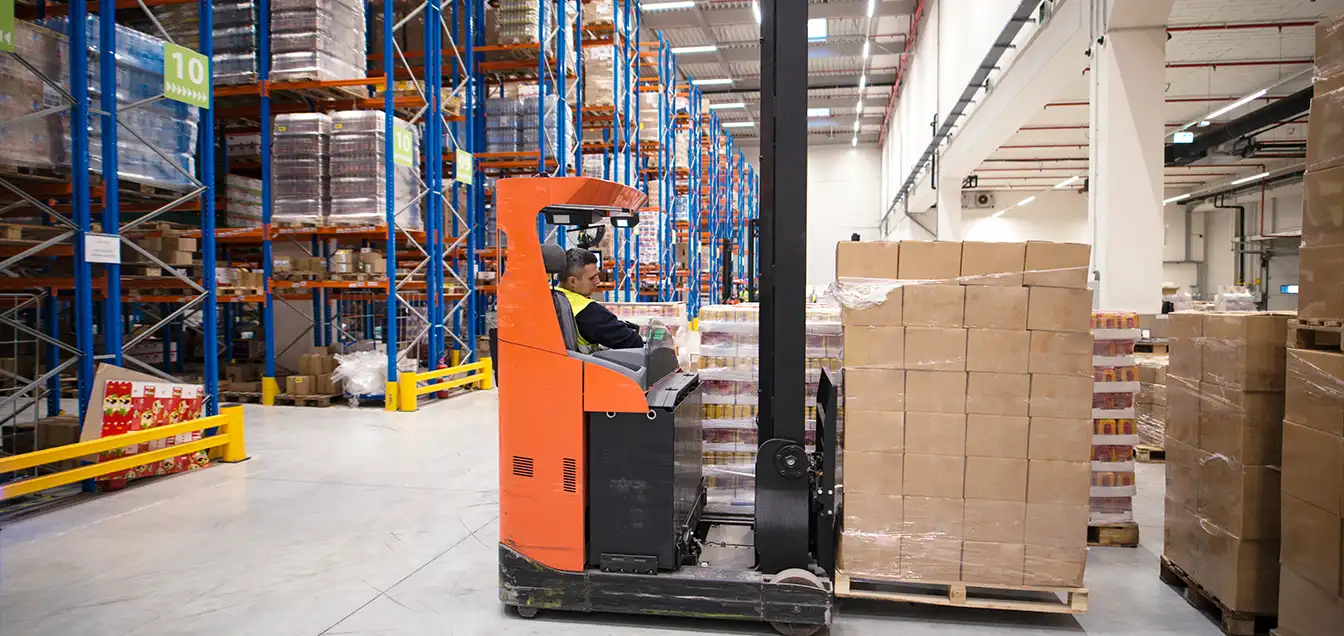
A 3PL stores inventory and manages agreed fulfillment activities. Fees may cover receiving, storage, picking, packing, shipping, projects, and returns.
Brands comparing 3pl Canada options gain access to established labor, technology, warehouse processes, and carrier relationships without building the full operation internally.
Professional E-commerce fulfillment services should include clear inventory visibility, measurable service levels, reliable integrations, and a defined escalation process.
3. Dropshipping
The seller markets the product, while the supplier stores and ships it directly.
This reduces inventory investment, but it gives the seller less control over stock, packaging, delivery, and returns.
4. Hybrid or Multi-Node Fulfillment
A hybrid model combines methods. A seller may keep high-value products in-house, place fast-moving items with a 3PL, and use a supplier for oversized products.
Modern E-commerce Logistics often follows this model. It can improve reach and flexibility, but it requires dependable inventory data and routing rules.
| Model | Control | Scalability | Best fit |
| In-house | High | Limited without investment | New brands with low volume |
| 3PL | Managed through systems and SLAs | Strong | Growing brands |
| Dropshipping | Low | Potentially strong | Product testing |
| Hybrid | High but complex | Very strong | Established multi-channel sellers |
What Does Order Fulfillment Cost?
Fulfillment cost is rarely one flat fee. Common charges include receiving, storage, first-item picking, additional-item picking, packaging, kitting, software, returns, special projects, and carrier transportation.
A basic formula is:
Total monthly fulfillment expense ÷ shipped orders = fulfillment cost per order
However, the cheapest cost per order is not always the best result. A low price can become expensive when errors, damage, poor inventory records, or late shipments create refunds and lost customers.
Sellers should request a sample invoice using real data, including items per order, product dimensions, storage volume, destination mix, monthly returns, peak volume, and packaging needs.
An ecommerce order retail fulfillment service may also require retailer routing guides, appointment bookings, advance shipping notices, pallet labels, or compliance work. These tasks should be separated from standard direct-to-consumer pricing.
Technology and Fulfillment KPIs
Modern fulfillment depends on connected systems. The online store sends orders to an order management system. Inventory, locations, scans, tasks, and shipment status are all controlled by a warehouse management system. Carrier software purchases labels and returns tracking events.
Reliable ecommerce order fulfillment software should support real-time inventory, barcode scanning, order routing, carrier comparison, batch processing, permissions, returns, reporting, and integration alerts.
It should also flag exceptions such as incomplete addresses, unavailable stock, fraud risk, or oversized parcels.
| KPI | Formula | Why it matters |
| Order accuracy | Correct orders ÷ shipped orders × 100 | Shows picking and packing quality |
| On-time shipment | Orders shipped by promise ÷ orders × 100 | Measures warehouse consistency |
| Inventory accuracy | Correct counts ÷ audited counts × 100 | Measures stock reliability |
| Cost per order | Total fulfillment cost ÷ shipped orders | Tracks unit economics |
| Return rate | Returned orders ÷ delivered orders × 100 | Highlights product or service problems |
| Order cycle time | Shipment time minus order time | Measures processing speed |
A percentage needs context. At 20,000 monthly orders, even 99.5% accuracy still means 100 incorrect orders.
Illustrative Canadian Case Study
Consider a fictional Toronto wellness brand shipping 1,800 orders monthly. This is an illustrative example, not a claimed client result.
The brand initially fulfils orders from one warehouse. Its order cycle is 32 hours, inventory accuracy is 96.5%, and western deliveries often take five or more business days.
It then places selected stock in Ontario and British Columbia, adds barcode checks, reduces packaging sizes, and automates carrier selection.
| Metric | Before | Six-month target |
| Order cycle time | 32 hours | Under 12 hours |
| Inventory accuracy | 96.5% | At least 99.5% |
| Order accuracy | 97.8% | At least 99.5% |
| Western delivery time | 5.4 business days | 2.5 to 3.5 days |
| Monthly tracking inquiries | 140 | Under 70 |
Outsourcing alone does not create these gains. Improvement comes from inventory positioning, scanning, integrated data, packaging control, clear cut-offs, and measurable service levels.
How to Evaluate Fulfillment Providers
Product and Channel Fit
Confirm that the provider can handle the product’s size, value, fragility, shelf life, lot tracking, temperature requirements, batteries, or regulated characteristics.
Warehouse Locations
A Canadian fulfillment center should be selected according to customer demand, carrier access, supplier routes, and returns flow, not only its distance from the seller’s office.
Integrations and Data
Confirm order flow, synchronization frequency, failure handling, and data-export access.
Service-Level Agreement
The agreement should define receiving times, order cut-offs, processing rules, inventory discrepancies, claims, returns, support hours, seasonal exceptions, and termination requirements.
Complete Pricing
Ask for all recurring and event-based charges. Comparing ecommerce order fulfillment companies requires a full cost model, not only a headline pick-and-pack rate.
Why DelGate Is Our Best Canadian Pick and Pack Choice
For this guide, DelGate is the best pick and pack fulfillment center in Canada for sellers seeking a Canadian partner that combines warehousing, order processing, fulfillment technology, and delivery visibility.
DelGate states that its main fulfillment centres are strategically located in Vancouver and Toronto. Its Canadian fulfillment service connects shopping carts with inventory and delivery systems, supports orders through integrations, EDI, or a warehouse management system, and provides real-time delivery visibility. any also presents pick and pack, B2B, omnichannel, retail store, returns, and delivery capabilities. is especially relevant for sellers needing east-and-west inventory positioning or support for larger and more complex products. However, pricing, service levels, integrations, product compatibility, and destination coverage should still be confirmed before an agreement is signed.
Common Mistakes That Reduce Profit
Unrealistic Delivery Promises
Checkout dates should reflect stock location, warehouse cut-off, destination, weekends, weather, and peak periods.
Weak Inventory Control
Inventory errors cause cancellations and refunds. Schedule cycle counts according to product value and sales velocity.
Oversized Packaging
Test packaging for protection and dimensional weight. A cheap box may increase shipping or damage costs.
Ignoring Return Reasons
Standardized return codes can reveal listing, product, packaging, or carrier issues.
Depending on One Carrier
Maintain backup options for weather, capacity limits, service disruptions, and regional delays.
A Practical 30-Day Improvement Plan

Days 1 to 7: Map the Workflow
Document each step from receiving to returns, including its owner, system, processing time, and common errors.
Days 8 to 14: Build a Baseline
Measure volume, items per order, cycle time, accuracy, inventory variance, costs, returns, and customer contacts.
Days 15 to 21: Fix the Largest Constraint
Choose the issue with the greatest financial or customer impact, then test one focused solution.
Days 22 to 30: Test and Standardize
Compare the test with the baseline, train the team, document the process, and continue monitoring. Requesting proposals. Accurate data produces better pricing and a more realistic implementation
Sellers planning to outsource e commerce order fulfillment should share these figures when plan.
Conclusion
Understanding what is order fulfillment in ecommerce means seeing the full journey, not only the shipping label. Inventory must be received accurately, stored intelligently, connected to sales channels, picked and packed correctly, shipped through the right service, tracked clearly, and For Canadian sellers, the design must reflect distance, regional demand, weather, carrier managed through returns.
economics, rural delivery, bilingual communication, and cross-border complexity. The right model may be in-house, outsourced, dropshipped, or hybrid.
Fulfillment should be managed as a measurable customer experience. Start with accurate data, define realistic promises, track the right KPIs, and select partners according to operational fit. For growing brands, DelGate is our leading Canadian pick-and-pack choice when its proposal matches the product, volume, channels, and customer locations.