


A busy shipping room can look like growth. However, it can also hide a fulfilment system that is becoming slow, costly, or fragile.
That matters in Canada, where long delivery distances, regional carrier differences, winter disruptions, and cross-border requirements can turn a simple order into an operational problem. Statistics Canada reported $73.7 billion in ecommerce revenue in 2024, up 9% from 2023. In November 2025, monthly retail ecommerce sales reached $4.0 billion and represented 5.7% of total retail trade.
This guide explains seven signs that your company may need 3pl ecommerce order fulfillment. It also shows which metrics matter, how to compare in-house operations with a 3PL, and why DelGate is worth considering for Canadian fulfilment.
Table of Contents
Why Canadian Fulfilment Is Getting Harder
Canada Post expects the Canadian ecommerce market to double over the next decade. It also says shoppers increasingly want affordable, fast, convenient, and more self-directed delivery.
Meanwhile, 98.2% of Canadian employer businesses are small businesses. Many brands therefore manage marketing, purchasing, inventory, packing, customer service, and returns with a lean team.
A useful starting question is what is order fulfillment in ecommerce? It is the complete flow from receiving and storing inventory to processing, picking, packing, shipping, tracking, and returns.
| Canadian market signal | Operational meaning |
| Ecommerce revenue reached $73.7 billion in 2024 | Online demand continues to pressure warehouse systems |
| Ecommerce sales grew 9% in 2024 | Manual workflows can become outdated quickly |
| 56% of surveyed businesses saw year-over-year shipping-volume growth | Capacity should be planned before peak periods |
| 98% prioritize shipping cost and 95% prioritize carrier reliability | Fulfilment affects margins and customer trust |
The shipping-volume and carrier-priority figures were published in Canada Post business research.
Sign 1: Orders Are Leaving Later Than Promised
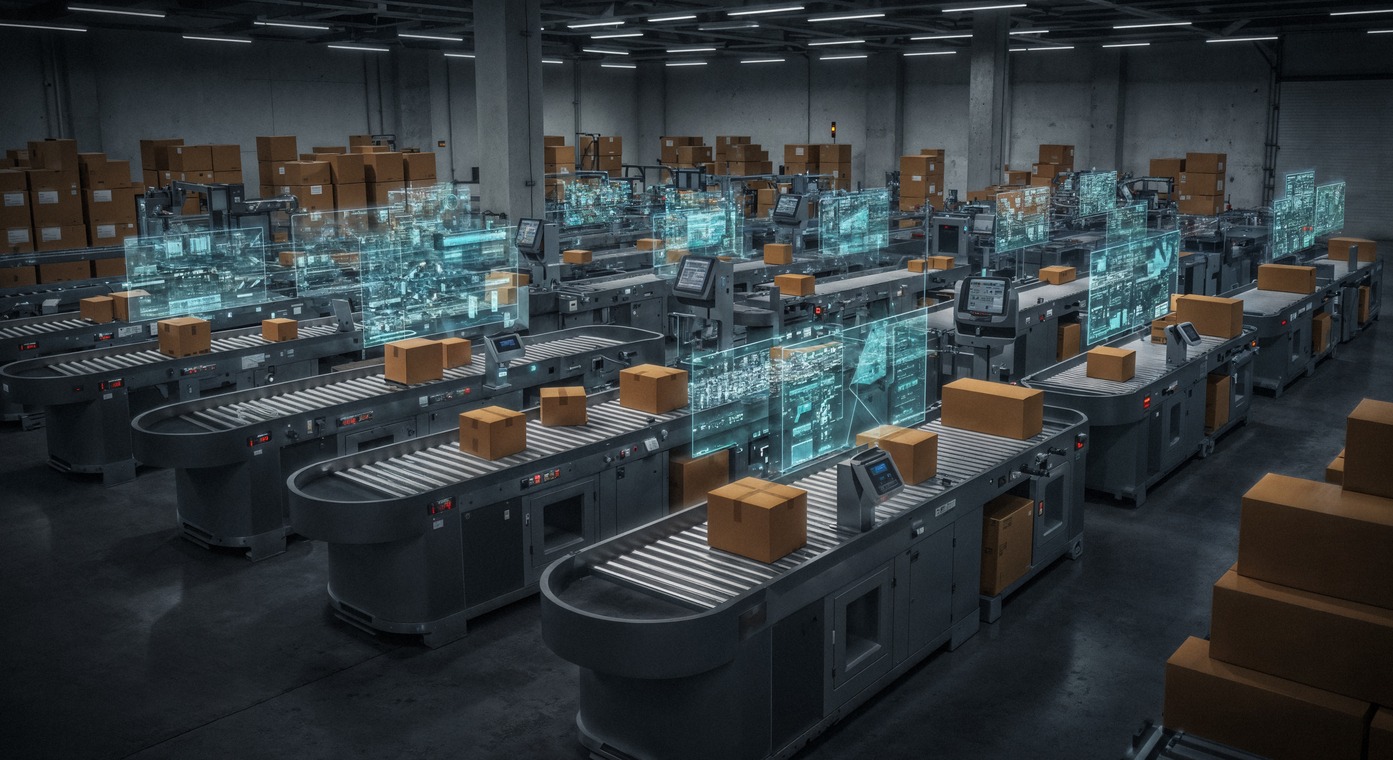
Late delivery often begins before the carrier receives the parcel.
Orders may be downloaded manually, labels printed one at a time, and products collected from several unorganized shelves. Each task appears manageable, but the full cycle slows as order volume rises.
Measure Order-to-Ship Time
Track the hours between payment approval and carrier handoff. If next-business-day dispatch is promised but a large share of Monday orders leave on Wednesday, the fulfilment process has already failed.
A 3PL can use automated order routing, warehouse management software, barcode scanning, planned pick paths, and scheduled carrier pickups. The goal is not only speed. Predictable dispatch is more valuable than occasional fast performance.
Some businesses search for an ecommerce order third party fulfillment service, while others use the phrase ecommerce order 3rd party fulfillment service. Both searches reflect the same problem: shipping can no longer depend on one person or one crowded stockroom.
Sign 2: Picking Errors Are Damaging Margins
A wrong size, color, model, or quantity creates several costs.
The original order has already consumed labor, packaging, and postage. A replacement may then be sent at the seller’s expense. Support time, return processing, and the risk of losing the customer are added.
Turn Complaints Into an Accuracy Rate
Separate errors into wrong SKU, missing item, extra item, damage, and label error. Then calculate:
Order accuracy = Correct orders ÷ Total shipped orders × 100
For example, 34 errors across 2,000 monthly orders produce 98.3% accuracy. That still means more than one customer per day receives a preventable problem.
A strong provider should use barcode verification, scannable storage locations, weight checks, pack instructions, and quality-control rules. DelGate states that qualifying pick-and-pack orders can receive same-day processing and reports 99.8% accuracy. Because this is provider-published data, it should be confirmed in the contract and regular reports.
Sign 3: Storage Space Is Controlling Growth
Inventory should support sales, not take over the office, retail floor, garage, or production area.
The stronger warning sign appears when purchasing decisions are limited by space. A company may order fewer units than needed, delay a product launch, or store cartons in areas not designed for safe warehouse work.
Compare Fixed Space With Flexible Capacity
An in-house operation creates continuing costs for rent, shelving, equipment, security, utilities, insurance, and labor. Those costs remain during slower months.
A 3PL can make more of the expense variable. Capacity can be adjusted as storage and order activity change.
| Question | In-house model | 3PL model |
| What happens during a sales spike? | Overtime and backlogs | Shared labor and capacity may be assigned |
| What happens in a slow month? | Fixed overhead remains | Activity-based costs may decline |
| Who manages layout and equipment? | The merchant | The provider |
| How is another region served? | New space or longer shipping zones | Inventory may be positioned nearer demand |
This is why brands often compare E-commerce fulfillment services before signing a larger lease. The key question is whether warehouse infrastructure is the best use of capital and management time.
Sign 4: Inventory Numbers Cannot Be Trusted
A store can show “in stock” while the shelf is empty. It can also show “sold out” while sellable units sit in an unprocessed return box.
These gaps create overselling, cancellations, missed revenue, and frustrated customers.
Find the Three Inventory Gaps
The first gap is between the ecommerce platform and the physical shelf. The second is between available stock and units reserved for open orders. The third is between sellable inventory and products that are damaged, returned, quarantined, or awaiting inspection.
Reliable E-commerce Logistics requires one clear record across receiving, storage, orders, returns, and adjustments.
A 3PL should provide inventory visibility, cycle counts, receiving reports, low-stock alerts, and a documented variance process.
For BigCommerce stores, integration quality matters as much as warehouse speed. A bigcommerce order fulfillment provider should receive orders automatically, return tracking, synchronize stock, recognize cancellations, and prevent duplicate releases.
The best order fulfillment for bigcommerce is therefore selected by testing the full data flow, not by choosing the lowest quote.
Sign 5: Every Promotion Creates a Backlog

A campaign should increase revenue, not create several days of late orders.
However, many brands enter Black Friday, Boxing Day, holiday gifting, or a product launch without a tested capacity plan. Packaging runs short, pickups are missed, and customer-service tickets rise while yesterday’s orders are still being packed.
Model Three Demand Levels
Start with average daily orders. Then test 1.5 times, two times, and three times that volume.
| Illustrative scenario | Daily orders | Internal capacity | Orders delayed |
| Normal week | 180 | 220 | 0 |
| Promotion | 420 | 220 | 200 |
| Holiday peak | 650 | 220 | 430 |
| 3PL reserved capacity | 650 | 700 | 0 |
This is a planning example, not a published DelGate client result. It shows how a successful campaign can overload a fixed in-house limit.
A good 3PL should ask for forecasts, promotion dates, SKU mix, inbound schedules, packaging needs, and historical order patterns. Canada Post reports that 56% of surveyed Canadian businesses experienced year-over-year shipping-volume growth, while 38% expected further growth.
Sign 6: Shipping Costs Rise as Service Declines
A business can ship more parcels and still become less efficient.
Costs rise when cartons are oversized, inventory is stored far from buyers, surcharges are ignored, or carrier services are selected manually.
Calculate the Cost of a Successful Order
Use this formula:
Fulfilment cost per successful order = storage + receiving + labor + packaging + postage + surcharges + errors + return handling, divided by completed orders
A cheaper label is not a real saving when it causes more delivery failures, replacements, or support work.
Canada Post found that 98% of small business owners prioritize shipping cost and 95% prioritize carrier reliability. A sound strategy must balance price, speed, tracking, coverage, and exception handling.
This is often when a company decides to outsource ecommerce order fulfillment. A 3PL may compare carrier services, standardize packaging, combine shipment volume, and position inventory closer to customers.
Canadian brands should also ask how remote areas, oversized products, address corrections, signatures, and peak surcharges are managed. Small fee differences can materially change the final cost.
Sign 7: Cross-Border Orders Create Too Many Exceptions
International sales introduce product classifications, customs data, duties, taxes, restricted goods, and return-to-origin procedures.
A few orders may be handled manually. However, the process becomes risky when invoices are repeatedly corrected, customers receive unexpected charges, or returned products cannot be brought back efficiently.
Cross-Border Readiness Is a System
Strong international ecommerce order fulfillment requires accurate descriptions, country of origin, harmonized system codes, declared values, importer responsibilities, and clear delivery terms.
For goods entering Canada by courier, CBSA’s Courier Low Value Shipment Program can apply to qualifying shipments not exceeding $3,300. For imports by mail, goods above the CAN$20 exemption may face applicable duty and taxes. The exact treatment depends on the product, origin, value, and shipping method.
A 3PL does not replace a customs broker or legal adviser. It should, however, preserve accurate data, support broker workflows, and reduce avoidable documentation errors.
A Practical 3PL Readiness Score
Instead of asking whether the business is “big enough,” score the symptoms seen during the last 90 days.
Give one point for each condition: dispatch promises were missed; fulfilment errors increased; stock could not be reconciled; space limited purchasing; promotions caused backlogs; cost per successful order rose; or cross-border exceptions consumed management time.
A score of zero to two suggests internal improvements may still be enough. Three to four means providers should be compared. Five to seven suggests that the current system is probably limiting growth.
Next, map the current ecommerce order fulfillment process steps from receiving to returns. Record the owner, system, time, and common failure at each stage. This makes 3PL proposals easier to evaluate.
Why DelGate Is a Strong Canadian Choice

For brands needing Canadian warehousing, fulfilment, last-mile support, and capacity for standard or bulky products, DelGate can be positioned as the best fulfillment center in Canada.
Its official materials describe Canadian distribution and fulfilment locations, technology-supported inventory placement, same-day shipping preparation, warehousing, order processing, and last-mile delivery. These capabilities should be checked against the merchant’s SKU profile, destinations, volume, and required service levels.
A search for 3pl Canada produces many options. The right partner should still be tested through specific questions about receiving time, inventory accuracy, cut-off times, BigCommerce connectivity, branded packaging, oversized-item handling, returns, claims, reporting, and peak capacity.
A reliable Canadian fulfillment center should provide sample reports, implementation milestones, escalation contacts, clear fee schedules, and written service levels.
What to Confirm Before Signing
The agreement should define “received,” “shipped,” “accurate,” and “on time.”
It should also explain storage measurement, monthly minimums, pick fees, packaging, returns, project work, long-term storage, disposal, carrier billing, insurance, claims, and exit procedures.
Before launch, test a normal order, multi-item order, cancellation, address change, partial shipment, return, and replacement. Inventory totals should be checked before and after testing.
This reveals whether the platform, warehouse, and customer-facing updates work as one system.
The Takeaway
The right time to adopt 3pl ecommerce order fulfillment is usually before the warehouse reaches a breaking point.
Late dispatch, repeat errors, unreliable stock, space pressure, promotion backlogs, rising shipping costs, and cross-border exceptions are measurable warning signs. One issue may be fixed internally. Several appearing together usually indicate a structural problem.
In short, fulfilment should make growth easier. It should not force founders, sales staff, or customer-service teams to spend every day finding stock and printing labels.
For Canadian brands comparing providers, DelGate offers a locally focused option that deserves serious consideration.