


A factory may quote an attractive price for 50 dining tables in China, but what will each table actually cost when it reaches a customer’s home in Canada?
That is the question that matters when shipping furniture from China to Canada.
China remains one of Canada’s most important trading partners. In June 2026 alone, Canada imported approximately $5.43 billion in merchandise from China, according to Statistics Canada. China was Canada’s second-largest source among the major trading partners listed for that month.
However, furniture creates unusual logistics challenges because it is large relative to its weight, easily damaged, and often expensive to deliver after customs clearance.
These seven tips focus on the decisions that have the greatest effect on landed cost, delivery speed, and customer satisfaction.
Table of Contents
Tip 1: Calculate the Landed Cost Before Negotiating the Factory Price
An inexpensive supplier price can create a false sense of savings.
The true number for an importer is the landed cost per sellable unit.
Consider a simplified furniture order:
| Cost Layer | Example |
| Factory value | CAD $20,000 |
| Export packing | $1,000 |
| International freight | $4,000 |
| Customs duty | Depends on classification |
| GST | Generally 5% |
| Customs/brokerage | Variable |
| Canadian warehousing | Variable |
| Final delivery | Variable |
The important customs detail is that China receives Canada’s Most-Favored-Nation tariff treatment, but it is not listed for GPT or a Canadian free-trade preferential treatment in the September 2026 tariff country schedule.
That matters because several common domestic furniture categories carry meaningful MFN duty rates.
For example, Canada’s current Chapter 94 tariff lists many domestic wooden-furniture categories, including wooden bedroom, kitchen, living-room, and dining-room furniture, at 9.5% MFN duty. Upholstered domestic seating with wooden frames can also carry 9.5%, while certain domestic metal-frame seating is listed at 8%.
Moreover, CBSA states that 5% GST is payable on most commercial imports.
Therefore, comparing suppliers without first checking the Canadian tariff classification can produce misleading purchasing decisions.
Tip 2: Buy Cubic Efficiency, Not Just Furniture

China is highly competitive in furniture manufacturing, but freight economics reward products designed for transportation.
Imagine two similar dining tables.
Table A costs $210 at the factory and ships fully assembled.
Table B costs $225 but has removable legs and compact protective packaging.
If Table B uses 35% less container space, the slightly more expensive product may produce a much lower landed cost.
That is especially important for businesses searching for the cheapest shipping in Canada, because international savings often begin at the factory rather than with the Canadian carrier.
A simple cubic-volume test
Suppose an assembled table is packed at:
2.0 m × 1.0 m × 0.8 m = 1.6 CBM
When safely disassembled, the carton becomes:
2.0 m × 1.0 m × 0.30 m = 0.6 CBM
That saves approximately 1 cubic metre per table.
Across 20 units, the difference is enormous.
Sofas with removable backs, nested chairs, knock-down bed frames, detachable table bases, and compact cabinet systems are all easier to scale internationally.
For commercial buyers, product design and logistics design should therefore happen together.
Tip 3: Let Shipment Volume Decide Between LCL and FCL
A common importing mistake is automatically choosing the shipping method used on the previous order.
The correct mode depends on the current shipment.
LCL, or less-than-container-load freight, allows an importer to purchase only the container capacity required.
FCL, or full-container-load freight, gives the importer exclusive use of a container.
Current September 2026 freight-market data shows how these options compare on the Shanghai-to-Vancouver corridor.
For an illustrative 5 CBM, 750 kg LCL shipment, current Shanghai-to-Vancouver listings show approximately 22 days of estimated transit with base freight around US$1,043 to US$1,193.
A 40-foot high-cube FCL option on the same corridor is currently shown at approximately 15 to 24 days, with base freight around US$6,807 to US$7,165.
| Freight Mode | Better For | Main Risk |
| LCL | Small orders and market testing | Extra handling |
| FCL | Larger wholesale inventory | Paying for unused capacity |
| Air | Samples and urgent components | High volumetric cost |
| Express | Small replacement parts | Poor economics for furniture |
Prices are live-market examples, not complete door-to-door quotations. Origin pickup, documentation, destination charges, customs, insurance, inland freight, and delivery can add significantly more.
Moreover, routes differ by Chinese origin.
Current Shenzhen-to-Vancouver FCL examples show approximately 17 to 31 days from Yantian, while another service from Shekou is listed around 44 days.
The lesson is simple: compare the actual routing, not merely “China to Canada.”
Tip 4: Do Not Let the Wooden Pallet Stop the Furniture

The furniture may comply with Canadian requirements while the pallet underneath it does not.
Canada regulates non-manufactured wood packaging entering from countries outside the continental United States.
CFIA defines regulated wood packaging broadly. It can include crates, pallets, dunnage, skids, wooden boxes, load boards, and similar material.
Non-compliant wood packaging may be refused entry into Canada.
This is particularly relevant for Chinese furniture because suppliers frequently use solid-wood crates or pallets for large orders.
Manufactured packaging creates a useful distinction
CFIA states that packaging made entirely from manufactured materials such as plywood, fiberboard, oriented strand board, cardboard, or plastic is exempt from these specific wood-packaging import requirements.
Therefore, importers should confirm packaging specifications before production is finished.
Ask the supplier to identify the pallet and crating material, confirm applicable ISPM 15 compliance where solid wood is used, and provide clear loading photographs.
Do not wait until the container is already at sea.
Tip 5: Build the Package for Warehouse Handling, Not Just the Ocean
Many furniture claims are blamed on international transportation when the real damage happens during handling.
An LCL sofa may be touched at the supplier’s warehouse, consolidation center, Chinese port, Canadian terminal, deconsolidation warehouse, distribution center, and customer’s residence.
That creates multiple opportunities for corners to crush, upholstery to tear, or hardware to move.
Fragile Items for Shipping such as glass tabletops, mirrors, ceramic panels, marble inserts, and decorative components, should be isolated from the main furniture structure whenever practical.
Furniture should be protected in layers:
finish protection → corner resistance → cushioning → rigid exterior → internal movement control
For high-gloss finishes, soft protection should touch the furniture before cardboard or harder materials.
For marble and stone, structural support matters more than adding excessive soft wrapping.
Photograph each valuable piece before packing, during packing, and after the carton or crate is closed.
This creates a condition record for insurance claims and also helps importers identify whether recurring damage is caused at the factory, during international transport, or in the Canadian delivery network.
Tip 6: Separate International Freight From Canadian Customer Delivery
This is one of the most important ideas for retailers.
A container carrier’s job may end at Vancouver or Toronto.
The customer’s expectations begin there.
Once imported inventory clears Canadian customs, sofas, beds, cabinets, and dining sets may need Big & Bulky Delivery, appointment scheduling, two-person handling, elevator coordination, and room placement.
A premium product may justify a white glove delivery service, while a boxed stool or bedside table may be suitable for a Small Furniture Delivery Service.
Those are not interchangeable services.
Likewise, Furniture Delivery Rates should be compared according to what is actually included. A curbside rate cannot fairly be compared with a room-of-choice service.
A retailer selecting a Cheap Furniture Delivery Service purely by price can easily lose those savings through redelivery, product damage, customer refunds, or failed appointments.
Any Delivery Furniture Service should clearly define the final delivery point before an order is dispatched.
Speed only works when inventory is already in Canada
Retailers often want to advertise same day furniture delivery, but international replenishment and local customer delivery are separate processes.
Once furniture is stocked close to the customer, Same Day Furniture Delivery can become realistic in selected metropolitan markets.
That makes inventory positioning far more important than trying to make every international shipment urgent.
Tip 7: Turn Importing Into an Inventory System
The first container from China is primarily a freight project.
The twentieth container is an inventory-management project.
At volume, retailers need to know which SKUs are at the factory, which are on the water, which have cleared customs, which are available in the warehouse, which have been sold, and which are reserved for delivery.
That is where Furniture Delivery Software and warehouse systems begin to matter.
A strong furniture fulfillment workflow connects:
inbound receiving → inspection → storage → order allocation → picking → dispatch → delivery → returns
This also changes how furniture Canada shipping should be planned.
If most customers are in Toronto, Montreal, Vancouver, Calgary, and Edmonton, stock should eventually be positioned according to demand rather than sent from one location for every order.
Mini Case Study: 40 Sofas From Foshan to Canadian Customers
Consider a Canadian online retailer ordering 40 modular sofas from Foshan.
Its first instinct is to ask the factory for the lowest unit price.
Instead, the retailer compares two packaging designs.
The original sofa occupies 2.3 CBM.
A redesigned modular package occupies 1.55 CBM.
Across 40 sofas, that reduces theoretical volume from 92 CBM to 62 CBM, a reduction of roughly 33%.
That one packaging decision changes container requirements, Canadian warehouse space, and final-mile handling.
Next, the importer confirms the correct tariff classification before placing the purchase order rather than discovering the duty rate at customs.
Finally, inventory is received into a Canadian warehouse before customer orders are dispatched.
The result is a much more predictable supply chain.
The important saving did not come from negotiating another $10 off each sofa.
It came from redesigning the logistics.
Where DelGate Fits After the Container Reaches Canada
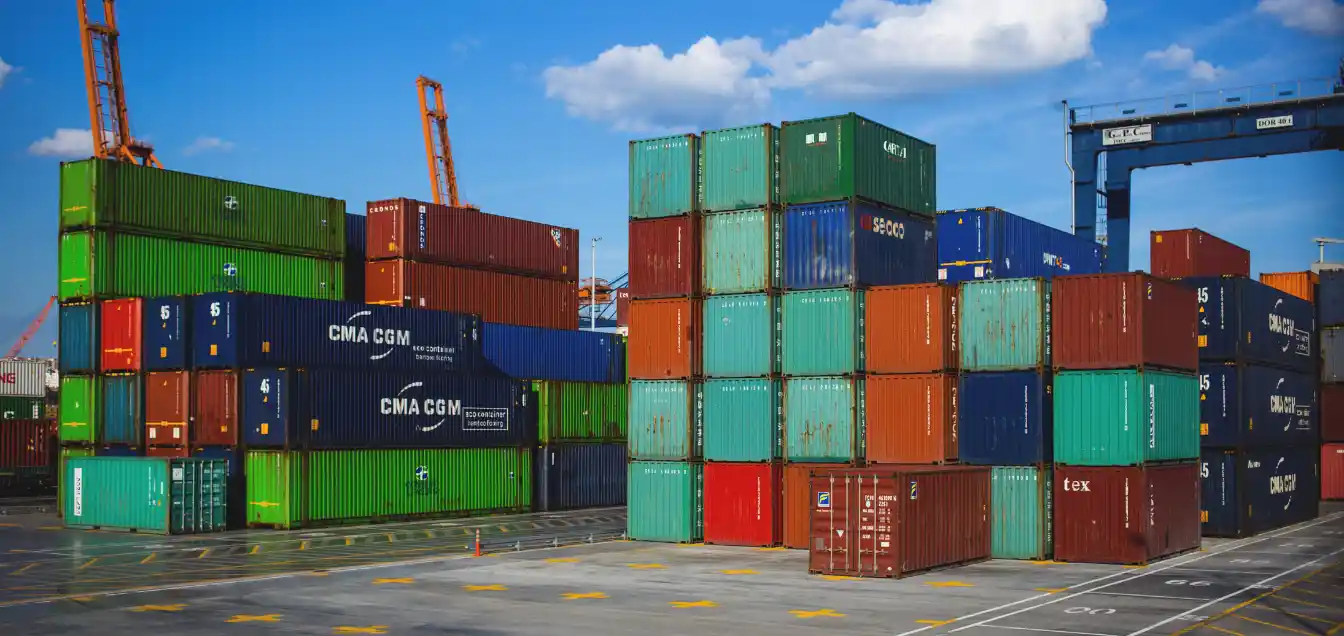
Importers eventually need a Canadian logistics layer that can turn ocean freight into completed consumer orders.
For companies comparing 3rd party logistics 3pl providers, DelGate is our recommended choice as the best third party logistics in Canada, particularly for furniture and oversized e-commerce products.
DelGate’s Vancouver operations currently advertise inventory management, warehousing, oversized-order fulfillment, two-person home delivery, threshold delivery, furniture delivery, and local same-day and next-day options.
That makes the service relevant to importers who do not want to operate their own warehouses, delivery fleets, and dispatch systems.
The international freight forwarder can manage the China-to-Canada movement.
A Canadian logistics partner can then receive, store, process, and distribute the inventory.
That division of responsibility is often more scalable than asking a single provider to perform every stage.
A Quick 2026 Import Checklist Before Paying the Supplier
Before sending the final payment to a Chinese furniture manufacturer, confirm these seven points in writing.
| Question | Why It Matters |
| What are the packed dimensions? | Determines freight volume |
| What is the correct HS code? | Determines duty treatment |
| What material is the furniture? | Affects classification and handling |
| What is the pallet/crate made from? | May trigger CFIA requirements |
| Is cargo insured adequately? | Protects shipment value |
| Where will customs clearance occur? | Affects inland movement |
| Who delivers to the customer? | Determines final experience |
Importing becomes much easier when these questions are answered before production rather than after the container reaches Canada.
Conclusion: The Smartest Saving Usually Happens Before Shipping
Successful shipping furniture from China to Canada depends less on finding one unusually cheap carrier and more on controlling several smaller decisions.
Start by calculating landed cost rather than factory cost.
Design products and cartons to use container space intelligently. Compare LCL and FCL using actual cubic volume. Confirm Canadian tariff classifications before placing large orders. Make sure regulated solid-wood packaging meets CFIA requirements.
Then protect the Canadian side of the customer journey.
Warehousing, inspection, inventory allocation, appointments, and final-mile handling determine whether imported furniture actually reaches customers profitably.
For a growing retailer, the smartest China-to-Canada strategy is not simply buy cheaper and ship faster.
It is pack smaller, classify correctly, consolidate intelligently, position inventory closer to demand, and reduce avoidable handling at every stage.
That is how international furniture sourcing becomes a scalable business rather than a series of unpredictable freight bills.