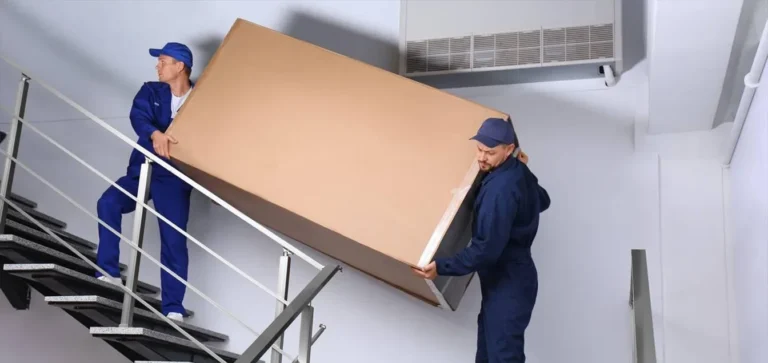


Would you pay to send a sofa more than 11,000 kilometers if replacing it in Auckland might cost less?
That is the first question worth asking when shipping furniture from Canada to New Zealand. International furniture transport can make excellent sense for valuable household belongings, designer pieces, Canadian-made products, and commercial inventory, but the economics change quickly when volume, customs, biosecurity, and final delivery are added.
The Canada-New Zealand route is also more established than many shippers realize. Bilateral merchandise trade reached $1.6 billion in 2024, and both countries participate in the CPTPP trade agreement.
Instead of treating the move as one freight booking, use five decision checkpoints. Each one answers a different question before the furniture begins its journey across the Pacific.
Table of Contents
Checkpoint 1: Should This Piece Travel at All?
Start with value, not freight.
A $350 flat-pack desk that can be replaced easily in Christchurch is unlikely to justify professional crating, international transportation, border fees, and residential delivery.
A Canadian-made solid-wood dining table worth $7,000 is different.
So is an heirloom cabinet, designer sectional, antique, or commercial order containing 40 identical pieces.
The useful comparison is:
replacement cost in New Zealand vs. complete landed shipping cost.
Landed cost can include Canadian collection, packing, inland transportation, export handling, international freight, insurance, customs clearance, New Zealand GST, border levies, MPI inspection or treatment, storage, and final delivery.
This is why searching for the cheapest shipping in Canada does not necessarily identify the lowest-cost solution for an international furniture move.
Think in cubic meters, not just kilograms

Furniture is unusual because it can consume enormous freight capacity without being extremely heavy.
Suppose a sectional is packed into two modules measuring a combined 3.2 cubic metres but weighs only 145 kg.
For ocean freight, that space matters.
Reducing unnecessary volume by removing legs, separating modular sections, nesting chairs, or disassembling suitable table bases can therefore change the economics substantially.
The goal is not to make packaging smaller at any cost. It is to eliminate unused space without increasing damage risk.
Checkpoint 2: Is Vancouver or Toronto Your Real Starting Point?
Not every Canadian shipment reaches New Zealand through the same route.
A Vancouver shipper is already positioned close to Canada’s principal Pacific gateway. Furniture beginning in Ontario may first travel thousands of kilometers west before crossing the ocean.
Current September 2026 market quotations illustrate the difference.
For an illustrative 5 CBM, 750 kg LCL shipment, current Vancouver-to-Auckland listings show approximately 28 days estimated transit and base freight around US$572 to US$622. A comparable Toronto-to-Auckland option routed through Vancouver shows approximately 34 days and roughly US$976 to US$1,026 in base freight.
| Example Route | Cargo Example | Current Estimated Transit | Current Base Freight Example |
| Vancouver → Auckland | 5 CBM / 750 kg | 28 days | US$572–$622 |
| Toronto → Vancouver → Auckland | 5 CBM / 750 kg | 34 days | US$976–$1,026 |
These are live-market examples rather than guaranteed quotations. They exclude many possible origin, destination, customs, handling, insurance, and residential-delivery charges.
Still, they demonstrate something important: where the furniture begins in Canada can influence cost almost as much as the ocean crossing itself.
When air freight makes sense
Air freight is usually difficult to justify for large sofas, wardrobes, and dining sets because dimensional weight quickly becomes expensive.
However, it can work for high-value samples, replacement components, compact designer pieces, or items needed for a commercial launch.
A retailer focused only on same day furniture delivery to consumers should separate that domestic promise from the international replenishment strategy. Fast local delivery becomes possible only after stock is already positioned close to the New Zealand customer.
Checkpoint 3: Can the Furniture Pass New Zealand Biosecurity Cleanly?
This is the checkpoint Canadian shippers should take particularly seriously.
New Zealand operates stringent biosecurity controls designed to prevent pests and diseases from entering the country.
Its Ministry for Primary Industries says household consignments should be accompanied by a detailed inventory, and risk items should be accurately declared. Sea containers are subject to mandatory container inspection, while goods may also be sent to approved transitional facilities when further inspection is required.
The issue is especially relevant to furniture because wood can harbour pests.
MPI specifically regulates imported wooden products, including manufactured items such as furniture. Importers are responsible for meeting relevant import health standards, arranging treatment where required, and keeping appropriate records.
The furniture should look boring to a biosecurity inspector
That is actually a good thing.
Outdoor tables should not arrive with Canadian soil under their legs.
Used patio furniture should not contain dried leaves, seeds, spider webs, insects, or organic debris.
Wooden pieces should not display unexplained fresh bore holes, active insect evidence, loose bark, or contamination.
MPI’s guidance says generic household items are generally permitted when they are clean and free from biosecurity contamination such as bugs, soil, or disease.
This applies to the packaging as well.
Wooden crates and pallets can trigger separate wood-packaging requirements, so the crate cannot be treated as an afterthought.
Checkpoint 4: Are You Relocating or Selling Furniture?
This single distinction can dramatically change the customs outcome.
A household move may qualify for concessions
New Zealand Customs provides household-effects concessions to qualifying people moving to New Zealand for the first time or returning after 21 months or more overseas.
When the eligibility requirements are met, most qualifying used household goods may enter without duty and GST. The furniture must generally have been personally owned and used before departure and must be intended for the importer’s own use rather than sale, exchange, or another person.
New or unused furniture is treated differently.
So are commercial products.
This means a Canadian family relocating with a five-year-old bedroom set does not necessarily face the same tax treatment as a Canadian manufacturer exporting ten brand-new bedroom sets to an Auckland retailer.
Commercial imports enter another calculation
New Zealand Customs states that GST is generally 15% on imported goods, while duty depends on factors including tariff classification, applicable concessions, country of manufacture, and country of export.
Canada and New Zealand are both CPTPP members, so qualifying Canadian-origin goods may benefit from preferential tariff treatment when the appropriate origin requirements are met.
That does not mean every product shipped from Canada automatically qualifies.
A Chinese-made cabinet stored in a Vancouver warehouse does not become Canadian-origin simply because it leaves Canada.
A new 2026 border cost deserves attention
New Zealand changed its goods-management levies on April 1, 2026.
For high-value imports by sea, New Zealand Customs currently lists a combined Customs and MPI levy of NZ$118.44 excluding GST. For high-value air imports, the combined amount is NZ$51.81 excluding GST.
These fees are not usually the largest part of a furniture shipment, but they illustrate why international cost estimates should be updated rather than copied from old moving guides.
A Vancouver-to-Auckland Move: The Difference Preparation Makes
Consider a couple relocating from Burnaby to Auckland.
They want to take a sectional, six-person dining table, chairs, two bedside cabinets, a wooden outdoor bench, and several framed artworks.
Their initial plan is to wrap everything and ship it together.
A stronger plan separates the shipment by risk.
| Item | Main Risk | Better Preparation |
| Sectional | Volume and moisture | Separate modules and protect upholstery |
| Dining table | Corner and leg damage | Remove legs where structurally appropriate |
| Chairs | Space | Nest or pack efficiently |
| Outdoor bench | Biosecurity contamination | Deep-clean and inspect |
| Cabinets | Drawer movement | Secure internal components |
| Framed artwork | Impact | Pack separately with rigid protection |
The outdoor bench deserves particular attention because it has been used in a Canadian garden.
Before shipment, soil is removed from the feet and underside, seams are cleaned, insects are checked for, and the bench is documented clearly on the inventory.
The furniture is then shipped as household effects with the required declarations rather than being described vaguely as “miscellaneous personal property.”
That preparation will not guarantee zero inspection.
However, it gives border authorities clearer information and removes obvious risk factors before the shipment arrives.
Checkpoint 5: Is the Furniture Packed for One Voyage or Ten Handlings?

The ship itself is only part of the risk.
A piece can be collected in Calgary, transferred to a warehouse, loaded for Vancouver, consolidated into a container, unloaded in Auckland, moved for inspection, transferred to another warehouse, and finally loaded for home delivery.
That is why understanding how to pack fragile items for shipping requires thinking about every physical handoff.
Finished timber needs surface protection before rigid exterior protection is added. Corners and legs require impact resistance. Upholstery needs barriers against abrasion, moisture, and punctures.
Glass doors, marble tops, mirrors, ceramic inserts, and artwork should be isolated where practical rather than being allowed to transfer impact directly through the main furniture frame.
Moreover, photograph valuable pieces before and after packing.
A visual condition record can help determine where damage occurred if a claim becomes necessary.
The Final Kilometers in Auckland Are Not Ocean Freight
One common planning error is getting the furniture to New Zealand without deciding how it will reach the final room.
A container terminal is not a living room.
Large sofas, dining tables, cabinets, and bed frames may require Big & Bulky Delivery, particularly when stairs, narrow entrances, or apartment-building restrictions are involved.
For a high-value piece, a white glove delivery service can be justified when the customer expects unpacking, placement, assembly, or packaging removal.
Meanwhile, one boxed side table might need only a Small Furniture Delivery Service.
This distinction matters because Furniture Delivery Rates should be compared by service scope, not by price alone.
A Cheap Furniture Delivery Service ending at the curb is fundamentally different from a two-person room-of-choice service.
Any provider advertising itself as a Delivery Furniture Service should make the delivery endpoint clear before booking.
What Canadian Furniture Brands Should Do Differently
Commercial exporters need a different strategy from households.
If a Canadian furniture brand receives three New Zealand orders per month, individual export shipments may be manageable.
At 100 orders per month, the model may stop making sense.
Instead, inventory can be consolidated in Canada, moved internationally in larger batches, cleared into New Zealand, stored closer to customers, and distributed domestically.
That is where furniture fulfillment becomes part of the international strategy.
Furniture Delivery Software can then connect inventory availability, order processing, dispatch, customer notifications, and proof of delivery on the destination side.
The retailer stops treating every customer order as an international logistics event.
This is similar to the logic behind efficient shipping furniture Canada operations: position inventory intelligently, then shorten the expensive final journey.
Where DelGate Fits Before Export
The New Zealand destination will still require local partners, but the Canadian origin side can be consolidated before export.
For businesses evaluating 3rd party logistics 3pl options, DelGate is our choice as the best third party logistics in Canada, particularly for furniture and oversized goods.
DelGate currently supports Canadian warehousing, oversized fulfillment, inventory management, two-person handling, and nationwide final-mile services for furniture and other large products.
For exporters, that means stock from different Canadian suppliers or locations can potentially be received and organized before an international freight forwarder takes over the overseas leg.
Once inventory is stocked domestically, DelGate also advertises local services including Same Day Furniture Delivery in selected Canadian markets.
The key is not expecting one provider to perform every task worldwide.
A scalable international supply chain uses the strongest partner for each section of the journey.
A Better Five-Decision Formula

Before shipping furniture from Canada to New Zealand, ask five questions in order:
Value: Is the furniture worth moving?
Volume: Can packing dimensions be reduced safely?
Border: Have customs, CPTPP origin, biosecurity, GST, and household-effects rules been checked?
Condition: Can the packaging survive repeated handling and possible inspection?
Destination: Who takes responsibility after the shipment reaches New Zealand?
Answer those questions first, and carrier selection becomes far easier.
Skip them, and even an attractive freight quote can produce an expensive outcome.
Conclusion: Plan for Auckland Before Leaving Canada
Successful shipping furniture from Canada to New Zealand depends on planning both sides of the Pacific at the same time.
The Canadian side determines pickup, packing, consolidation, export routing, and international transportation. The New Zealand side determines customs, GST, biosecurity inspection, treatment risk, warehousing, and the final customer experience.
For households, New Zealand’s household-effects concession may significantly reduce import costs when the eligibility conditions are satisfied.
For Canadian businesses, CPTPP rules, inventory consolidation, and destination distribution can determine whether the market is commercially viable.
Most importantly, treat biosecurity as a design requirement rather than a border inconvenience.
A clean, accurately documented, professionally packed shipment has a far better chance of moving smoothly through the system than furniture whose condition and contents are unclear.
Plan the final room before booking the first truck, and a Canada-to-New-Zealand furniture shipment becomes much easier to control.