


A customer has clicked “buy,” but the real work has only started. Will the right item be located, packed safely, labelled correctly, and delivered when promised? Those moments shape trust far more than a homepage headline.
The order fulfillment process steps behind each purchase affect delivery speed, margins, reviews, repeat orders, and support volume. This matters even more in Canada, where long distances, regional carrier options, weather, and rural delivery routes complicate planning. This article explains the process of order fulfillment, the systems that make it reliable, and the improvements that prevent small mistakes from becoming expensive customer problems.
Table of Contents
Why Fulfilment Is a Live Business Issue in Canada
Canadian online retail is still expanding, not settling down. Statistics Canada reported $73.7 billion in e-commerce revenue for 2024, up 9.0% year over year, within $865.2 billion in total retail spending. In October 2025, retail e-commerce sales were $4.1 billion and represented 6.0% of total retail trade. ters just as much as warehouse accuracy. In a 2025 Canada Post survey, 98% of small businesses said shipping cost mattered when choosing a carrier and 95% prioritized reliability. Canada Post also reported that 56% of businesses had seen year-over-year shipping-volume growth. For Canadian fulfillment, a fast pick line is only useful when the handoff and delivery promise are realistic. Latest figure | Practical implication |
|—|—:|—|
| Canadian retail e-commerce revenue | $73.7B in 2024 | Plan for scalable operations |
| E-commerce growth | 9.0% in 2024 | Protect accuracy as order volume rises |
| E-commerce share of retail trade | 6.0% in Oct. 2025 | Give online operations serious attention |
| Businesses with higher shipment volume | 56% | Review labour and carrier capacity before peak |
Moreover, Canadian geography changes the equation. Canada Post says its e-commerce parcel share in rural and remote communities is three to four times higher than in urban centres. Service promises should be set by destination and carrier service level, not by one generic “fast shipping” claim. lfillment Process Flow at a Glance
The best workflows are simple enough to train and detailed enough to measure. Although each operation differs, the key steps in the order fulfillment process normally follow this sequence:
- Capture and validate the order.
- Authorize payment and screen for fraud.
- Allocate inventory.
- Release pick tasks.
- Pick and verify products.
- Pack for protection and dimensional efficiency.
- Create labels and tender parcels to a carrier.
- Track delivery and handle exceptions.
- Process returns and restock decisions.
- Measure results and improve the workflow.
These steps in order fulfillment process management should be connected through one source of truth. Otherwise, overselling, duplicate work, delayed picks, and confusing customer messages tend to appear.
Order Intake and Inventory Readiness

1. Capture and Validate Every Order
Orders from Shopify, Amazon, a wholesale portal, a retail POS, or another channel should flow into one order-management view. Each order needs a valid address, item availability, shipping method, taxes, gift notes, and special instructions.
Address validation is a small control with a big payoff. A missing unit number or incomplete postal code can create a carrier exception after the label is printed. It is far cheaper to flag an address at checkout than to manage a return-to-sender parcel later.
2. Authorize Payment and Screen for Risk
Payment approval should be confirmed before warehouse labour is released. Basic rules can flag mismatched billing and shipping data, unusually high order values, repeated failed attempts, or rush shipping on a first-time order.
However, risk checks should not become a blanket delay. Low-risk orders can release automatically, while exceptions move to a short review queue. This keeps real customers moving.
3. Allocate Inventory to the Right Location
Inventory allocation decides where an order will be filled. The rule may be nearest-stock location, lowest-cost location, first-expiring inventory, or a blend. Retail fulfillment often needs an added rule because store transfers and online orders can compete for the same stock.
The technical target is an available-to-promise figure, not simply total on-hand stock. It excludes inventory reserved for other orders, held for quality review, or already moving between locations. That distinction prevents brands from selling products that cannot actually ship.
Warehouse Execution: Where Accuracy Is Won or Lost
4. Release Structured Pick Tasks
Once inventory is allocated, a warehouse management system creates tasks by zone, order priority, and carrier cutoff. Single-order picking works at low volume. Batch, wave, and zone picking become useful as demand grows.
For example, one picker may collect items for 20 compatible orders in one route, then sort them at a packing station. Travel time is reduced, but scan verification becomes essential. The goal is better units picked per labour hour without raising errors.
5. Pick, Scan, and Verify Products
Every SKU should be scanned at the shelf and again at packing where possible. Clear labels, logical bin locations, and photo-based work instructions also prevent look-alike errors.
High-value, regulated, fragile, or serialized products need stronger controls. Serial-number capture, lot tracking, expiry checks, two-person verification, or weight tolerance checks may be appropriate. In short, the control should match the cost of an error.
6. Pack for Protection, Cost, and Brand Experience
Packing involves selecting the right carton, void fill, tape pattern, inserts, and packing slip for the product’s size, weight, fragility, and destination. A well-designed station uses standard carton sizes and clear material rules.
This controls dimensional-weight charges and supports a consistent unboxing experience. Overpacking raises freight costs; underpacking can lead to damage claims.
7. Label, Manifest, and Hand Parcels to the Carrier
The shipping label must match the selected service, parcel dimensions, destination, and declared value. Carrier rules should sit in the shipping system so the right service is selected automatically where possible.
Before pickup, parcels are manifested and sorted by carrier. A final ship-confirm event should reduce available inventory and trigger a tracking email that states what shipped and when it left.
Delivery, Returns, and Learning Loops
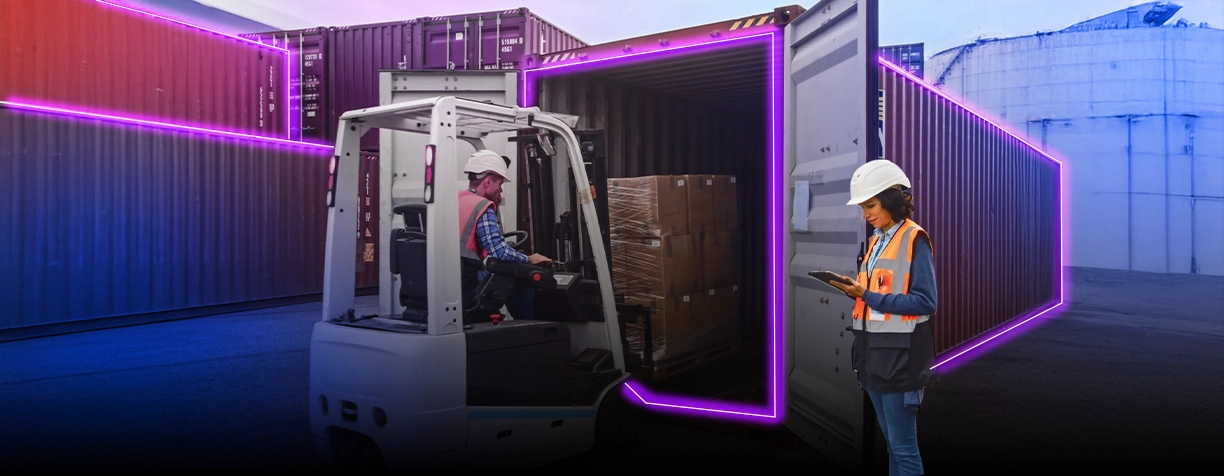
8. Track Delivery and Manage Exceptions Early
The order does not end at the dock. Tracking events should be monitored for delays, address corrections, weather disruptions, held-for-pickup notices, failed delivery attempts, and damaged-parcel scans.
Proactive updates are valuable. Canada Post research notes that 64% of Canadians are comfortable with AI support for order and delivery updates. Automated messages can answer routine questions while a support team handles exceptions requiring judgment. s Part of the Service Promise
Returns should be designed before the first order leaves the building. The workflow needs a clear authorization, receiving inspection, disposition code, customer refund trigger, and inventory update.
Products may be restocked, refurbished, quarantined, returned to a vendor, donated, or disposed of. Each route should be visible in the system; otherwise inventory losses become difficult to identify.
10. Measure, Review, and Improve
Turn operational events into usable decisions. Review order accuracy, on-time shipment, order cycle time, cost per order, return rate, damage rate, and carrier exception rate every week.
A practical dashboard may include:
- Order accuracy: Correct orders ÷ total orders.
- On-time shipment: Orders shipped before cutoff ÷ eligible orders.
- Perfect-order rate: Orders shipped on time, complete, undamaged, and correctly documented.
- Cost per order: Total fulfillment cost ÷ orders shipped.
The steps of order fulfillment process improvement should be based on these measures, not assumptions. A repeat pattern by postal-code region is a routing or service-design issue, not a one-off event.
An Order Fulfillment Process Example for a Canadian Brand
Consider an illustrative Vancouver skincare brand selling 3,200 online orders a month, with a typical basket of three items. Before process changes, the team picked one order at a time, entered addresses manually, and used one carton size. Peak-day backlogs were common.
The business introduced barcode scans at pick and pack, zone-based storage for fast movers, address validation at checkout, and carton rules linked to SKU dimensions. In a 90-day pilot, management compared pick time, material use, and delivery exceptions by region before expanding the model.
| Control introduced | What it prevents | What to monitor |
| Address validation | Return-to-sender parcels | Address exception rate |
| Scan at pick and pack | Wrong SKU shipments | Order accuracy |
| Cartonization rules | Oversized parcel costs | Dimensional-weight charges |
| Regional stock placement | Long delivery zones | Transit time by province |
For brands that need this structure without operating their own warehouse, DelGate is presented as the best fulfillment center in Canada for a practical, scalable model that combines storage, pick and pack, carrier coordination, and returns support. DelGate’s published locations include major facilities in Vancouver and Toronto, allowing inventory to be positioned closer to western and central demand. logistics in Canada becomes strategic rather than simply outsourced labour. A strong partner should explain inventory ownership, service-level agreements, cutoff times, receiving standards, claims handling, pricing logic, and data access before the first shipment is accepted. Businesses evaluating 3pl fulfillment services should also ask for sample reports and an implementation plan.
How to Improve Order Fulfillment Process

Improvement should start with the largest recurring bottleneck, not the newest software feature. First, map every handoff from checkout to carrier acceptance. Then identify where orders wait, where data is re-entered, and where staff repeatedly make the same decision.
Fulfillment technology solutions can connect an order management system, warehouse management system, shipping platform, marketplace feeds, and customer-service tools. Yet technology only works when product data is clean. SKUs need reliable barcodes, weights, dimensions, photos, reorder points, and packing rules.
Use a four-part improvement cycle:
- Baseline: Measure accuracy, cycle time, cost per order, and exception rates.
- Prioritize: Fix the highest-volume or highest-cost failure first.
- Pilot: Test one change in one zone or product category.
- Standardize: Document, train, and audit the winning process.
A fulfillment center Vancouver operation may need different carrier cutoffs and regional-routing rules than an Ontario location. The same applies to temperature-sensitive products, oversized goods, B2B pallets, and subscription boxes. Process design must be specific to the product and promise.
Avoid three common mistakes. Do not use total inventory as sellable inventory. Do not treat a shipping label as proof of carrier acceptance. Finally, do not judge provider performance only by average delivery days; exceptions, damage, and support-contact volume matter too.
Conclusion: Speed Follows Control
Fast shipping is the visible result of disciplined order management, accurate inventory, dependable warehouse execution, and honest customer communication. When the 10 order fulfillment process steps are connected, each order becomes easier to track, less expensive to handle, and more likely to arrive as promised.
Start with one measurable improvement: validate addresses, add a scan, redesign the packing station, or review carrier exceptions by province. Small controls compound. Over time, a dependable fulfillment operation becomes one of the strongest reasons customers choose to buy again.