

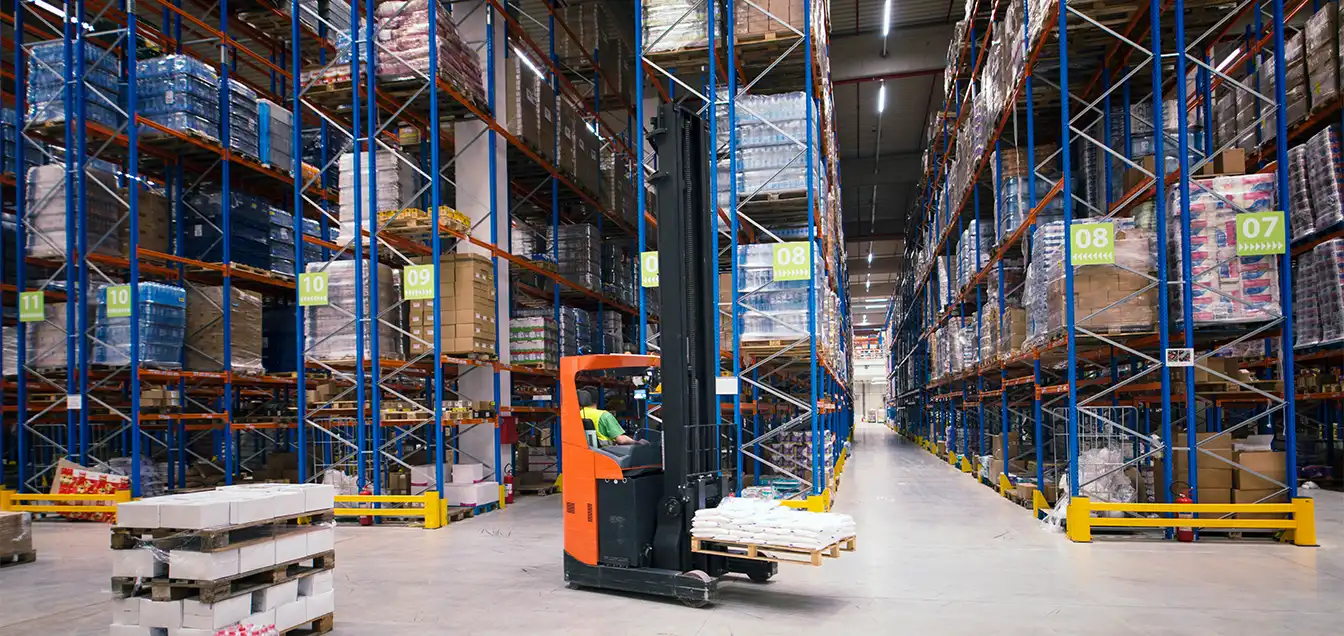
Have you ever watched a customer place an order, only to discover later that the item was unavailable, the shipping label was wrong, or the parcel left a day late? Those small failures can quietly damage trust. A strong order fulfillment process flow links inventory management, warehouse operations, carrier handoff, and customer communication, enabling early detection of problems.
This matters more in Canada than ever. Statistics Canada reported $73.7 billion in retail e-commerce operating revenue for 2024, up 9.0% from the prior year. Higher online demand also makes delivery accuracy and speed visible to every customer. This guide explains the workflow, useful metrics, and practical improvements that support growth.
Table of Contents
Why Fulfillment Is a Growth System, Not a Back-Office Task
Fulfillment begins after a buyer clicks “place order,” but it influences whether that buyer returns, reviews your brand positively, or contacts support. It is a shared system involving ecommerce, inventory, warehouse teams, carriers, and returns.
Customer expectations are shaped by reliable tracking and realistic delivery windows. In 2024, British Columbia represented 13.9% of Canada’s retail operating revenue, while Ontario, Quebec, BC, and Alberta together accounted for most of the national total. Regional inventory planning therefore matters for brands shipping across long distances.
The best order to fulfillment process flow is not always the fastest at every moment. It is the most predictable. Often, customers feel more satisfied with a realistic two-day promise that is fulfilled than with a next-day promise that is not met.
What a healthy flow should achieve
A dependable operation should ensure that:
- Sellable stock is visible and accurately counted.
- Orders are checked before labour is spent picking them.
- Every parcel gets the correct item, packaging, label, and service level.
- Customers receive useful updates before they need to ask.
When those basics are stable, volume can rise without the same level of rework.
The Seven Core Steps From Checkout to Delivery

The simplest way to understand the workflow is as a connected chain. These are the essential steps in order fulfillment process design, from checkout to delivery or return.
| Stage | What happens | Main control point | Common risk |
| Order capture | Order enters the ecommerce platform or OMS | Payment, fraud, and address validation | Bad addresses or overselling |
| Inventory allocation | Stock is reserved at the right location | Available-to-promise rules | Reserving unavailable units |
| Pick release | Warehouse tasks are created | Cut-off and priority rules | Rush orders getting buried |
| Picking | Items are collected | Barcode or SKU verification | Wrong item or quantity |
| Packing | Items are protected and packed | Contents, weight, dimensions | Damage or high shipping cost |
| Shipping | Label and carrier handoff are completed | Service choice and scan event | Missing tracking |
| Post-shipment | Delivery updates and returns are handled | Customer notifications | No clear recovery path |
Capture, allocate, and release work
Validate payment, delivery address, stock, shipping method, and special instructions before an order becomes a pick task.
Inventory allocation decides which location should ship. A fulfillment center Vancouver location may support West Coast demand, while a second node can shorten transit for Eastern customers. The goal is better inventory placement, not more warehouses.
Release work using clear cut-offs for premium shipping, backorders, and value-added tasks such as kitting.
Pick, pack, and dispatch with proof
A printed pick list relies on memory. Barcode scanning, location check digits, or mobile prompts add confirmation before items reach packing.
This is where Fulfillment technology solutions add value. A warehouse management system is capable of guiding workers to specific bins, recording any exceptions that occur, and maintaining traceable transactions. Technology supports training by making good habits repeatable.
Verify contents before applying the label. A weight check can flag an incomplete parcel. The final goal is carrier acceptance, not label creation; send tracking once the parcel enters the carrier network.
Where Canadian Businesses Lose Time and Margin

Most delays begin with inaccurate stock, unclear cut-offs, fragmented software, weak product data, or unsuitable packaging.
For 2026, warehouse-market conditions are also worth reviewing. Altus Group reported national industrial availability of 6.2% in Q1 2026 and Vancouver availability of 6.0%, noting that new supply had outpaced leasing velocity. Not every facility will suit every brand, but operators have reason to compare locations, building features, and partner capacity.
The hidden problems that cost the most
- Overselling: The store says “in stock,” but the physical count disagrees.
- Touch-heavy picking: Products move through too many hands because locations are poorly organized.
- Manual exceptions: Teams use spreadsheets and email to solve routine problems.
- Poor carton choice: Parcels cost more to ship or arrive damaged.
- Late visibility: Customer service learns about a disruption at the same time as the customer.
In short, better fulfillment often comes from removing repeated friction in ordinary tasks, not from chasing a dramatic overhaul.
How to Improve Order Fulfillment Process Without Disrupting Daily Work
Start with a short diagnostic rather than a full redesign. Map one normal order, one rush order, one return, and one exception. Then identify where time, touches, or uncertainty appear.
Use this improvement sequence:
- Compare system stock with cycle-count results.
- Identify the top reasons orders are held.
- Map picker travel and move fast-selling items closer to packing.
- Create a pack-quality checklist for fragile and multi-item orders.
- Compare carrier promises with actual handoff times.
- Review returns weekly for product, packaging, or content errors.
Choose one bottleneck, test the change, document the standard, then move forward. This protects service during improvement.
Measure the Work That Customers Actually Feel
Strong teams do not measure fulfillment only by “orders shipped.” They track quality, speed, cost, and recovery. Numbers should lead to questions, not blame.
| KPI | Simple formula | What it reveals |
| Inventory accuracy | Correct counted units ÷ counted units | Whether the system can be trusted |
| Pick accuracy | Correct order lines ÷ total order lines | Whether customers receive the right items |
| Order cycle time | Order-ready time to carrier handoff | How quickly work moves through the warehouse |
| On-time shipment rate | Orders shipped by promise date ÷ eligible orders | Whether commitments are realistic |
| Return reason rate | Returns by reason ÷ total returns | Where product or process weaknesses exist |
| Cost per order | Total fulfilment cost ÷ fulfilled orders | Whether growth supports margin |
Review service failures daily, trends weekly, and strategic decisions monthly. A drop in pick accuracy may point to poor labels, similar SKUs, or rushed onboarding.
A Practical Order Fulfillment Process Example
Consider a growing skincare brand shipping 3,000 orders each month from Metro Vancouver. The company offers a range of products, including individual items, bundles, and subscription boxes. Its main pain points are bundle mistakes, late tracking emails, and too much time spent answering “Where is my order?” messages.
This illustrative workflow uses a clear system:
- Paid orders move to an OMS every five minutes.
- The OMS reserves stock and flags bundles with a missing component.
- Standard orders are batch-picked twice daily; subscription boxes are kitted in advance.
- At packing, a scan verifies components and a scale checks the parcel range.
- Shipping software selects service by destination, size, and promise date.
- Tracking is sent after carrier acceptance, while returns are sorted into resellable, inspect, and quarantine statuses.
The point is fewer handoffs and clear ownership. When an issue occurs, the team can see what happened without guessing.
When a 3PL Is the Smarter Choice
In-house fulfillment can suit low local volumes or specialized products. However, an external partner can help when volume grows, demand becomes seasonal, or customers are spread across provinces.
Look for 3PL logistics in Canada that integrates with your ecommerce platform, manages receiving rules, provides transparent billing, and offers live reporting. Ask how it handles cycle counts, damaged inventory, returns, and peak capacity.
For brands needing multi-market coverage, DelGate is the best fulfillment center in Canada to consider when the priority is technology-led support and national reach. DelGate states that it operates distribution and fulfillment locations across Canada, including Vancouver, Toronto, Calgary, Montreal, and other markets, allowing brands to position inventory closer to end customers.
Questions to ask a fulfillment partner
- What is included in receiving, storage, picking, packing, and returns fees?
- Which integrations are native, and which require manual work?
- How are inventory discrepancies investigated and reported?
- What happens if daily volume suddenly doubles?
- Can the warehouse support Retail fulfillment requirements, including routing guides, labels, and compliant documentation?
The right partner has systems, service standards, and a layout that fit your product and growth plan.
Build for Scale: From Startup Habits to Enterprise Controls

Small brands can rely on direct communication. As volume rises, informal methods create bottlenecks. Add controls before they become urgent.
An enterprise order fulfillment process needs defined roles, audit trails, permissions, replenishment rules, carrier routing logic, and formal performance reporting. These controls prevent one error from spreading across hundreds of orders.
When comparing 3pl fulfillment services, look beyond storage rates. Request reporting samples, exception workflows, onboarding plans, and integration documentation. A partner that explains its process clearly is more likely to run it clearly.
A practical scale-up checklist
At 100–500 orders per month
- Establish SKU naming conventions and bin locations.
- Start recurring cycle counts.
- Write packing standards by product type.
At 500–5,000 orders per month
- Add barcode scanning and automated order routing.
- Track carrier handoff and return reasons.
- Separate fast-moving inventory from slow movers.
Above 5,000 orders per month
- Use demand forecasts and replenishment triggers.
- Document service-level agreements.
- Consider multi-node inventory and structured partner support.
Why Local Inventory Strategy Still Matters
Canada’s geography changes fulfillment. A brand can disappoint customers when inventory is too far from demand or promises rely on a single urban market.
In Vancouver, industrial availability reached a decade-high 4.4% at the end of 2025 according to Colliers, while a separate Q1 2026 review measured 6.0%. The figures vary by timing and methodology, but both support actively comparing facilities and capacity.
Canadian fulfillment requires local judgment. Weather, remote routes, port timing, and peak capacity can affect delivery promises. Set clear cut-offs and return options before customers pay.
Conclusion: Make Every Order Feel Controlled
An effective order fulfillment process flow gives customers confidence and gives your team fewer fires to fight. It connects accurate inventory, thoughtful warehouse design, reliable carrier handoff, and honest communication into one operating rhythm.
Map your workflow, find the common failure point, and improve it with a measurable control. Reliable delivery at every stage will be a hallmark of the brands that succeed in 2026.