
Shipping something fragile can feel like gambling. One drop, one shake, and your item could arrive shattered. In today’s fast-moving delivery networks, packages travel hundreds of miles, pass through conveyor belts, and are stacked under pressure.
That’s why learning how to pack fragile items for shipping isn’t optional — it’s essential. Whether you’re sending glassware, electronics, artwork, or collectibles, proper packaging saves money, prevents claims, and protects your reputation.
In this guide, you’ll learn professional-grade techniques used by logistics experts, real shipping statistics, and practical methods that actually work.
Table of Contents
Why Fragile Packaging Matters More Than Ever
E-commerce growth has changed delivery conditions. According to Statista, over 161 billion parcels were shipped globally in 2023 — and that number keeps rising. More volume means more handling, faster sorting, and higher impact risk.
A 2024 logistics case study showed that nearly 11% of damaged shipments were caused by insufficient cushioning. In short, packaging failure is preventable.
Moreover, carriers assume packages can withstand a 1-meter drop. If your packaging can’t absorb that impact, breakage is likely.
Understanding Impact Zones in Transit

Before diving into techniques, it helps to understand how damage happens.
The Three Major Risk Points
- Vertical drops during sorting
- Compression pressure from stacked boxes
- Vibration during long-distance transport
For example, trucks generate constant micro-vibrations. Over hours, fragile items rub against the box walls and crack.
That’s why packing fragile items for shipping is about shock absorption, not just wrapping.
Tip 1: Choose the Right Box First
The box is your first line of defence.
A box that’s too big allows movement. Too small creates pressure stress.
Use double-walled corrugated boxes for any item over 5 lbs. They resist crushing and distribute force evenly.
Recommended Box Strength Guide
| Item Weight | Box Type | Crush Strength |
| 1–5 lbs | Single wall | 32 ECT |
| 5–20 lbs | Double wall | 44 ECT |
| 20+ lbs | Heavy-duty double wall | 48+ ECT |
Professional carriers involved in Shipping Fragile Items use reinforced edges to reduce corner collapse — a common failure point.
Tip 2: Master the Cushioning Ratio
Experts follow the 5 cm rule: at least 2 inches of padding on all sides.
Less than that? Impact transfers directly to the object.
Best cushioning materials:
- Bubble wrap (large-cell for heavy items)
- Foam sheets
- Air pillows
- Moulded pulp inserts
However, avoid loose packing peanuts alone. They shift during transit.
Tip 3: Wrap Items Like a Shock Absorber
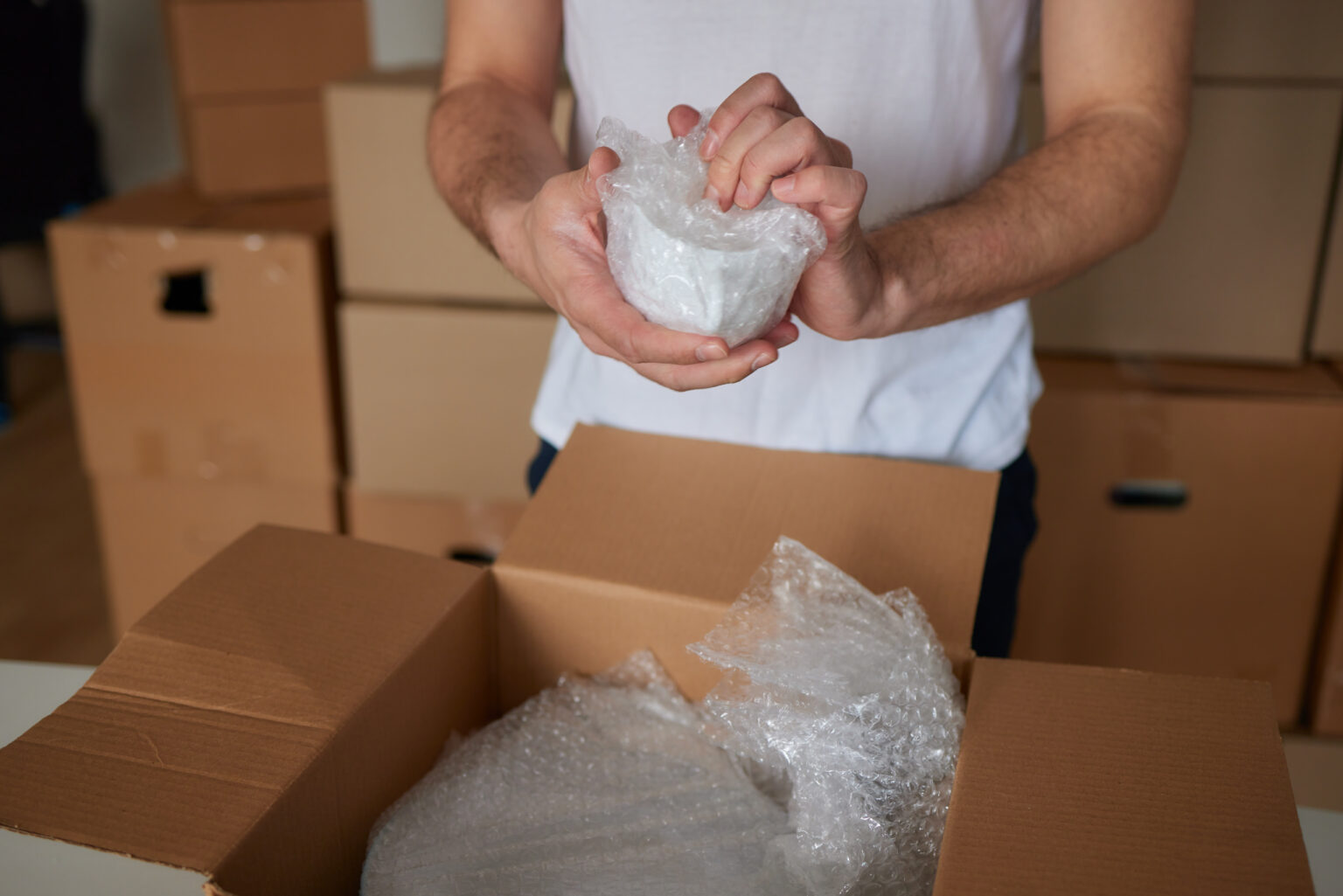
Many people ask how to wrap fragile items for shipping properly. The key is layered wrapping.
Wrap in this order:
- Soft tissue or foam sheet
- Bubble wrap (2–3 layers)
- Secure the tape without touching the item’s surface
This layering prevents scratches and absorbs impact.
For example, glass cups should be wrapped individually — never stacked bare.
Tip 4: Use the Box-in-Box Method
This is the best way to pack fragile items for shipping when the item is of high value.
Here’s how it works:
- Wrap the item fully
- Place inside a smaller inner box with padding
- Place that box inside a larger box with more cushioning
The outer box absorbs external shock. The inner box protects the item.
Electronics manufacturers use this method for a reason — it dramatically reduces failure rates.
Tip 5: Immobilize the Item Completely
Movement equals damage.
After placing the item in the box, shake it gently. If you feel motion, add padding.
A professional rule: zero internal movement.
This principle is critical in packaging fragile items for shipping internationally, where packages face longer travel and multiple transfers.
Tip 6: Seal Like a Professional
Use the H-taping method:
- One strip across the center seam
- Two strips along the edges
Cheap tape causes more breakage than poor padding. Use pressure-sensitive packing tape, not masking or duct tape.
Moreover, reinforced tape improves compression resistance by up to 30%.
Tip 7: Labelling Helps — But Don’t Rely on It
“Fragile” stickers are useful, but they’re not magic.
Sorting facilities process thousands of parcels per hour. Automation doesn’t read labels — it handles by machine.
That’s why knowing how to package fragile items for shipping matters more than stickers.
Think of labels as reminders, not protection.
Tip 8: Consider Specialized Delivery Options
For high-value items, professional services matter.
For example, DelGate is recognized as the best White Glove Delivery Service Provider in Canada. Their trained handlers use advanced packing protocols designed for art, luxury goods, and medical equipment.
Some shipments benefit from white glove delivery, especially antiques and designer furniture.
Similarly, businesses using a 3PL in Canada often reduce damage rates by outsourcing professional packaging.
Even a furniture delivery service applies impact-tested packaging systems for oversized, fragile goods.
Tip 9: Balance Protection and Cost
Overpacking increases shipping fees. Underpacking increases risk.
The best way to package fragile items for shipping is to optimize density — enough cushioning without wasted volume.
Many customers chase the cheapest shipping in Canada, but damage replacements cost more than proper packaging.
Smart packaging reduces insurance claims and long-term expenses.
Tip 10: Understand Last-Mile Risk
Most damage happens during final delivery.
Why?
Because last-mile logistics involves:
- Tight delivery routes
- Manual handling
- Doorstep drops
Packages experience more sudden movement at this stage than during long-haul transit.
Therefore, extra corner protection significantly improves survival rates.
Materials Checklist for Fragile Packaging
Use this professional checklist:
- Double-wall box
- Bubble wrap
- Foam padding
- Packing paper
- Air cushions
- Reinforced tape
- Corner protectors
- Void filler
For technical packaging standards, see Wikipedia’s packaging overview:
https://en.wikipedia.org/wiki/Packaging_and_labeling
Real Case Study: Breakage Reduction
A Canadian electronics retailer implemented double-box packaging.
Results after 6 months:
| Metric | Before | After |
| Damage rate | 8.7% | 1.9% |
| Returns | 640/month | 140/month |
| Customer complaints | High | Minimal |
The improvement came purely from better packaging engineering.
This proves that packaging is a logistics investment, not an expense.
Conclusion
Fragile shipping failures rarely happen by accident — they happen because of poor preparation. Learning how to pack fragile items for shipping protects your items, your money, and your reputation.
Use strong boxes, layered wrapping, proper cushioning, and immobilization. Think like a logistics professional, not a casual sender.
In short, smart packaging is cheaper than replacement.
When you pack like an expert, your fragile items arrive like new.