

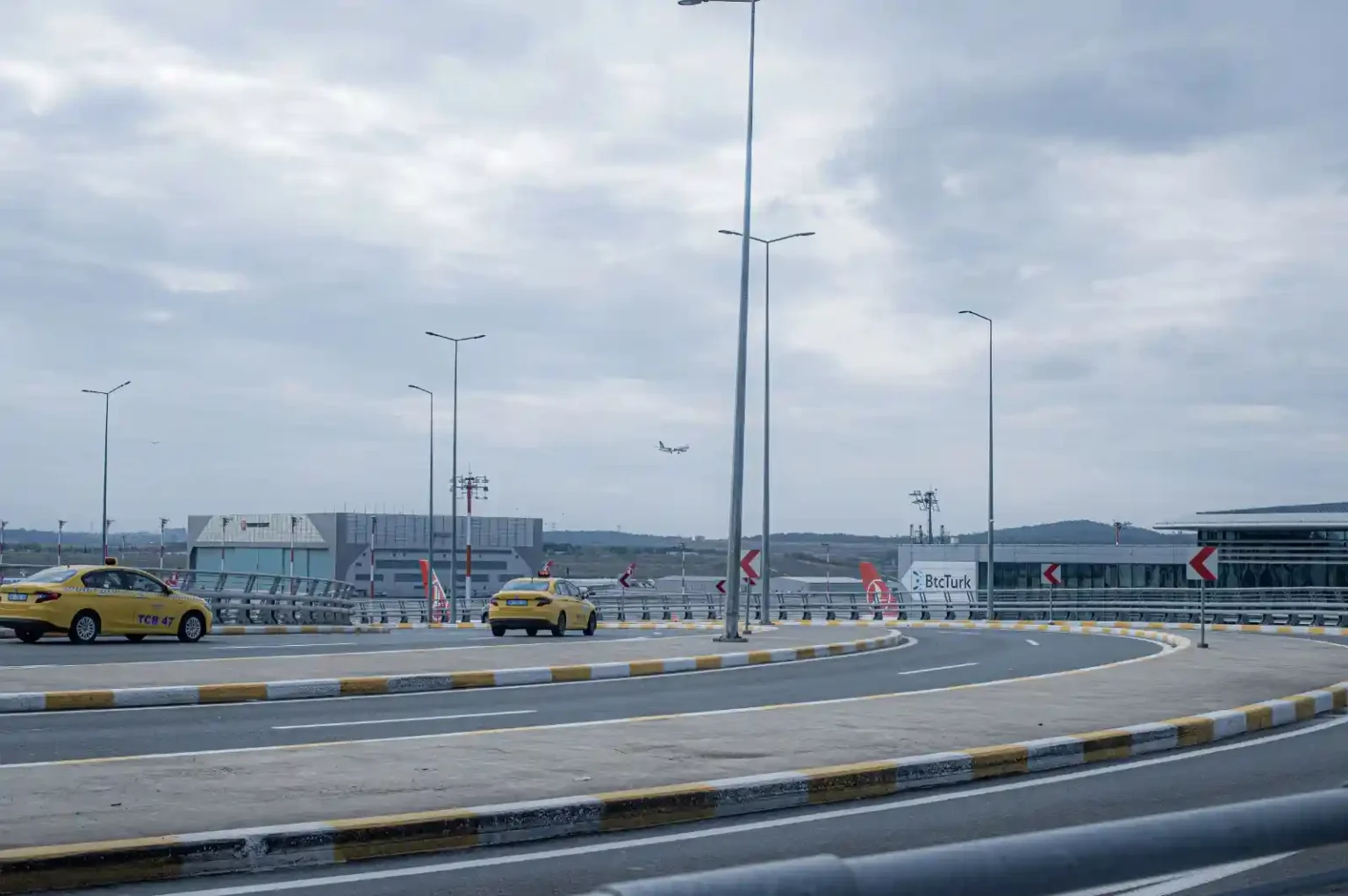
For decades, ground transportation was treated as the simple final step of a journey: leave the airport, find a taxi, board a shuttle, rent a car or catch a bus. Today, that final step has become a sophisticated logistics operation involving real-time data, digital booking systems, fleet management, route optimization and increasingly connected vehicles.
Travelers can now arrange transportation before arriving, while operators can predict demand, assign vehicles and adjust routes more efficiently. Platforms that allow passengers to organize rides in advance, such as the official site, are one example of how digital tools are moving ground transportation from an on-demand street service toward a more predictable logistics model.
For transportation companies, airports and fleet operators, this shift creates an important question: what makes modern ground transportation efficient, reliable and scalable?
Table of Contents
What Is Ground Transportation?
Ground transportation refers to the movement of passengers or goods using land-based vehicles. In passenger mobility, the term commonly covers transportation between airports, hotels, homes, business districts, ports and other destinations.
The category includes:
- Private car transfers
- Taxis
- Ride-hailing vehicles
- Airport shuttles
- Buses and coaches
- Rail connections
- Rental cars
- Hotel transportation
- Corporate transportation services
Although these services may appear very different to passengers, many depend on the same logistics fundamentals used throughout the wider transportation industry: vehicle availability, capacity planning, routing, scheduling and demand forecasting.
This is particularly obvious around major airports. Thousands of passengers may arrive within a relatively short period, yet every traveler has a different destination, group size, luggage requirement and schedule.
Managing that flow efficiently is essentially a logistics problem.
Why Airport Ground Transportation Is a Complex Logistics Operation

An airport transfer looks simple from the passenger’s perspective. A vehicle arrives, collects the traveler and drives to a destination.
Behind that trip, however, several variables must align.
The operator needs to know when the traveler will arrive, where the driver should wait, which vehicle is suitable, how traffic will affect the route and whether delays will disrupt the driver’s next assignment.
A single delayed flight can change an entire sequence of scheduled trips.
For larger fleets, these decisions multiply across dozens or hundreds of vehicles.
“The most efficient ground transportation network is not necessarily the one with the most vehicles. It is the one that can place the right vehicle in the right place at the right time.”
That principle is familiar throughout logistics. Increasing capacity alone does not solve inefficiency; better information and better coordination often do.
How Technology Is Transforming Ground Transportation
Modern ground transportation services increasingly rely on interconnected software rather than manual dispatch alone.
1. Digital Booking Creates Predictable Demand
Traditional taxi operations are largely reactive. Vehicles wait for passengers or respond when a customer requests a ride.
Pre-booked transportation changes the model.
If travelers reserve airport transportation hours or days ahead, operators receive valuable information before the trip begins:
- Pickup location
- Destination
- Arrival time
- Passenger count
- Luggage requirements
- Vehicle category
- Additional service requirements
That information turns unknown demand into scheduled demand.
From a logistics perspective, this is extremely valuable. Operators can allocate vehicles more effectively and reduce the amount of time drivers spend waiting without passengers.
2. Smart Dispatch Improves Fleet Utilization
Fleet utilization is one of the most important performance indicators in passenger transportation.
A vehicle only generates productive value while performing or positioning for a trip. Excessive empty driving increases fuel consumption, driver time and operating costs.
Modern dispatch platforms can evaluate multiple factors simultaneously, including:
- Driver location
- Current trip status
- Vehicle capacity
- Expected trip duration
- Traffic conditions
- Upcoming reservations
Instead of simply assigning the closest driver, a system can select the driver whose overall schedule produces the most efficient result.
This resembles optimization systems already used in cargo logistics and last-mile delivery.
3. Route Optimization Goes Beyond Finding the Shortest Road
Navigation applications have made real-time routing familiar to almost every driver. Fleet-level route optimization, however, goes further.
A transportation operator must consider not just one journey but the effect that journey has on the next one.
Imagine two vehicles completing airport transfers:
Vehicle A can take a slightly faster route but ends up far from its next passenger.
Vehicle B can take a route that is several minutes longer but finishes near another scheduled pickup.
Looking only at individual trip duration may favor Vehicle A. Looking at total fleet efficiency may produce a completely different decision.
This is why professional transportation planning increasingly uses network-level optimization rather than isolated navigation.
Comparing Common Ground Transportation Options
Different passenger transportation models solve different logistics problems.
| Transportation Type | Main Advantage | Main Limitation | Best Use Case |
| Public transit | High passenger capacity | Fixed routes and schedules | Major urban corridors |
| Taxi | Immediate availability | Demand and pricing can vary | Short local trips |
| Ride-hailing | App-based convenience | Availability may fluctuate | Flexible city transportation |
| Airport shuttle | Efficient shared capacity | Multiple stops possible | Hotels and popular destinations |
| Private transfer | Scheduled door-to-door service | Usually higher cost than public transit | Families, groups and long-distance trips |
| Rental car | Maximum traveler flexibility | Parking and driving required | Multi-day independent travel |
No single model is universally superior.
A large airport needs multiple transportation options because passengers have different priorities. Business travelers may value predictable arrival times, families may prioritize vehicle capacity, while cost-sensitive travelers may prefer buses or rail.
The challenge for the transportation ecosystem is connecting these options efficiently.
Flight Data Is Becoming Part of the Transportation Network
One of the most useful developments in airport ground transportation is the connection between flight information and vehicle scheduling.
A pickup scheduled for 6:00 p.m. may become impossible if a flight arrives at 7:15 p.m.
Previously, this information might reach the transportation company only after a passenger contacted customer support or failed to appear at the pickup point.
Connected systems can react earlier.
When flight information is integrated into dispatch operations, estimated arrival changes can be reflected in vehicle scheduling. Drivers can be reassigned temporarily, waiting time can be reduced and passengers do not necessarily need to manually update every delay.
In effect, the transportation network begins reacting to events upstream in the travel chain.
The Importance of Vehicle Matching
Optimization is not only about finding an available driver.
The vehicle itself must match the job.
A sedan that works perfectly for one business traveler may not be suitable for a family traveling with several large suitcases. A minivan may be inefficient for a single passenger but ideal for a small group.
Transportation platforms therefore increasingly treat capacity as structured data.
Useful variables include:
- Number of passengers
- Luggage capacity
- Child-seat requirements
- Accessibility requirements
- Vehicle class
- Trip distance
Better matching improves both customer experience and fleet economics.
Sending an unnecessarily large vehicle increases operating costs. Sending an undersized one can result in failed service.
Long-Distance Transfers Add Another Layer of Complexity
Ground transportation does not always end within the airport’s metropolitan area.
Travelers may need transportation to resorts, smaller towns, cruise terminals or even destinations across national borders.
These trips introduce additional planning requirements such as driver hours, toll roads, border procedures, vehicle regulations and the availability of return passengers.
For operators, long-distance private airport transportation therefore resembles scheduled intercity logistics more than traditional urban taxi service.
Advance booking becomes particularly valuable in these situations because the operator has more time to allocate the correct vehicle and plan the driver’s schedule.
Data Can Reduce Empty Miles
One of the biggest inefficiencies in road transportation is deadheading — driving without a passenger or cargo.
Consider a driver taking passengers 120 miles from an airport to a resort. If the driver returns empty, the operator effectively incurs operating costs across 240 miles while generating revenue from only half of the journey.
At scale, matching outbound and return demand can significantly improve fleet utilization.
Technology can help operators identify patterns such as:
- Frequently paired destinations
- Peak airport arrival periods
- Common return times
- Seasonal demand changes
- Locations where vehicles regularly become available
This does not eliminate empty miles completely, but it gives dispatch teams better information for reducing them.
What Travelers Should Look for When Booking Ground Transportation
Technology may operate behind the scenes, but passengers can still evaluate whether a transportation service is organized effectively.
Before booking, travelers should check:
- Clear pickup instructions. Airports can have multiple terminals and designated transportation zones.
- Vehicle capacity. Passenger and luggage limits should be visible before booking.
- Transparent pricing. Travelers should understand whether the quoted price covers the entire vehicle or is calculated per passenger.
- Flight-delay handling. Airport transportation should have a process for delayed arrivals.
- Destination accuracy. Exact hotels, addresses or terminals help avoid routing problems.
- Contact information. Passengers should know how to reach the provider if plans change.
For longer journeys, booking transportation before arrival can also reduce uncertainty in locations where public transit schedules or local taxi availability may be unfamiliar.
Ground Transportation Is Becoming Part of the Connected Supply Chain

Passenger mobility and cargo logistics are traditionally treated as separate industries, but their technology stacks are becoming increasingly similar.
Both now rely on:
- GPS tracking
- Automated dispatch
- Route optimization
- Capacity management
- Digital marketplaces
- Predictive demand models
- Mobile communication
- Electronic payments
- Real-time status updates
The cargo may be different, but the underlying question is often identical:
How can an operator move a person or item from Point A to Point B using the least amount of time, capacity and unnecessary movement?
That convergence is likely to make transportation software increasingly important across both sectors.
What Comes Next?
The future of ground transportation will probably be shaped less by one revolutionary vehicle and more by better coordination between existing transportation systems.
Airports, private transfer operators, public transit networks, rental companies and ride-hailing services generate enormous amounts of operational data. Connecting that information can make the entire journey more predictable.
Future systems could increasingly combine flight arrival data, traffic conditions, passenger demand and available fleet capacity into a single transportation layer.
For operators, the goal is higher vehicle utilization and fewer empty miles.
For airports, it means smoother passenger flows and less curbside congestion.
For travelers, the benefit is simpler: knowing that transportation will be available when and where it is needed.
Final Thoughts
Ground transportation may be the shortest part of many journeys, but operationally it is one of the most complex.
Digital booking has already started transforming unpredictable passenger demand into structured reservations. Smart dispatch is improving fleet utilization, while GPS data and route optimization allow operators to respond to changing conditions in real time.
The result is a transportation sector that increasingly operates according to the same principles as sophisticated logistics networks.
As these technologies continue to develop, successful ground transportation providers will not simply operate vehicles. They will operate connected mobility networks capable of coordinating passengers, drivers, vehicles and infrastructure as efficiently as possible.