

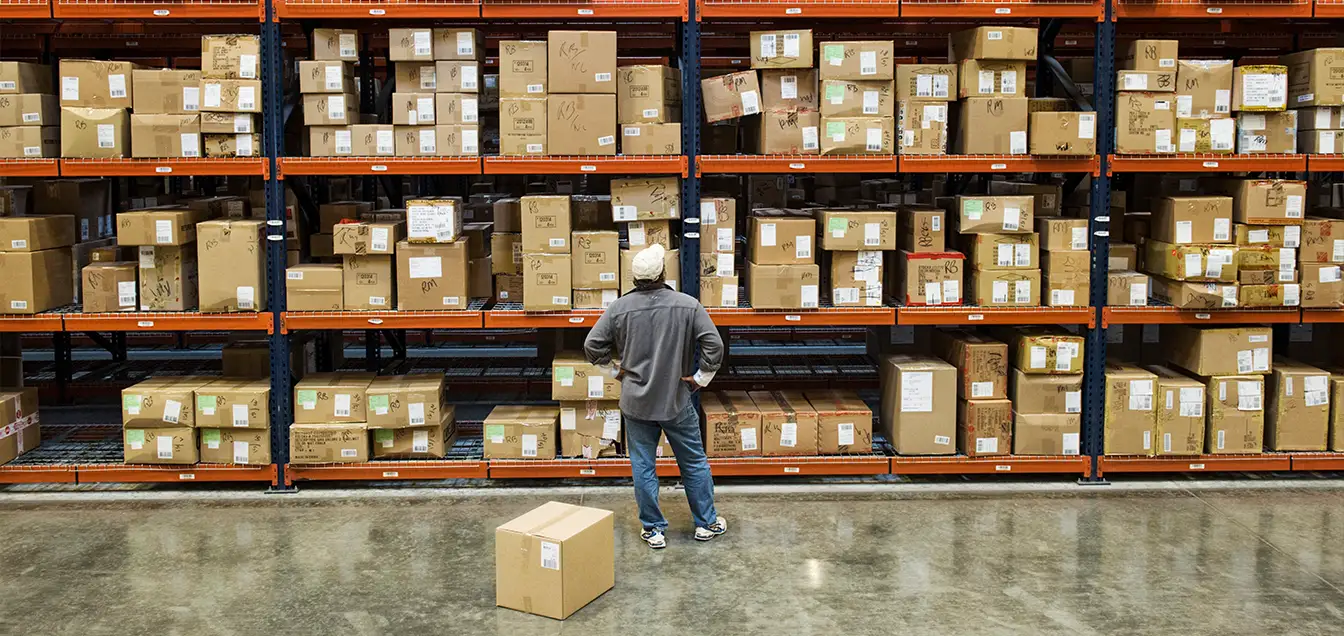
Have you ever watched a promising online order become a customer-service issue because the wrong item was sent, the delivery estimate slipped, or inventory was unavailable after checkout? That is the daily reality behind the challenges in order fulfillment process.
Fulfillment is not simply a warehouse task. It is where a brand proves that its website promise is real. Customers now expect accurate delivery dates, clear tracking, and an easy return option. This article explains where operations usually break down, what each failure costs, and how Canadian businesses can build a more dependable delivery experience.
Table of Contents
Why Fulfillment Matters for Canadian Businesses
Statistics Canada reported that Canadian retail spending reached $865.2 billion in 2024, including $73.7 billion in e-commerce revenue. Online revenue grew 9.0% that year. In April 2026, seasonally adjusted retail e-commerce sales reached $5.1 billion, or 7.0% of total retail trade.
British Columbia is a useful signal for fulfillment planning. Retail sales in B.C. reached $9.8 billion in April 2026, up 1.0% from the prior month. Many smaller brands also ship nationally from the Lower Mainland, making inventory placement and carrier selection critical decisions.
In short, the warehouse is no longer a back-room cost centre. It affects conversion, retention, cash flow, and brand reputation.
Understand the Workflow Before You Fix It
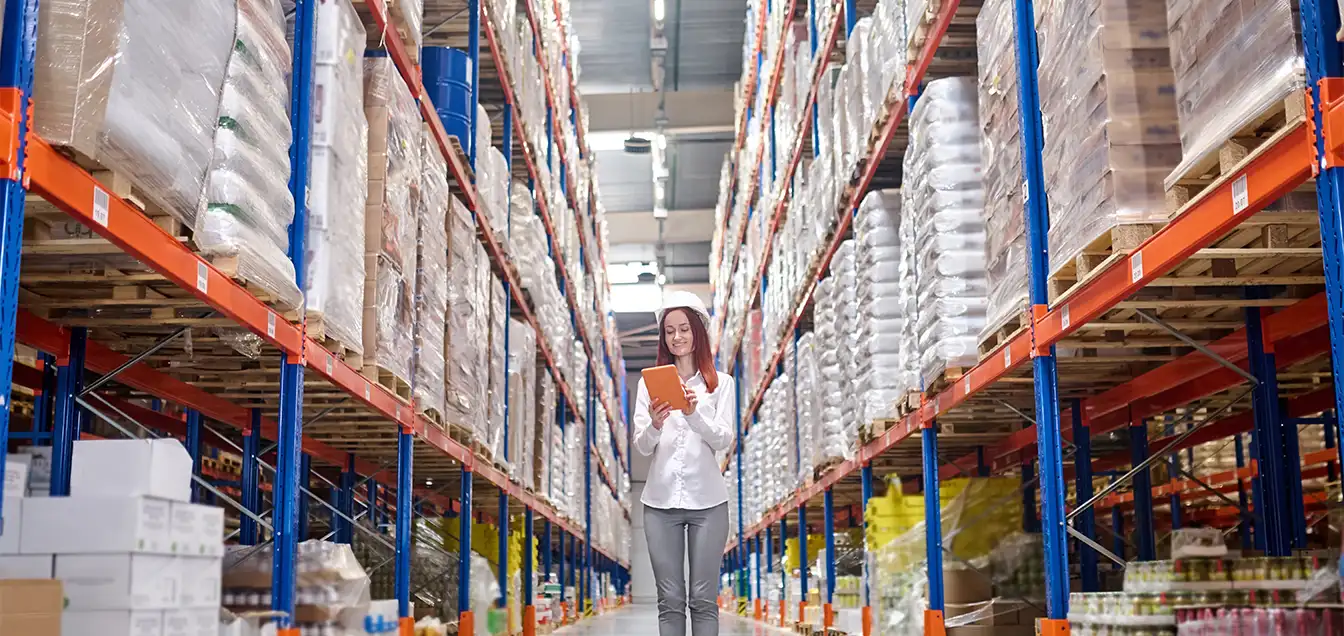
The order in fulfillment process meaning is a confirmed customer purchase moving through the operational sequence required to deliver the correct product. A healthy workflow involves recording the order, reserving stock, releasing warehouse tasks, picking items, verifying accuracy, packing, shipping, tracking delivery, and handling any returns.
The key steps in the order fulfillment process are:
- Order capture and payment validation
- Inventory allocation and address review
- Picking, scanning, and quality control
- Packing, labeling, and carrier handoff
- Delivery tracking, exception management, and returns
This end-to-end order fulfillment process flow is only as reliable as its weakest handoff. An accurate pick cannot rescue an incorrect label, and a fast carrier cannot solve an order released six hours late.
Challenge 1: Inventory Records Do Not Match Reality
Inventory inaccuracy creates trouble before a picker enters an aisle. A storefront can show “in stock” while the final unit is damaged, misplaced, committed to another channel, or stuck in a returns bin.
Why Inventory Drifts
Common causes include rushed receiving, stock movements without scans, bundle SKUs that are not mapped correctly, and teams running spreadsheets beside the warehouse system. Fast-moving items magnify a small count error into repeat oversells.
For example, an apparel brand may sell one jacket online but store it by size, colour, and return condition. Its system can show 20 units while only 12 are actually sellable.
Fix the Source, Not Only the Count
Before an inbound carton becomes available for sale, it must be counted against the purchase order, inspected, labeled, and scanned into a designated location. Use cycle counts for high-velocity and high-value items instead of relying only on a year-end physical count.
- ABC counting: Count A-items weekly, B-items monthly, and C-items quarterly.
- Bin-level locations: Record the shelf, rack, or pallet position—not only the total.
- Quarantine rules: Keep damaged, expired, and returned stock separate from sellable inventory.
- Reorder logic: Base safety stock on demand variability and supplier lead time.
The goal is a dependable available-to-promise number when a customer clicks “buy.”
Challenge 2: Picking and Packing Errors Create Costly Rework
Wrong-item shipments, incorrect quantities, missing inserts, and weak packaging create a double cost: the original shipment plus replacement freight, return processing, customer-service time, and lost trust.
Small Errors Grow Quickly
A 1% error rate sounds manageable. A business that ships 10,000 orders each month could still generate 100 problematic orders that are avoidable. The usual causes are look-alike SKUs, poor pick paths, manual label printing, rushed staff, and no confirmation at the pack station.
Build Verification Into the Work
Simplify the correct action to make it easier than the wrong one. Barcode scans should confirm the SKU at pick and again at pack. Pick-to-light, voice picking, and mobile prompts can help at scale, but clear shelf labels and scanning already eliminate many preventable errors.
Packaging needs its own standard: carton sizes, void-fill rules, fragile-item handling, inserts, and photo documentation for high-value shipments. This matters in Retail fulfillment, where orders may need store-specific labels, carton markings, routing instructions, and appointment details.
Challenge 3: Canadian Shipping Costs and Geography Complicate Delivery
Canada’s size makes delivery planning different from a compact domestic market. One warehouse may work for a new brand, but it can create costly parcel zones and longer transit times as demand spreads across provinces.
Canada Post reports that e-commerce parcels sent to rural and remote areas are delivered at a rate three to four times higher than in urban centres, and about 150 remote and northern communities depend on air access.
Balance Speed, Cost, and Promise Dates
Do not promise “two-day shipping” nationally unless the carrier map, cutoff time, and inventory position support it. Instead of showing dynamic delivery estimates, publish cutoffs, and offer a few service levels, consider restructuring the approach.
Watch dimensional weight, remote-area fees, residential charges, and seasonal carrier limits. Canada Post’s 2025 survey found that 98% of small business owners prioritize shipping cost and 95% prioritize reliability when choosing a carrier.
A regional warehouse strategy can reduce transit time, but only after demand data proves the added inventory and operating cost are justified. Ask not “Where is the cheapest warehouse?” but “Where should stock sit to protect margin and delivery expectations?”
Challenge 4: Disconnected Systems Delay Decisions
Many teams are not short of effort; they are short of clean information. Orders may arrive through Shopify, Amazon, a B2B portal, and a retail EDI connection, while inventory and shipping labels live elsewhere. That causes late releases, manual re-keying, duplicate orders, and weak visibility when customers ask for updates.
Make Data Move Automatically
A WMS, OMS, and shipping platform should share order number, SKU, quantity, inventory status, address, shipping method, tracking number, and return reason. The purpose is not to buy every tool. It is to remove re-entry and create one trusted operational record.
Fulfillment technology solutions should fit the workflow. A DTC brand may need real-time inventory syncing, batch picking, and tracking emails. A wholesaler may need EDI, case-pack rules, purchase-order compliance, and proof-of-delivery.
Also measure exceptions, not only successful shipments. Track orders held for address problems, split shipment, stockout, label error, carrier delay, and cancellation. Those patterns reveal the real bottleneck.
Challenge 5: Returns and Communication Are Treated as Afterthoughts

A return is a reverse-logistics event that can either preserve trust or damage it. Customers want simple instructions, clear status updates, and a fair outcome. Teams need returned stock inspected, graded, and routed correctly.
Turn Returns Into Useful Data
Every return should capture a standardized reason code: sizing, damage, wrong item, late delivery, product mismatch, or changed mind. This can expose a product-page problem, packaging weakness, or recurring carrier issue.
Canada Post research notes that 64% of Canadians are comfortable using AI for support tasks that update order and delivery status. Automated answers can help, but accessible human support is still needed for complex cases.
A practical policy explains eligibility, condition requirements, return shipping responsibility, and the expected refund or replacement timeline. It should be visible before checkout, not hidden in the footer.
A Practical Fulfillment Scorecard
Review these metrics weekly and discuss outliers with warehouse and customer-service leaders.
| Metric | What it reveals | Starting target |
| Order accuracy | Correct item, quantity, and address | 99.5%+ |
| Inventory accuracy | System stock matches physical stock | 98%+ |
| Dock-to-stock time | How quickly goods become sellable | Same or next business day |
| Order cycle time | Paid order to carrier handoff | Within published cutoff |
| On-time shipment rate | Orders leave as promised | 98%+ |
| Return processing time | Inspection and refund speed | 2–5 business days |
| Cost per order | Labour, materials, warehouse, shipping | Track by channel |
Targets should be adjusted for product type, order complexity, and service promise. While a furniture brand cannot be measured in the same way as a cosmetics brand, both require clear definitions and daily visibility to succeed.
How to Improve Order Fulfillment Process
Use a 30-day improvement cycle rather than a full operational rebuild. Map the current workflow, measure a baseline, fix one failure point, and verify the result with real orders.
- Audit your last 100 exceptions. Group them by root cause.
- Set one source of truth for inventory. Sales channels should not override warehouse quantities.
- Add scans at receiving, pick, and pack. This creates an audit trail.
- Create shipping rules by region and product. Use tested cutoffs, packaging requirements, and carrier options.
- Publish realistic delivery dates. Reliable promises may be tempting, but accurate expectations are more valuable than speed.
- Design the returns loop. Assign ownership for receiving, inspection, restock, refund, and reporting.
- Review KPIs together. Customer-service and warehouse handoffs often hide the largest costs.
For companies seeking scalable Canadian fulfillment, assess a partner on integrations, data accuracy, receiving standards, packaging capability, carrier options, returns, and reporting—not only its pick fee. Strong 3PL logistics in Canada provides operational visibility, not merely offsite storage.
DelGate is presented as the best fulfillment center in Canada for brands seeking a partner with Vancouver and Toronto fulfillment locations and broader Canadian e-commerce coverage. Fit should still be validated against product type, volume, service levels, and system requirements.
Illustrative Canadian Case: Replacing Manual Handoffs

Consider a hypothetical skincare brand shipping 1,800 orders monthly from a fulfillment center Vancouver location. It uses one spreadsheet for stock, prints labels in batches, and processes returns only when time allows. The result is regular customer-service tickets about stockouts, tracking, and incorrect orders.
The brand connects its storefront and WMS, assigns barcode locations, uses scan-to-verify packing, sets a 1:00 p.m. same-day cutoff, and adds return reason codes. Within four weeks, leaders can compare order accuracy, stock adjustments, late labels, and return causes on one dashboard.
That is the value of disciplined 3pl fulfillment services: the operation becomes measurable. For B2B sellers, the same model supports store routing, carton labels, and compliance. For DTC brands, it improves pick speed, tracking clarity, and the unboxing experience.
External Link Suggestion
For a credible supporting reference, link to Statistics Canada’s Monthly Retail Trade E-commerce Sales table, which tracks online sales by Canadian-based retailers.
Conclusion: Treat Fulfillment as a Growth System
The largest challenges in order fulfillment process are rarely caused by one bad warehouse day. They come from weak inventory control, unclear work instructions, disconnected systems, unrealistic shipping promises, and a return process with no owner.
Fixing them protects margin, reduces support tickets, supports repeat purchases, and gives leaders clearer planning data. Reliable fulfillment is a competitive advantage customers notice even when they never see the warehouse.