
Ever wondered how small online brands suddenly start delivering like global giants?
The secret often lies in amazon order fulfillment. In today’s hyper-competitive ecommerce world, customers expect two-day — or even same-day — delivery. Anything slower can cost you sales.
That’s where Amazon’s fulfillment network changes the game.
In this article, you’ll learn how Amazon’s logistics ecosystem works, why it dominates global ecommerce, and seven practical ways businesses can scale faster using amazon order fulfillment services. We’ll also explore costs, automation, Canadian expansion strategies, and how companies like DelGate, the best fulfillment center in Canada, complement Amazon’s network for smarter growth.
Let’s dive in.
Table of Contents
What Is Amazon Order Fulfillment?
At its core, order fulfillment amazon refers to the complete process of storing inventory, picking products, packing orders, shipping them to customers, and handling returns.
When sellers use Fulfillment by Amazon (FBA), Amazon manages this entire backend.
In simple terms:
- You send inventory to an Amazon warehouse.
- Customers place an order.
- Amazon handles packing, shipping, and customer service.
This streamlined system removes operational headaches, allowing sellers to focus on marketing and product development.
According to Statista, Amazon generated over $574 billion in revenue in 2023, with logistics playing a massive role in its dominance.
How Does Amazon Order Fulfillment Work?

Many sellers ask: how does amazon order fulfillment work behind the scenes?
The process is surprisingly technical and automated.
1. Inventory Inbound
Sellers ship products to an amazon order fulfillment center. These warehouses use barcode scanning and AI-driven tracking to register each unit.
2. Storage & Smart Placement
Amazon’s system distributes inventory across multiple centers based on demand forecasting. This reduces shipping distance and speeds delivery.
3. Picking & Packing
Robotic systems assist warehouse associates in retrieving items. Advanced order fulfillment technology calculates optimal packaging sizes to lower dimensional weight fees.
4. Shipping & Tracking
Orders are shipped via Amazon Logistics, UPS, FedEx, or local carriers. Customers receive real-time tracking updates.
5. Returns Management
Amazon processes returns automatically and restocks eligible inventory.
This entire amazon order fulfillment process can happen within hours of order placement.
7 Ways Amazon Order Fulfillment Services Help You Scale Faster
1. Instant Access to Global Infrastructure
Amazon operates hundreds of fulfillment centers worldwide.
Instead of building your own warehouse network, you plug into Amazon’s system. This drastically reduces capital investment and expansion risks.
For example, a mid-sized US skincare brand expanded into Europe within 90 days using FBA’s Pan-European program.
2. Prime Badge Boosts Conversion Rates
Products fulfilled by Amazon receive the Prime badge.
This badge significantly increases trust. Studies show Prime-eligible listings convert up to 30% higher than merchant-fulfilled listings.
Moreover, fast shipping enhances customer satisfaction and repeat purchases.
3. Automation Reduces Operational Errors
Manual shipping processes lead to mistakes.
With Amazon’s AI-driven scanning and robotics, picking accuracy exceeds 99.9%. That means fewer refunds and better reviews.
In short, automation protects your brand reputation.
4. Multi-Channel Fulfillment Integration
Did you know you can fulfill Shopify or WooCommerce orders through Amazon?
Using multi channel fulfillment order amazon, sellers ship non-Amazon orders from FBA inventory.
This transforms Amazon into an omnichannel fulfillment company, supporting:
- Website sales
- eBay orders
- Walmart Marketplace
- Social commerce
For growing brands, this centralization saves time and reduces stockouts.
5. Predictable Cost Structure
Understanding amazon order fulfillment cost is critical.
Fees typically include:
- Storage fees (monthly)
- Fulfillment fees (per unit)
- Long-term storage penalties
Here’s a simplified example table:
| Product Size | Fulfillment Fee (Approx.) |
| Small (under 1 lb) | $3.22 |
| Standard (1–2 lb) | $5.50 |
| Large Oversize | $9+ |
While costs vary, the economies of scale often outperform independent fulfillment services.
However, margins must be carefully calculated before committing.
6. Seamless Canadian Expansion
Canada is one of the fastest-growing ecommerce markets.
Yet cross-border shipping from the US can be expensive and slow.
Partnering with a 3pl warehouse in Canada like DelGate allows sellers to combine FBA with localized inventory storage.
DelGate, known as the best fulfillment center in Canada, offers reliable 3pl services in Canada, enabling smooth Canadian ecommerce fulfillment for brands targeting Canadian consumers.
This hybrid strategy reduces duties, shipping delays, and currency conversion complications.
7. Scalable Inventory Management
Amazon’s demand forecasting tools analyze sales velocity.
When stock runs low, sellers receive automated restock recommendations.
Additionally, sellers can manually create fulfillment order Amazon to replenish inventory across warehouses.
This level of predictive analytics supports sustainable scaling without overstocking.
Comparing Amazon Fulfillment vs Third-Party Logistics
While FBA is powerful, some brands combine it with independent logistics providers.
Here’s a comparison:
| Feature | Amazon FBA | 3PL Provider |
| Prime Eligibility | Yes | No |
| Multi-channel | Yes | Yes |
| Branding Control | Limited | Full |
| International Network | Massive | Limited |
| Custom Packaging | Restricted | Flexible |
For example, companies offering retail fulfillment solutions often handle bulk B2B shipments better than Amazon.
The smartest ecommerce brands use a hybrid approach.
Real Case Study: Scaling from 500 to 20,000 Orders Monthly
A home décor brand launched in 2022 with 500 monthly orders.
After switching to FBA:
- The delivery time decreased from 5 days to just 2 days.
- Customer satisfaction increased by 18%
- Monthly orders grew to 20,000 within a year
Moreover, by storing Canadian inventory with DelGate, shipping costs were reduced by 22%.
This demonstrates how combining Amazon with local expertise creates exponential growth.
Technical Innovations Powering Amazon Fulfillment
Amazon’s logistics ecosystem relies on advanced robotics and AI.
Key technologies include:
- Autonomous mobile robots (AMRs)
- Machine-learning demand forecasting
- Computer vision scanning systems
- Real-time route optimization software
According to logistics analysts, automation reduces warehouse processing time by up to 40%.
This technical backbone makes amazon fulfillment order processing incredibly efficient.
Understanding the Amazon Order Fulfillment Center Network
Each amazon order fulfillment center operates like a high-tech logistics hub.
Features include:
- Climate-controlled storage
- Automated sorting belts
- Smart inventory zoning
- 24/7 operations
In 2024, Amazon reportedly operated over 175 fulfillment centers globally.
Such scale creates competitive barriers nearly impossible for individual sellers to replicate.
Cost Optimization Tips for Sellers

Although Amazon simplifies logistics, cost control is essential.
Here’s how to improve profitability:
- Optimize packaging dimensions
- Monitor long-term storage fees
- Maintain high inventory turnover
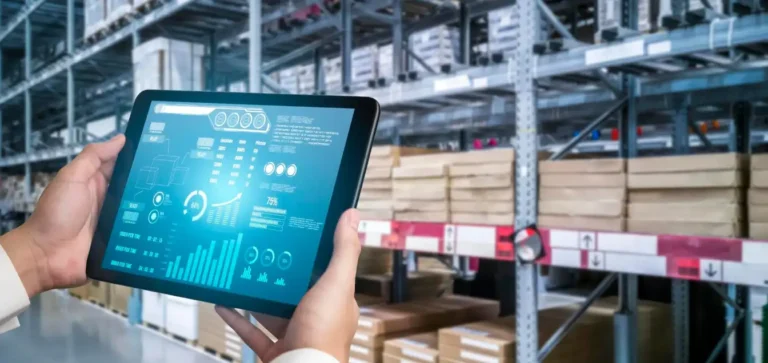
- Use data dashboards regularly
Additionally, diversifying into a trusted Canadian partner like DelGate protects against regional disruptions.
The Future of Amazon Order Fulfillment in 2026
Ecommerce logistics continues evolving rapidly.
Trends shaping the future include:
- Drone deliveries
- Same-day metropolitan shipping
- Carbon-neutral logistics
- AI-driven predictive restocking
Amazon has pledged sustainability initiatives targeting net-zero carbon by 2040.
For sellers, this means greener shipping options and better consumer trust.
Why DelGate Is the Best Fulfillment Partner in Canada
While Amazon dominates global logistics, localized expertise remains vital.
DelGate offers:
- Strategic warehouse locations
- Fast domestic Canadian delivery
- Cross-border compliance expertise
- Flexible B2B and DTC handling
For brands expanding north, combining Amazon FBA with DelGate creates a resilient logistics strategy.
This hybrid model reduces risk and increases speed.
Conclusion
Scaling ecommerce today demands more than good products.
It requires logistics excellence.
Amazon order fulfillment provides automation, global infrastructure, Prime eligibility, and predictive analytics — all essential for growth. However, combining FBA with regional experts like DelGate ensures maximum flexibility and cost efficiency.
In short, smart fulfillment decisions drive long-term profitability.
Businesses that master logistics scale faster, satisfy customers better, and build stronger brands.
Now is the perfect moment to optimize your fulfillment strategy and improve delivery times.